Author: rogue-admin

2023 Nature Camp Continues at Greensprings Loop Trail!

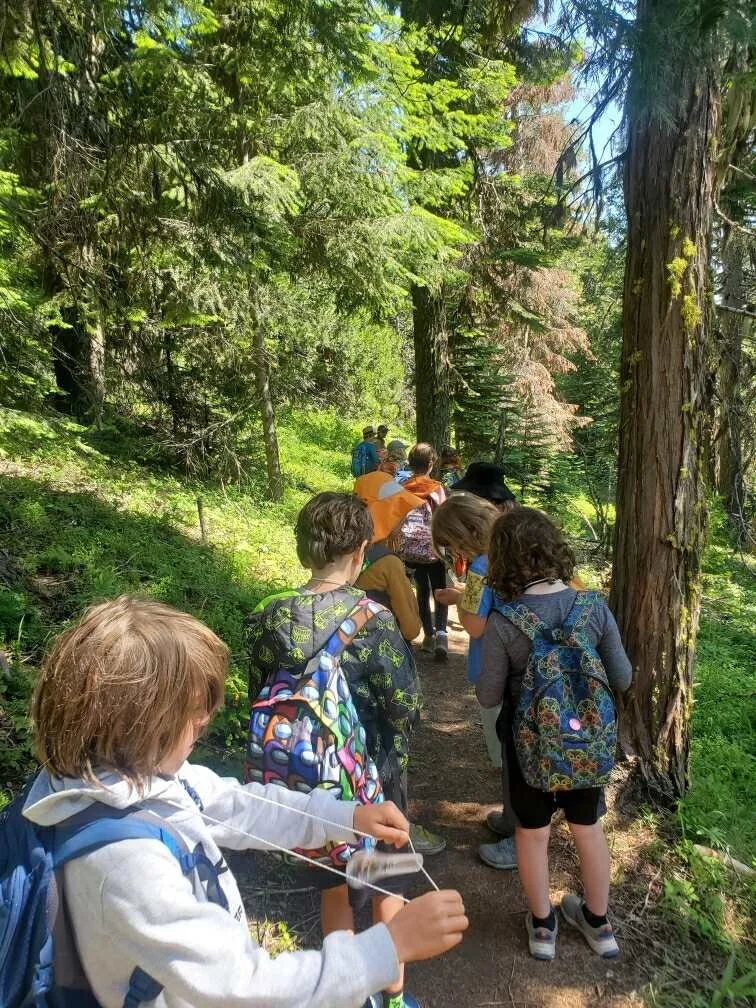
Monument Days with The Crest’s Nature Day Camp have moved to Greensprings Mountain Loop Trail! Our Summer Interpretive Rangers, Meaghen O’Rourke and Christina Gilbert, hosted their first amazing group of campers at this scenic and lushly-forested trail on July 19, 2023.

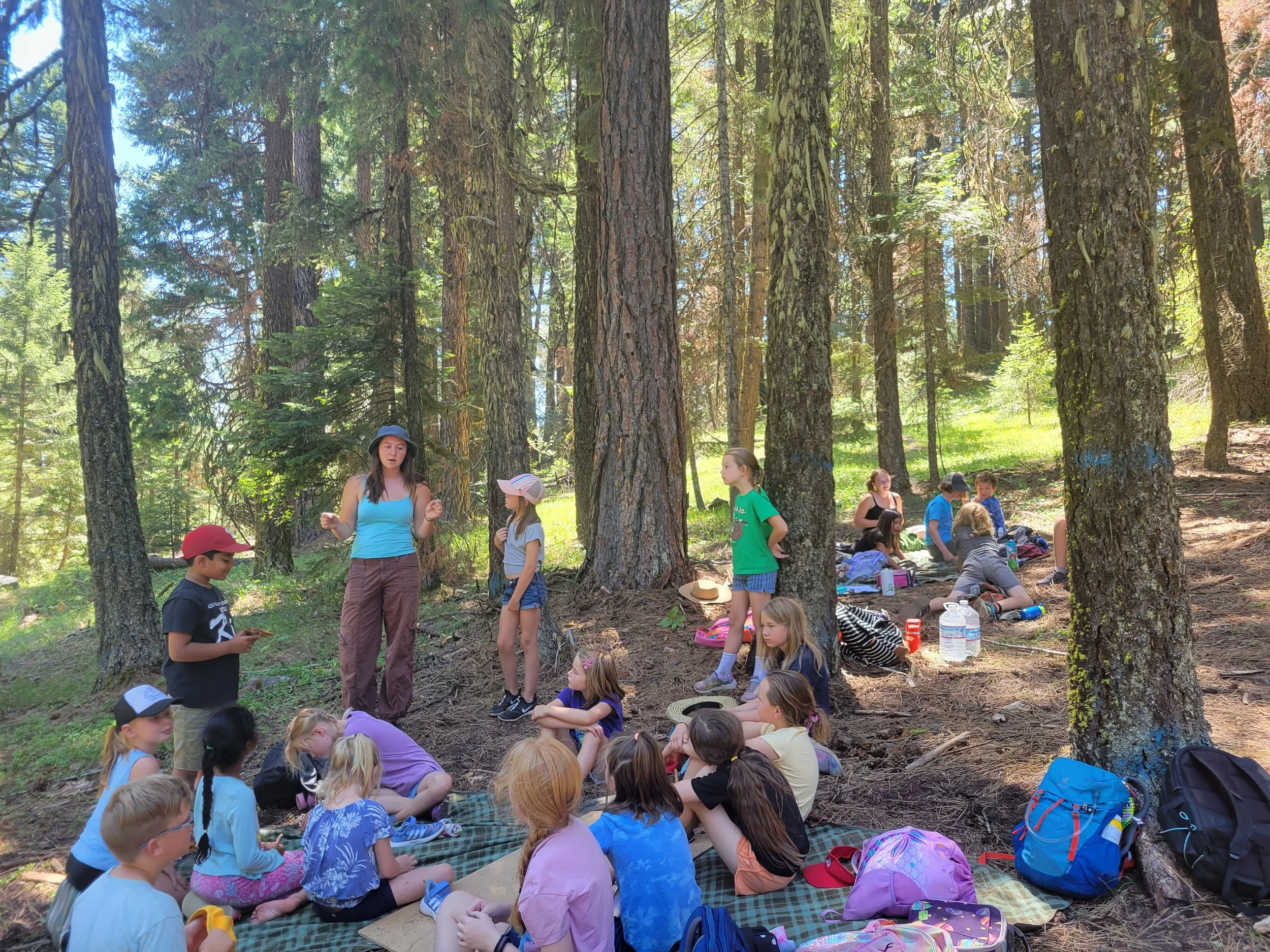
The younger students, aged 6 to 8, known as the “turtles” took a short hike to a viewpoint overlooking the valley below. While hiking they practiced “zooming in and zooming out,” by playing games that encouraged their curiosity and practiced their skills for closely examining their environment. The kids learned how to identify pinecones, examined what makes up a lichen, and compared the shapes of different types of bird feathers. Sometimes the best hikes are the ones where you don’t go very far from the trailhead!

The older students, aged 9 to 11, went on a more adventurous hike around the entire loop trail. They examined the many different types of trees that can be found on this trail, and enjoyed the many vistas. They also had some exciting animal encounters where they got to observe a ribbon snake and several lizards basking in the sun.

At the end of the day, we all gathered together to share stories and play more games. It was a wonderful ending to an educational and fun day.

2023 Nature Camp Kicks Off

Nestled within the lush surroundings of the CSNM, the first Monument Day of The Crest’s Nature Day Camp unfolded on the picture-perfect day of June 28, 2023. As the kids arrived by bus, their excitement was palpable; they were ready to embark on an adventure filled with exploration and discovery. The group, known as the “foxes,” consisting of kids aged 6-11 years, gathered together to begin their journey to Hobart Bluff with the Friends’ Interpretive Rangers.

While on the trail, the kids were encouraged to contemplate the concept of an ecosystem. With their curious minds at work, they shared insightful answers, demonstrating their understanding of the intricate relationships between living organisms and their environment. As the group traversed the trail, the kids observed various elements that corroborated their initial responses, reinforcing their comprehension of how ecosystems function.

In addition to becoming familiar with the concept of a healthy ecosystem, the kids learned the potential impacts that can disrupt an ecosystem’s delicate balance including how human activities and natural occurrences can influence the overall well-being of an ecosystem. By understanding the significance of maintaining ecosystem health, these young explorers developed a greater appreciation for their role as stewards of the environment.

At the first viewpoint along the trail, the kids practiced a “sit spot”, an exercise that fosters a deeper connection with nature. They found a comfortable spot and quietly observed their surroundings. They absorbed the sights and sounds of the Monument’s biodiversity, and captured their experiences and emotions in their personal journals.

As the educational hike drew to a close, the kids returned from their immersive adventure, brimming with newfound knowledge and excitement. The hike had not only provided them with a chance to explore the landscapes of the Monument, but also ignited a sense of wonder and curiosity within them. Our hope is that experiences such as this one will broaden the children’s understanding of and foster a love for the natural world, contributing to a generation of environmentally-conscious individuals. 

The Nature Camp Monument Days that we run in partnership with The Crest will continue for eight weeks, during which our Summer Interpretive Rangers, Meaghen O’Rourke and Christina Gilbert, will lead all-day educational adventures in the Monument for 6-11 year olds. If you want to sign your child up for Nature Day Camp, visit The Crest’s website at https://thecrestatwillowwitt.org/programs/summer-camps/nature-day-camps/.

Artist-in-Residence Reception

When you’re up in the Monument, do you ever wish that you could capture a moment perfectly? Not just with your phone, where the greens don’t seem as vibrant and blue sky lacks a certain brilliance contrasted with a rolling cumulus cloud. Perhaps you want to freeze an emotion that floods over you as you look across the landscape swaying gently in a warm breeze, the almost invisible birds and insects flitting between the boughs and blades of grass. Even though the technology in our pockets always seems to be improving, it more often than not lacks the vividness of life. This is where artists come in. 

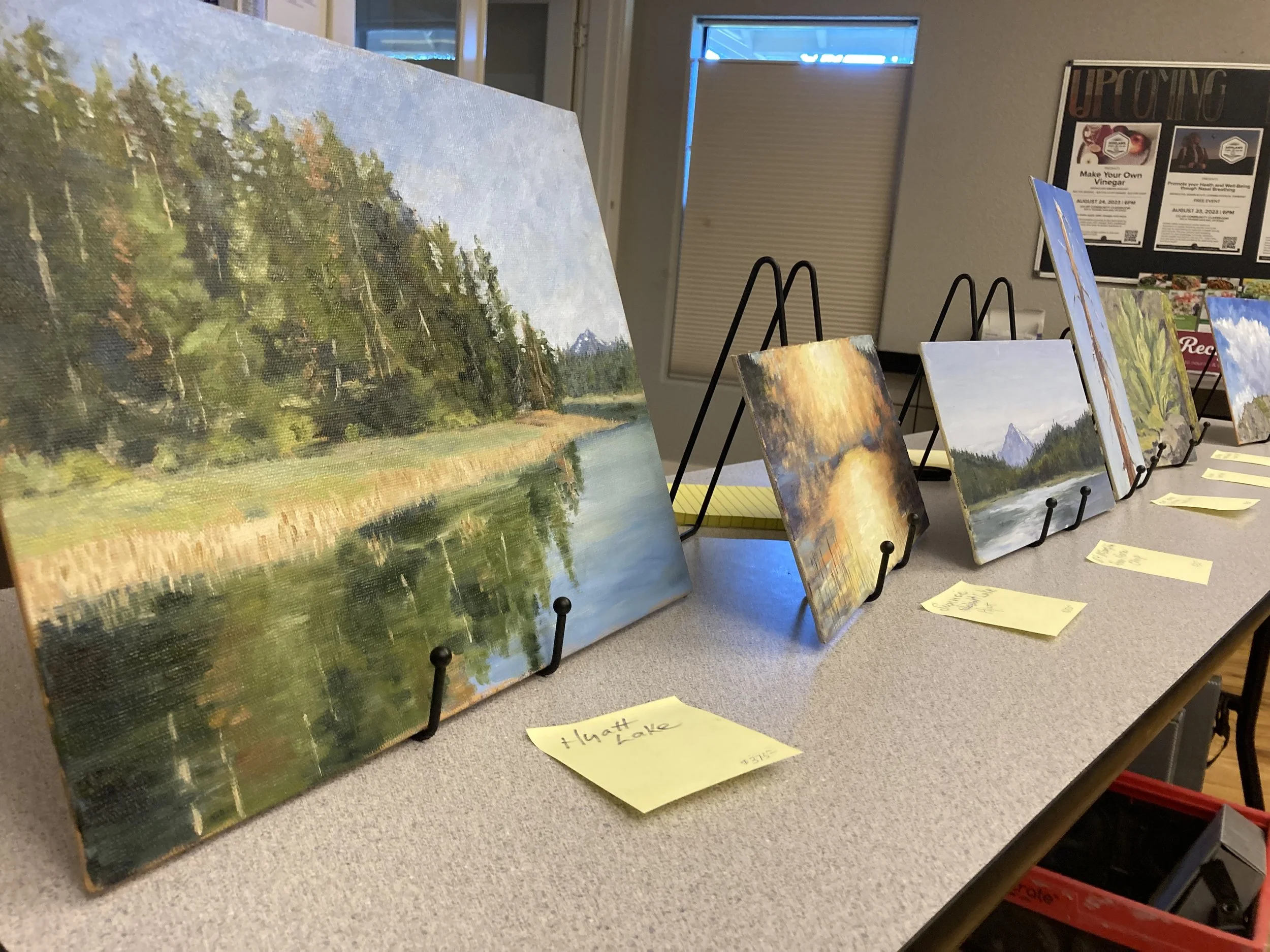
Every year, the Bureau of Land Management (BLM) selects artists for a one to two week stay in the Monument. During this time, the artists dedicate themselves to capturing the natural beauty of the landscape, its biodiversity, and unique character. Not only do they donate a digital copy of one of their pieces to the BLM, but they also participate in a reception hosted by Friends of the Cascade-Siskiyou National Monument. It was at this reception that we got to meet this year’s artists in person. 

Leslie Ann Hauer, who is from the east side of Washington State, set up her gorgeous oil paintings along a table. While she has no formal art training, you wouldn’t be able to tell. Her paintings all captured a snapshot of the Monument in colorful detail. From a gorgeous landscape at Hyatt Lake –with “50 shades of green”– to a detailed study of a mossy fence post, you truly felt as though her subjects came alive. 

Nisty Tharp, a native of Colorado who currently resides in Utah, worked primarily in acrylic paint and markers. She represented the Monument and its wildlife in punchy colors that evoked the vitality of its biodiversity. An art teacher by profession, Nisty spoke about her process and also the challenges of working on unconventional materials such as pieces of local pine wood. 

It was great to see so many beautiful pieces and we look forward to experiencing what next year’s artists create. 

We would like to thank Leslie and Nisty for donating 20% of their sales at the reception to FCSNM. To learn more about the artists and explore more of their work, please visit their websites: 

Nisty Tharp: https://www.nistyartwork.com/

Leslie Ann Hauer: https://hauerart.com/

Sunday Hike at Horseshoe Ranch Wildlife Area

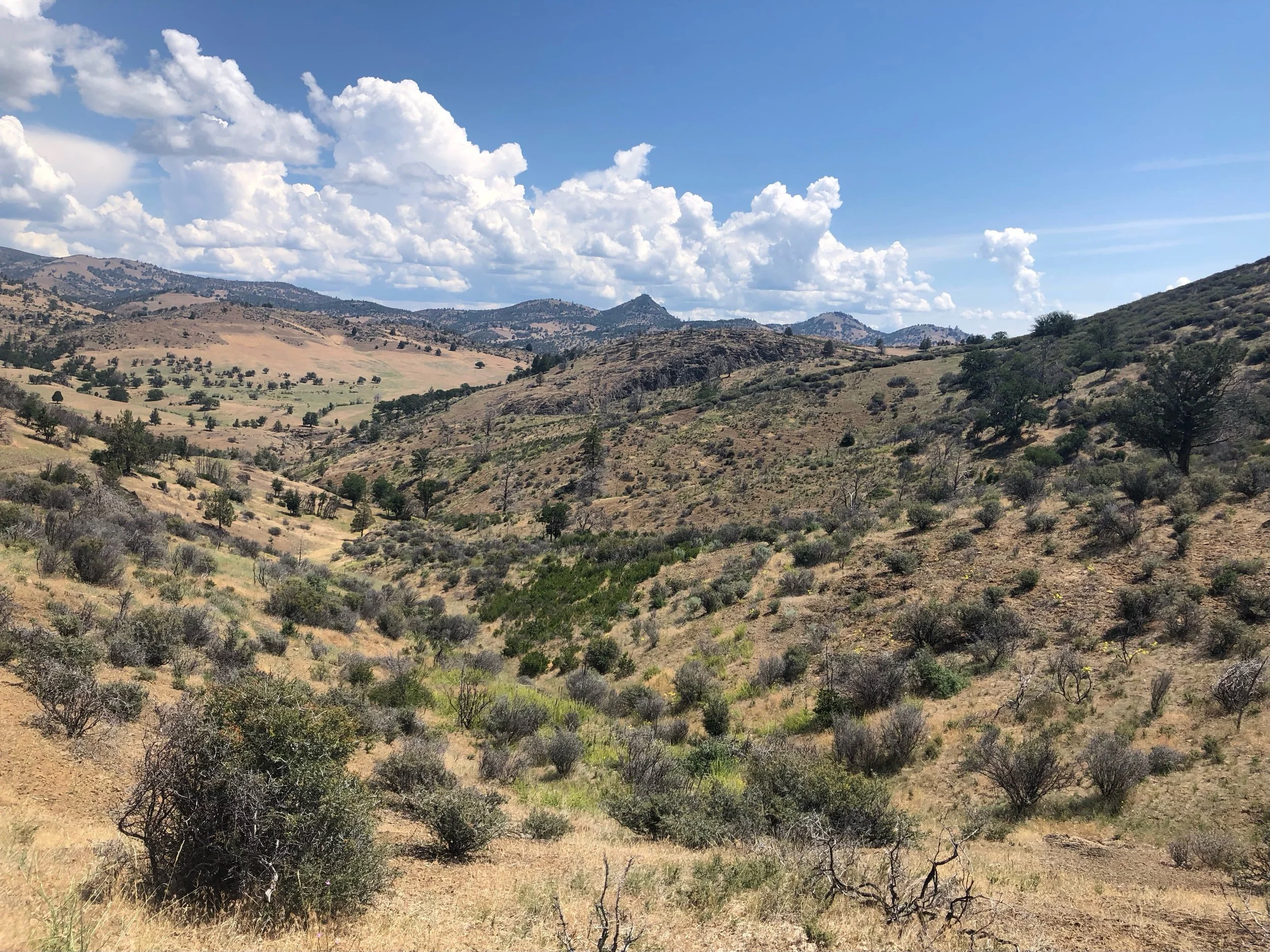
Horseshoe Ranch, formerly a working Cattle Ranch spanning from 1908 to 1970, underwent a transformation in 1977 when it was converted into a wildlife area by California Fish and Game. Recognizing its significance for biodiversity and maintaining habitat connectivity, the Ranch was incorporated into the Cascade-Siskiyou National Monument in 2017. The hike through Horseshoe Ranch Wildlife Area offers a captivating experience, showcasing remnants of the ranching industry amidst rolling hills adorned with native vegetation and abundant wildlife.

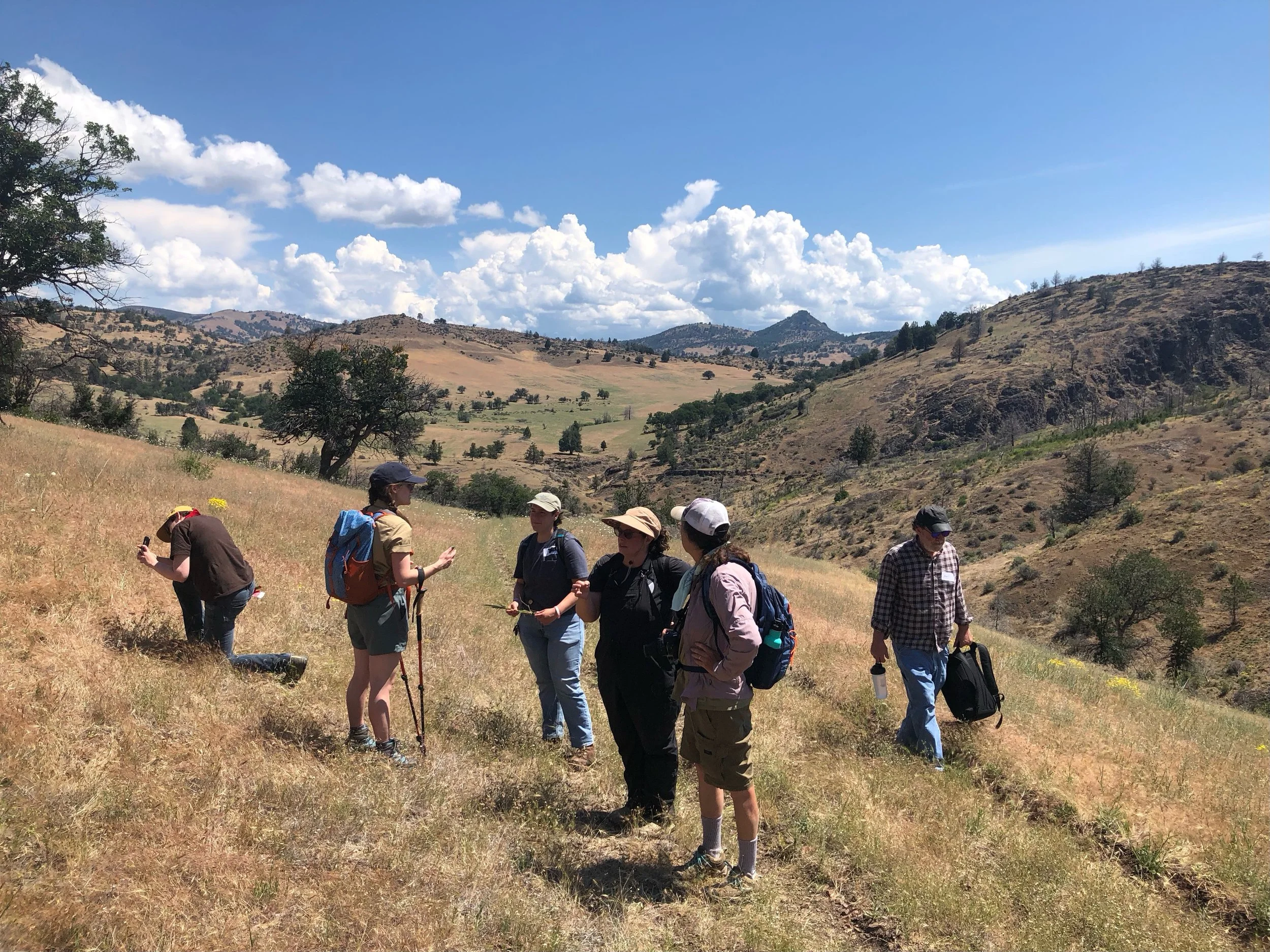
As we embarked on the trail, we encountered native plants and nesting birds, witnessing the resilience of the ecosystem in the fire-scarred trees. Heather Stewart-Ahn, a Master’s student in biology at Eastern Washington University and a 2022 Friends Research Fund recipient, co-lead our hike. Heather has been studying an extremely rare, vividly red lichen, Umbilicaria phaea var. coccinea, found in the Monument. Heather showed us a population of Umbilicaria phaea var. coccinea and we explored the micro ecosystem of the red lichens clinging to the basalt and learned about their structure, reproduction, and vulnerabilities. To hear more about Heather’s research, check out her presentation at our 2023 Monument Research Symposium HERE

Continuing our trek, we came upon a crumbling ranch spring house. Nestled near Scotch Creek enveloped by grasses and wildflowers, with Pilot Rock proudly standing in the Oregonian backdrop, its metal roof glinted in the sunlight. There were many bird species around, one of which was the Killdeer whose nests they guarded along the rocky creekside.

Ascending the old fire road, we hoped to glimpse the expansive grasslands beyond Scotch Creek, frequented by feral horses whose impact on the riparian area was evident, eroding the creekside. Despite reaching the hilltop, the horses eluded our sight, perhaps avoiding the hot sunlight. On a level stretch of terrain, an exclamation redirected our attention. Swiftly grabbing binoculars, we witnessed small specks in the distance swiftly moving – the feral horses were there taking advantage of the area’s nourishing grasses and riparian areas.

Throughout our hike in the Horseshoe Ranch Wildlife Area, we encountered remnants of a bygone era, witnessed the preciousness of rare lichens, and marveled at the resilience of nature. Whether you’re a nature enthusiast, a history buff, or simply seeking a rejuvenating outdoor activity, exploring this wildlife area within the Monument promises a rewarding and memorable hiking experience.

2nd Annual CSNM Painting Days

The 2nd Annual CSNM Painting Days took place June 15, 16, & 17, 2023. The group of experienced artists returned to Babbitt Saddle, just east of Pilot Rock, and to the high point above the Hobart Bluff trailhead to take in the amazing array of wildflowers, grand vistas, and engaging rock and tree formations. They also made a visit to Hobart Lake and to a location in the Siskiyou Mountains outside of the Monument near the campground on Mt. Ashland. 

They painted images in the Cascade-Siskiyou National Monument to share the natural qualities of these unique wildlands and to call attention to the way they benefit society whether you visit them or not. Wildlands contribute to clean air and water, and provide habitat for a wide range of life forms whose very existence supports our own. 

The painters Midge Black (midgeblack.com), Sarah Burns (sarahfburns.com), Erik Sandgren (eriksandgren.com), Kathryn Cotnoir (artshine.org/artist/kathryn-cotnoir/), Desmond Seratorre (desmondserratore.com), Howard Hunter, and organizer Katy Cauker were joined this year by Mary Hills and Nicole Pizziconi. All of the artists strive to paint steadily throughout the year and most have websites with work available for viewing pleasure and purchase. 

Event Leader – Katy Cauker: Draw  Paint Print, www.kcgallery6.com

Words by Katy Cauker.

Volcanoes in the Monument Hike & Learn

On Friday, June 9, the Ashland Food Co-op Community Classroom was full to the brim with geology enthusiasts. As additional chairs were being located, Jad D’Allura took his place at the front of the room to begin his presentation. Jad has spent a lot of time in the world of geology, particularly that of Southern Oregon. After receiving his Ph.D. in geology from UC Davis, he worked for Texaco as an exploration geologist for two years before coming to work for Southern Oregon University for 33 years prior to retirement. Yet he still continues to do basic geology research with University of Oregon undergraduate seniors in the Monument. 

The Cascade-Siskiyou National Monument comprises 114,000 acres set aside for its biodiversity. Still, it’s only natural that that biodiversity would rest upon a diverse and fascinating geological foundation. The Monument itself is made up of two mountain ranges including the Cascade Mountains and Siskiyou Mountains. In particular, its geological history has been characterized by volcanic activity with most of the rocks found in the Monument being volcanic in nature. But, what exactly is a volcano and how is it formed? It would be difficult to find someone better qualified than Jad to answer this question. 

A volcano is a rupture in the Earth’s crust fundamentally caused by plate tectonics. In the case of the Monument, the denser oceanic crust (the Juan de Fuca Plate) is pulled beneath the less-dense continental crust (North American Plate) at the Cascadia Subduction Zone. This process usually results in earthquakes. The upper mantle is then melted due to water released by the downgoing oceanic crust in a dehydration reaction. This melting generates less-dense magma that may then rise through the denser crust and erupt at the surface, forming a volcano. 

We learned that volcanic rocks will appear as different colors depending on how quickly  that magma rises to the surface. Rapidly rising magma contains more iron and appears darker, such as basalt. Magma that is slower to rise, or is interrupted, has a chance for crystals to form within it and is lighter in color due to less iron. An example of this type of rock is andesite. 

When someone thinks of a volcano, what usually comes to mind is a cone with the top neatly shorn off. While this can be an example of a stratovolcano, or composite volcano, another very common type of volcano found in the Monument are shield volcanoes. Shield volcanoes tend to be lower in profile and very basaltic. In fact, much of the volcanic remnants in the Monument are hidden in plain sight. Pilot rock is one such remnant. What was once a large volcano with spreading and sloping sides has been eroded away over millions of years to the point where only the neck, or vent, remains. 

At this point in Jad’s presentation, we finally got around to addressing the original question: How has the geological underpinnings of the Monument contributed to its incredible biodiversity? Jad made sure to not leave this stone unturned. Land bridges were created between distinct regions due to the activity of faults, such as the Siskiyou Summit Fault. This allowed for the movement of flora and fauna around the landscape. Additionally, the cooling and shrinking of lava provided conduits and reservoirs for water. Even the diversity of soils can be traced back to the Monument’s geology as different soils are derived from different rock types. These different soil types allow for varying levels of permeability and can be observed with the naked eye through patchworks of vegetation types. 

On Saturday, June 10, Jad then took our intrepid group of participants on a geological tour of the Cascade-Siskiyou National Monument itself. There, they transferred knowledge from diagrams and pictures to real rock formations, a process made much easier with our capable guide! Our tour of the Monument took us up Indian Memorial Highway to see the Colestin and Roxy formations. We stopped at the side of the road to look at basaltic andesite rocks and the debris from ancient eruptions and lava flows. 

An unexpected fringe benefit of cutting roads through mountains is the layers of rock that are exposed. This is where our group found ourselves as vehicles whizzed by and Jad, armed with a hammer and pick, chipped off bits of rock to give us a glimpse into eons of time. 

Lost Creek Falls Sunday Hike

We began our day by leaving Ashland in the rear view mirror. The town slowly shrunk as we snaked our way up the paved road leading into the Monument. The sun had just started to peek through the clouds and the sky held the promise of more sunshine to come. The car was quiet as the occupants observed the changing landscape outside the windows. We traveled into rolling hills and meadows, soon reaching towering forests. Our destination, Lost Creek Falls, is exactly what the name implies. Lost. Off the beaten path, this secluded hike is hard to find and often unknown. Soon we turned off the paved road, onto a gravel one that led us deeper into the forest. The further we drove the more changes we saw, lush greenery along the road, tall trees, and eventually, a small creek.

When we finally came to a stop and opened the doors, we were greeted by the earthy scent of the forest floor accompanied by the fresh water that trickled in the creek. The area was stunning, and the chirping birds sang as we gathered our group to begin the hike to Lost Creek Falls. Starting in we found a small single file trail winding through the open forest. Following the trail we found many native flowers, some of which were rare species to find. This prompted a conversation about the origin of the Monument. How in 2000 former President Bill Clinton used the Antiquities Act to conserve and preserve this area of land because of its expansive biodiversity. We continued to hike, thinking about what this meant, and beginning to see for ourselves the rich mosaic of plant and animal life living and thriving in the very place we walked. The canopy began to tighten, allowing only a few streams of sunlight through to the forest floor. Not long after the dense forest started, we began to encounter large fallen trees across our path. It was amazing to see the smiles everyone bore as they traversed the terrain, sensing the wilderness of the place and becoming enchanted by it. Soon, the canopy cover reopened, and rocky outcroppings emerged in the distance. The sound of the creek had grown so gradually, one could almost miss the change. 

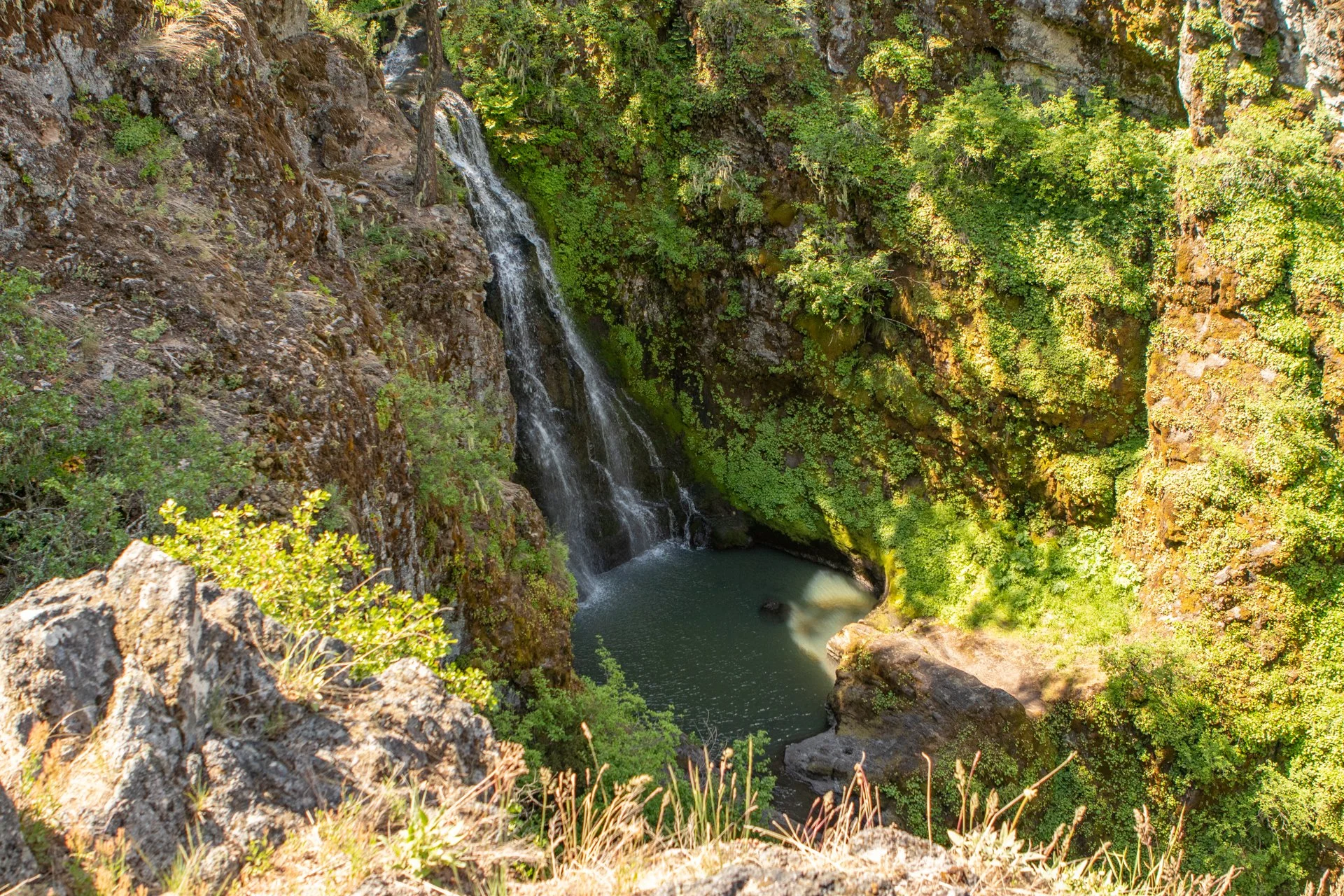
Leading the group out of the forest and into a clearing, we found ourselves at the top of a gorge. The steep rocky walls were covered in rich green vegetation, but there was no waterfall in the distance. Instead, we found the trail had led us directly to the top of the falls. Walking around the side we made our way to a craggy outcropping alongside the gorge wall and looked back at the falls. We meandered in the area, appreciating the beauty in the falls and finding new flowers, trees, and wildlife. As the sun shined down on us, eventually it was time to go. Walking the trail back out, we reflected on what it meant to have accessed such a beautiful and wild feeling place. 

Overall, the Lost Creek hike gave a sense of discovery, adventure, and connection with the landscape. As citizens, advocates, and stewards of the environment, we question the roles we play within the Monument and how we can take action to preserve these wild places.

Wildflower Identification Hike & Learn

On Friday, May 26, the Co-op classroom looked like the outside had come inside a little more than usual. All around the room were rag-tag bunches of flowering plants placed in an eclectic collection of containers. While they may have made for underwhelming decorative bouquets, they were there for a much more interesting purpose: Plant identification! More specifically, they were for plant identification using the Botany in a Day methodology by Thomas J. Elpel. Instead of focusing on memorizing individual species, Elpel’s method has the student learn plant families. This is a relatively less overwhelming task and can be done by learning to recognize patterns associated with each family. 

There are approximately 320,000 described plant species worldwide; of those, they fall into hundreds of families. However, for the class, Collette Streight –Executive Director of Friends of the Cascade-Siskiyou National Monument and that night’s instructor– selected seven of the most common to focus on 

  1. Rose Family (Rosaceae)

  2. Aster Family (Asteraceae)

  3. Mint Family (Lamiaceae)

  4. Pea Family (Fabaceae)

  5. Mustard Family (Brassicaceae) 

  6. Parsley Family (Apiaceae)

  7. Lily Family (Liliaceae)

After Collette introduced each plant family, everyone took out their hand lenses and examined the unconventional bouquets where an example was present. Participants were soon counting petals and identifying inferior and superior ovaries! We learned that in the aster family, there are actually two kinds of flowers: Disc flowers and ray flowers. What looks like one large flower to most people (think of a sunflower) is made up of hundreds of individual flowers, each with its own set of stamens and pistils. 

Armed with this new knowledge about plant families, we met Liz Landreth on Saturday to get to know some flowers in their natural habitat. Liz, also known as the “Flower Floozy,” is an amateur botanist focusing on intriguing stories about plants and our relationship with them. Liz’s approach to plant identification, emphasizing species and habitat characteristics, paired well with Collette’s approach. Not only was Liz able to identify the plant species, but we could also use the Botany in a Day method to determine the family. 

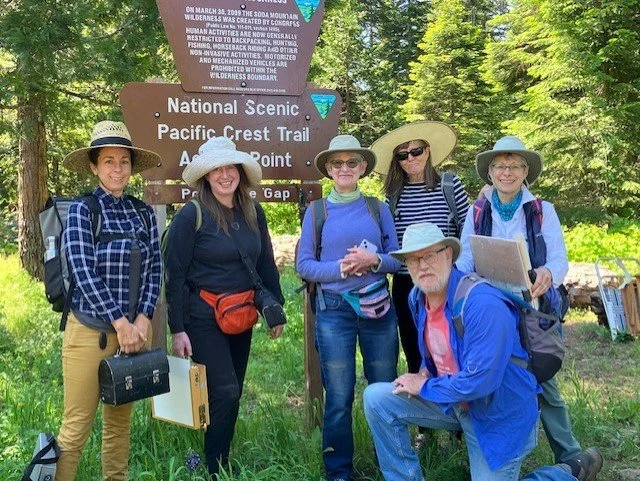
Our excursion started in the CSNM at a portion of the Pacific Crest Trail that passed Hobart Bluff. It would be an understatement to say that the area was botanically diverse. We made it only ten feet down the trail before Liz was pointing out flowers. Slowly we inched along, spending time with plants such as Jacob’s Ladder, waterleaf, and Larkspur. 

“Whenever people ask me how long a wildflower hike is going to be,” Liz joked, “clearly have never been on one!” And she was right. We were marking distance by new species, not by miles. We spied many types of Lomatium –also called biscuit root– and Liz informed us that they were an important First Food for the Indigenous Peoples of the area and are still considered by their descendents today as an ecocultural source of carbohydrates. Under the tree canopy, we saw trillium and checkered fritillaria (a member of the lily family). We even observed a peony that was very different from the cultivated varieties found in gardens but whose similarities were also unmistakable. One by one, Liz had us gently feel its leaves which were cool to the touch. 

Our final stop was at Little Hyatt Lake, where we once again caught up with the Pacific Crest Trail. The meadow we walked through was drier and more exposed at this lower elevation. Yet we still saw the tell-tale umbel flowers of biscuitroot and the feathery fronds of medicinal yarrow. Nearby we could see the still blue water of the reservoir and thought of the summer to come and all of the flowers it would bring with it. 

Star Thistle Pull with Pinehurst School

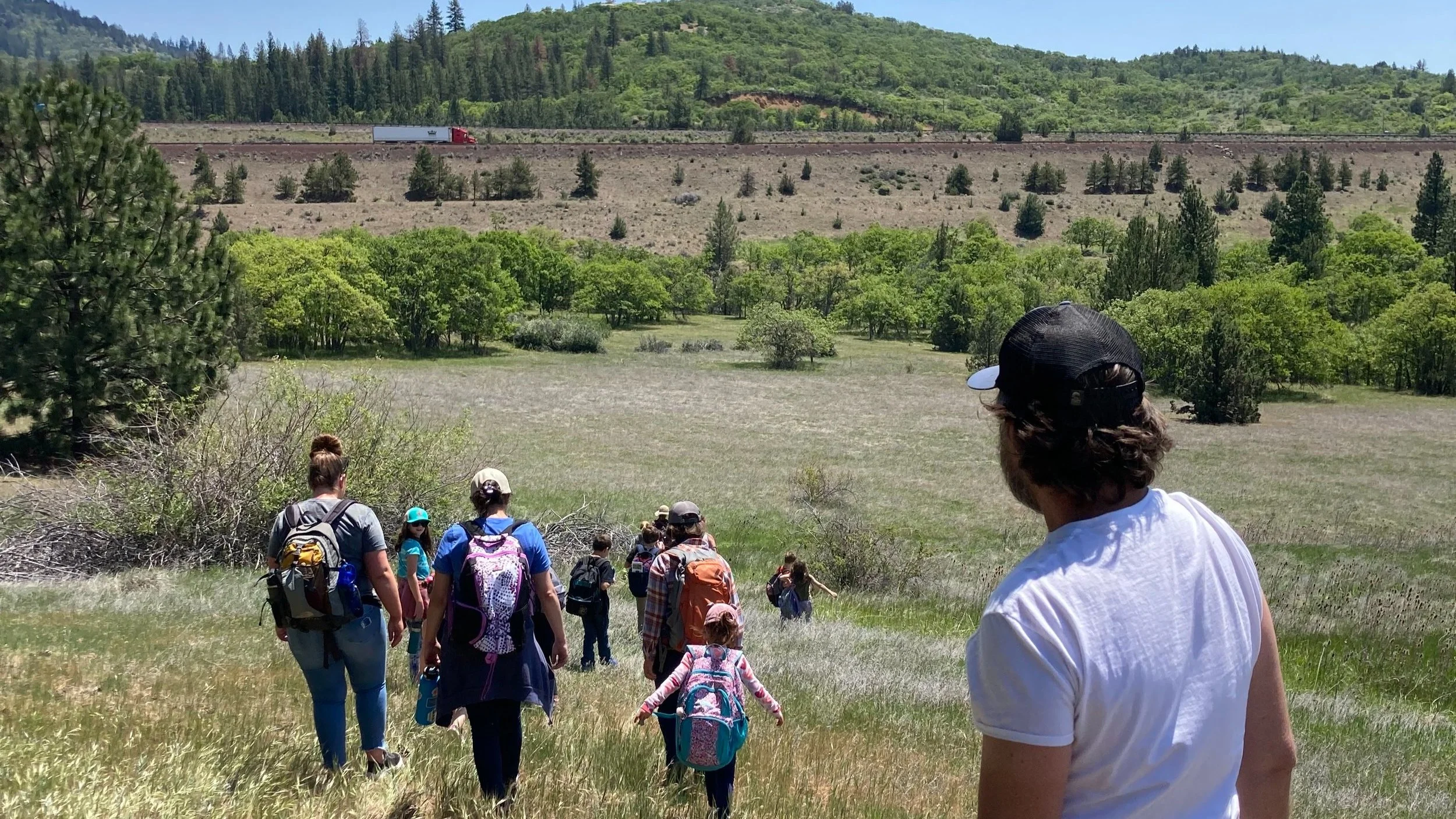
I once heard the adage “Oregon kids are tough!” and it couldn’t be more true for the students from Pinehurst School. Most kids, when presented with the prospect of hiking off-trail towards a destination where they would be expected to put in some hard work to pull weeds, would be understandably unenthused.  However, the Pinehurst students, their parents, and teachers started trooping down the hillside full of curiosity and good humor. As we began our hike –with a path marked the previous day with fluorescent orange tape– we were swallowed up by a rolling landscape of oak savannah. This certainly made our wayfinding easier as we were greeted by widely spaced trees casting gentle shade and quiet meadows interspersed along our path. 

We were joined by BLM Interpretive Ranger John Duwe and soon paused in one such meadow. Even though we could hear the distant roar of I-5 over the hill, the little world we had entered felt set apart. John Duwe led the students in an activity where they matched a rainbow of paint chips to the natural colors around us. It certainly made us realize that nature is full of colorful surprises when you look carefully! 

The trail we blazed led us down into several draws. In the second, we found a flowing creek where we could see practical examples of how humans can aid in restoring streams and riparian areas. We observed budding willow stakes cut from the large willows upstream and placed by volunteers the year before. We also saw rock dams which, to the uninitiated, are just that simple: Rocks placed in a row perpendicular across the stream to slow the flow and spread the water further across the landscape. While it’s not quite as impressive as what a beaver could do, rock dams are still valuable tools we can utilize to rehabilitate the area. 

After carefully crossing some treacherous mud, we began our ascent up the final hill toward a large, stately ponderosa pine and a couple of juniper trees that marked the area where we would pick yellow star thistle. The thistle, Centaurea solstitialis, is native to Eurasia but has become invasive in much of the United States, including Oregon. In particular, it has had an outsized impact on native grasslands, which are among the most important and endangered ecosystems in the United States. Native grasslands are essential for increasing and maintaining biodiversity by providing wildlife habitat, but they also contribute to water quality and quantity through root filtration and increased water holding capacity. They even store high amounts of carbon for sequestration!

  As we walked, we could feel the dead stalks and flower heads from last year’s thistle catching on our clothes and scratching our skin. While it was clear that the entire preserve could use many more hands to help control the noxious weed, we had our mission for that day and found a large square plot already marked with rebar and orange flags. The plot is one of eighteen grassland areas selected in 2020 within the Monument boundary as part of the BLM’s Grassland Restoration Project in partnership with the Sampson Creek Preserve and The Understory Initiative. One of the project’s objectives is to test the efficacy of various treatments for removing weeds such as yellow star thistle. 

Collette Streight, Executive Director of the Friends of the Cascade-Siskiyou National Monument, showed the students how to identify the plant. Somewhat at odds with its spiny flowers, the leaves of the young yellow star thistle are soft to the touch. Many of the students described them as “fuzzy!” Collette showed us that the most important thing to remember was to get as much of the root as possible. If we get the whole root, the plant will not be able to come back. Once we were confident that all students and volunteers could adequately identify the plant, we set to work. Slowly, we picked our way across the plot, digging out the small plants with fingers and sticks. Occasionally, someone would get a particularly long root and show it off to enthusiastic shouts of admiration. Soon, it became a contest to see who got the longest root! Yet even hard work flies by with friends, and shortly it was time for lunch. As everyone scrambled for one or two final plants, we realized they were much more challenging to find than when we had started! 

Lunch was had at the base of the tall ponderosa we had passed on our way in. While some enjoyed their sandwiches and snacks, many of the students explored the old apple trees planted as part of a long-gone homestead on the site. Soon, we harnessed this creativity, and Collette led the students in an activity that had them find a plant or insect they didn’t recognize and spend some time observing it. They were encouraged to observe using their senses and get to know the plant by asking questions, even if they may not have the answers. At the end, we all took a tour of each other’s new botanical and insect friends. 

Soon it was time to trek back to the cars and bid Mariposa Preserve goodbye. It was bittersweet because we all left feeling a greater sense of connection to this little corner of the Monument, but also knew we had left it better than we had found it.