Author: rogue-admin

Buck Rock Tunnel Archaeological Tours

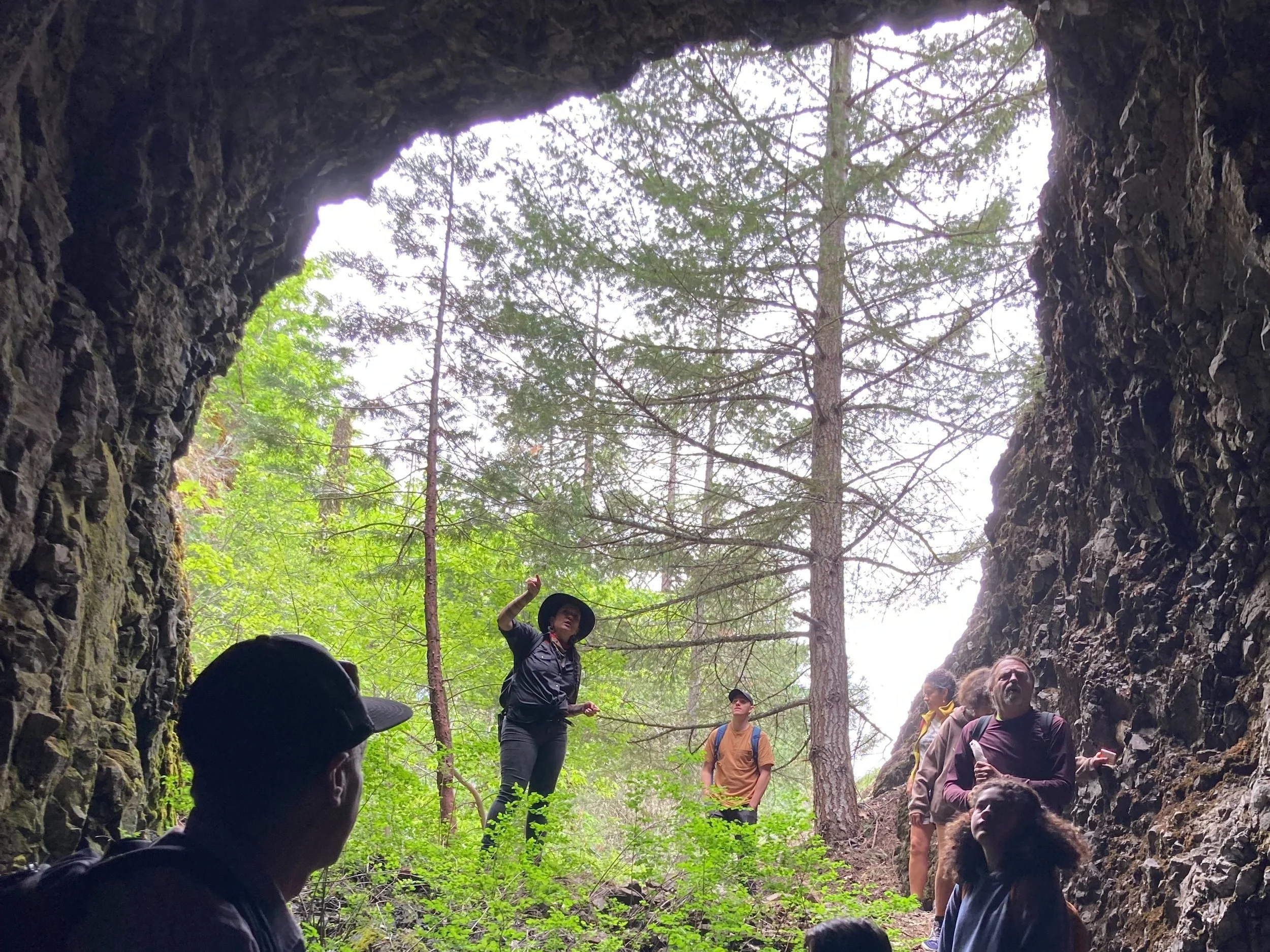
When you explore the Monument, it is easy to get lost in the wildness of it, its soft lines and natural colors a stark departure from the harsh surfaces of our roads and buildings down below. But as we crested the steep trail there was something expected waiting. Its black mouth was like a bullet wound in the mountainside, the darkness so deep that even the beautiful sunny day could not penetrate very far. The raw rock that formed its walls, ceilings, and floors bore the tell-tale mark of human intervention. It was not smoothed out by a millennia of exposure to the elements, but was jagged and textured with many sharp angles. As our group stepped inside this gaping hole, the temperature dropped and the air became clammy as it swallowed each person. 

While I had read about Buck Rock Tunnel, it wasn’t until I stepped inside that I was able to truly appreciate the scope and scale of its undertaking. It was originally intended to be a part of the Oregon & California (O & C) Railroad when construction began on August 17, 1883 and serve to help join Portland and the lines of the Southern Pacific Railroad in California. However, it was never completed when construction was halted on February 8, 1884 when the railroad company ran out of funds. While the proposed rail line never did come to be, its unfinished nature presents an interesting window into the engineering and construction of tunnels in the late 1800s. Yet perhaps most fascinating is what it can tell us about the people who worked on it, primarily Chinese laborers. 

That was the focus of the Buck Rock Archaeological Tours hosted by Southern Oregon University Laboratory of Anthropology (SOULA) and the Bureau of Land Management (BLM) archaeologists. Called the Buck Rock Tunnel Project, it is a collaboration between the Medford District BLM and SOULA and operates as an extension of the larger Oregon Chinese Diaspora Project. 

As my group began our hike toward the tunnel we were greeted by information stations along the way, staffed by volunteers eager to tell us about the findings of the project. We looked at old aerial photographs and maps as well as artifacts uncovered at the site, including the soles of rubber boots most likely worn by the laborers. We learned that much can be deduced from small shards of pottery and how it is possible to distinguish a European American camp from one that was primarily occupied by Chinese people through the types of pottery they left behind. Yet the centerpiece of the tour was definitely the tunnel itself. With each step we explored deeper into the unfinished cavern. All around us was evidence of blasting, drilling, and the inescapable realization that all that rock had to be carried out using only the power of man and beast. 

The Monument was originally set aside in the year 2000 for the purposes of biodiversity and it truly is a place of awe-inspiring confluences of geology and bio-regions sustaining many unique plant and animal communities. However, it is also a place with a rich and diverse human history that is also worthy of study and only adds to the Monument’s spectacular story.
Oak Trees in the Monument

April 28 & 29 – Oak Tree Hike & Learn

On Friday, April 28, around twenty people gathered in the Community Classroom of the Ashland Co-op to hear about one of our unsung heroes of the Cascade-Siskiyou National Monument: oak trees. The presenter was Rich Fairbanks, a dynamic and gregarious retired forester with a degree in forestry and a Master’s degree in planning. Rich has worked for the U.S. Forest service for 32 years in fire management, planning and silviculture and has held various positions in the organization including Interagency Hotshot Crew Foreman, Division Supervisor and ID Team Leader for the Biscuit Fire Recovery Project. He currently owns a small forest management company. He and his wife live in the mixed conifer forest of the Applegate where they steward their land and do a considerable amount of under burning.

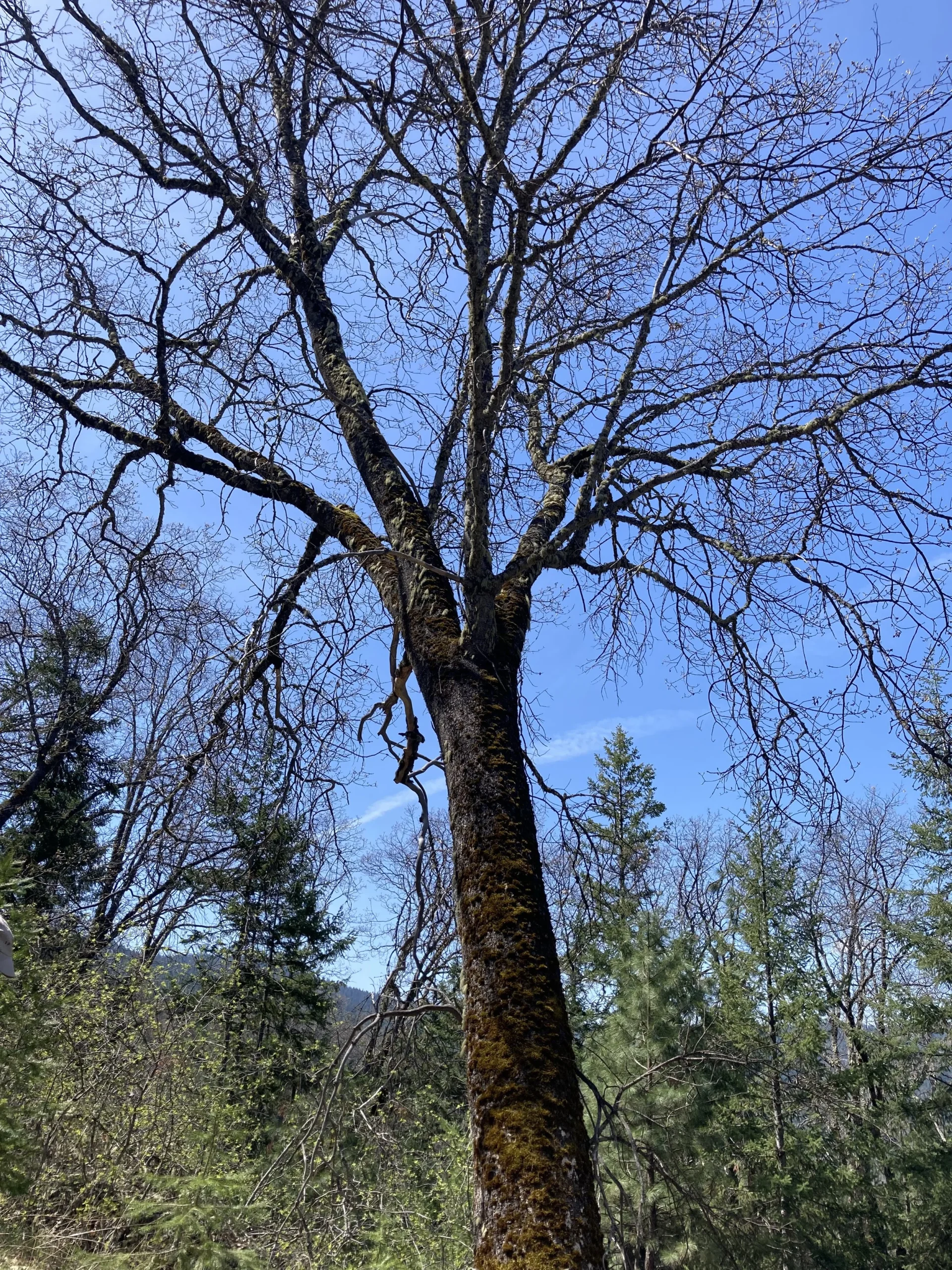
Rich started his introduction to oak trees by impressing us all with their great diversity. Not only are there multiple species represented in Southern Oregon, but they take many forms from the common White and Black Oaks to the majestic Canyon Live Oak and shrubby Huckleberry Oak. And while most people associate oaks with being a forest environment, Rich reminded us that that is only a portion of their varied habitats which include prairie, savanna and chaparral. 

In addition to providing wonderful shade to tired hikers, oaks also provide food and habitat to many other wild creatures. Their acorns are an invaluable source of food for many animals, especially in the late winter when many other food sources are scarce. They also support diverse understory plant communities. Due to their ability to wall off disease and dead wood, and thus create cavities, many animals make their homes in both living trees and dead snags. Armed with this new knowledge, we were ready to tackle the following day out in the field.

In the morning on Saturday, the day started with abnormally high temperatures for late April. But armed with sun hats, sunscreen, and extra water, our caravan of vehicles headed up into the Monument. We arrived at the trailhead for Buck Rock Trail and were immediately greeted by an abundance of oaks. Before we even began our hike, the trees began inspiring questions as a participant noticed an interesting round growth on an oak limb. Of course, Rich was quick with an answer and we learned that they are called galls and are made by wasps that trick the tree into creating a comfortable place for their larvae to hatch and develop. This was yet another example of the importance of oaks in the local ecosystem, and we hadn’t even left the parking lot! 

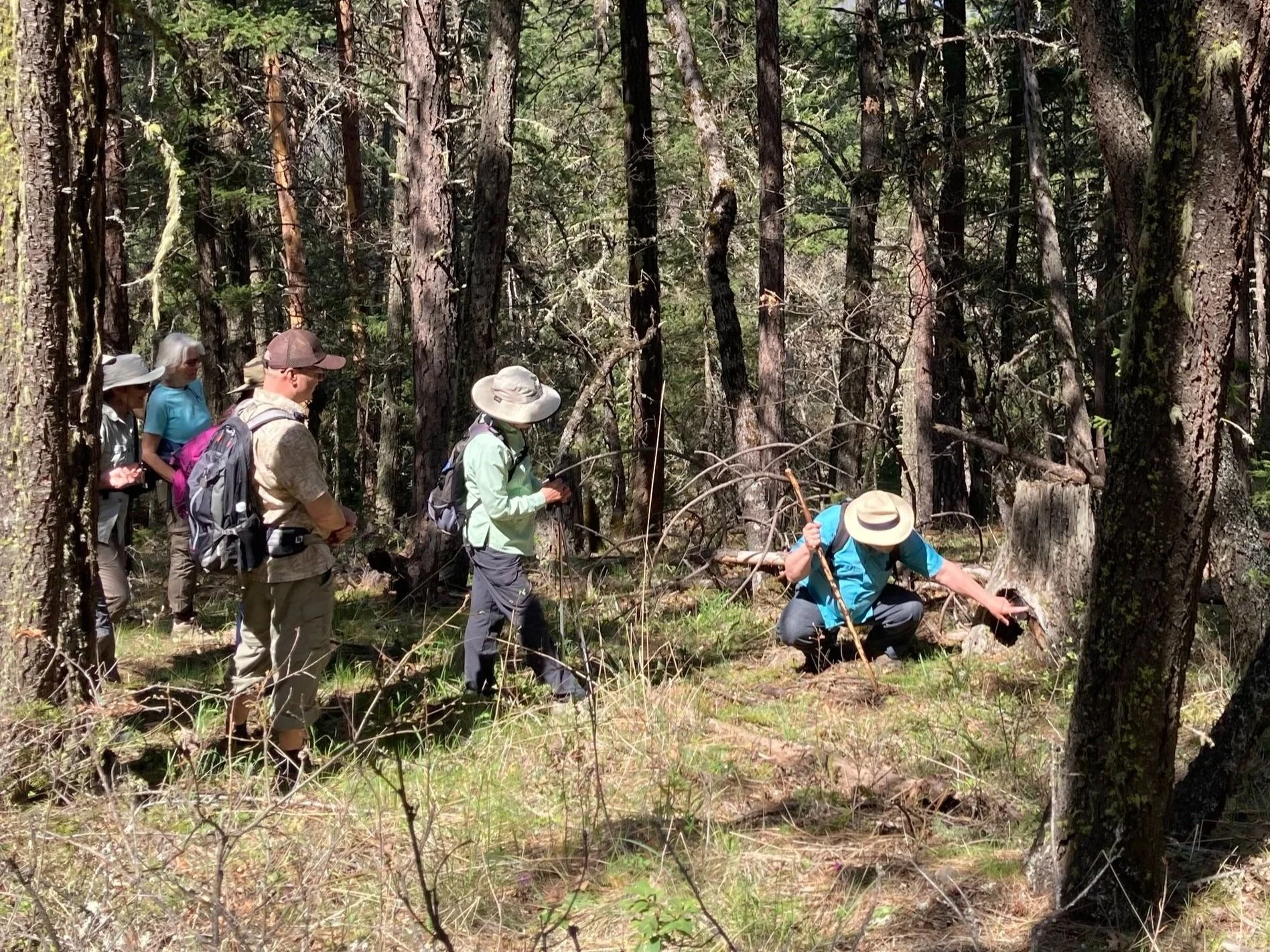
As we started down the trail, not only did Rich help us brush up on our tree and plant identification, but he also began pointing out often overlooked features of the landscape. From a layperson’s perspective, an area devoid of vegetation may not hold much interest. However, when looked at with the seasoned eye of a forester, it can tell a tale of clearcutting and compaction caused by heavy machinery decades ago. Rich also taught us that much can be learned even from an old tree stump if you know where to look. Venturing off trail, he showed us the squat remains of an oak tree cut down many years before. On the bleached and weathered wood he pointed out the remains of several burn scars indicating that before it had been logged, the oak had survived multiple low-severity fires. This testified not only to the frequency of fire in the local landscape but also to oak’s adaptations to survive such events. 

  Rich pointing out the burn scars on an oak stump.
Rich pointing out the burn scars on an oak stump.

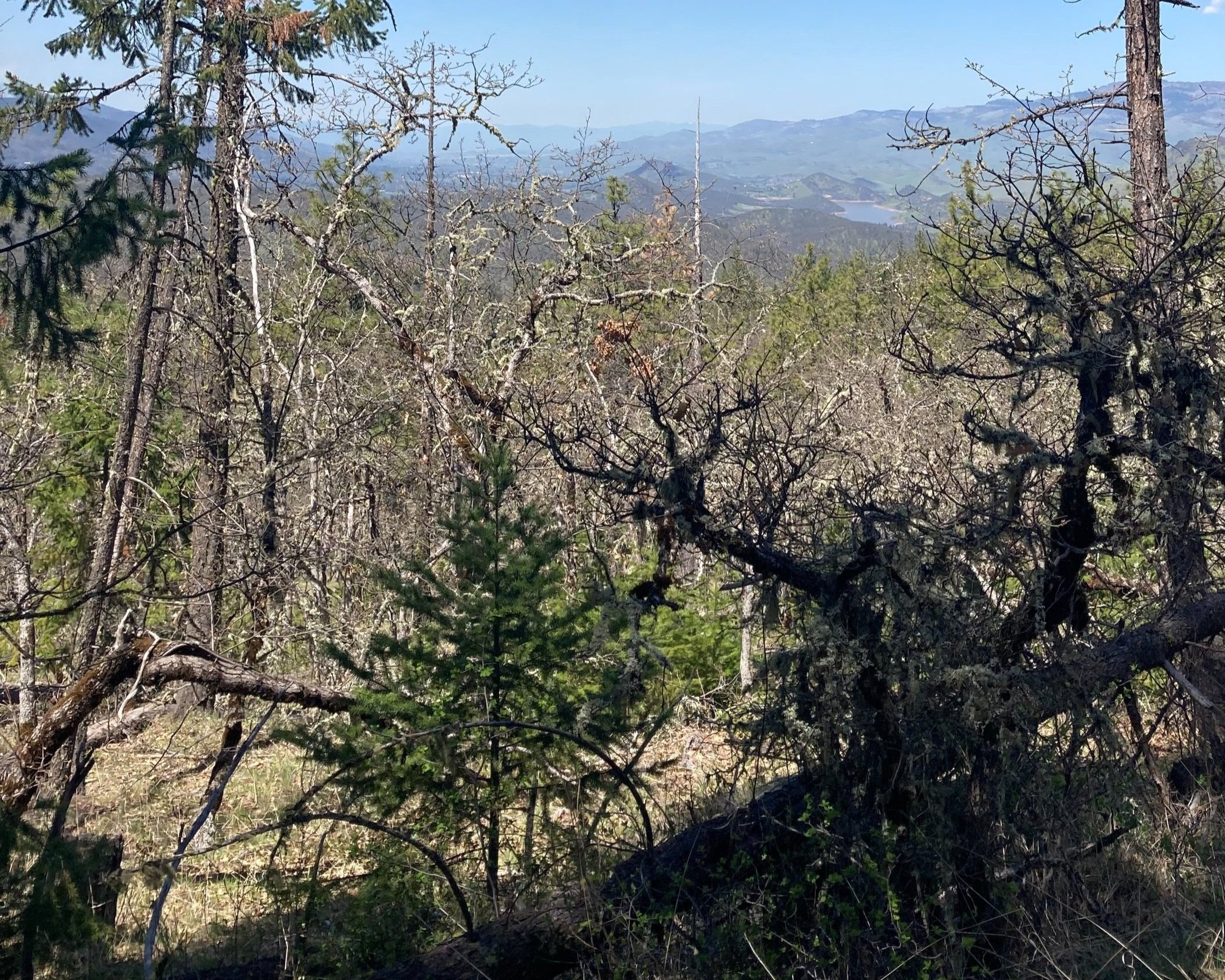
In fact, all around us we could observe the impact of almost a century of fire suppression. The forest was cluttered with tall brush, crisscrossed fallen logs and dense growth of young trees. Rich called this phenomenon densification and it is a major contributor to the rise in high severity fires that fire-adapted trees find much more difficult to survive. 

  An example of densification observed along the trail.
An example of densification observed along the trail.

In the end, all participants left with a more profound appreciation and understanding of oak trees and the important role that they play in many diverse ecosystems in the Cascade-Siskiyou National Monument and Southern Oregon in general. Rich’s storied and extensive knowledge of forest species and management impressed everyone – along with his sense of humor! I know that when I go out into our local landscapes, I will pause a little longer to appreciate our complex and wonderful oak trees.