Hike Recap: Nature Journaling

“I do know how to pay attention, how to fall down
into the grass, how to kneel down in the grass,
how to be idle and blessed, how to stroll through the fields,
which is what I have been doing all day.
Tell me, what else should I have done?
Doesn’t everything die at last, and too soon?
Tell me, what is it you plan to do
with your one wild and precious life?”

—    from “The Summer Day” by Mary Oliver —
 

 Group at Pilot Rock. KBoehnlein photo
Group at Pilot Rock. KBoehnlein photo

In the sweltering heat of mid-August, a small but stalwart group of hikers set out to explore the Pilot Rock and Lone Pilot trails. Bolstered with water, snacks, journals, colored pencils, and inquiring minds, they we ready to uncover the smallest details of their hike and capture time for creativity.
     The night before, ten participants gathered at the Ashland Library to make simple cardstock journals and practice sketching, inspired by books and resources gathered by the two leaders, Mary Silva and Katie Boehnlein. Mary has been creating beautiful watercolor and collage travel journals for years, and Katie is a passionate environmental educator and nature writer, so they brought great excitement and expertise to the table. They encouraged their participants to let go of inhibitions, highlighting instead the Japanese philosophy of wabi-sabi, or the art of imperfection, as they readied themselves for the next day’s artistic endeavors.

Saturday morning was undoubtedly hot. Small shade at the Pilot Rock trailhead served as the perfect place to read a passage from Thoreau’s Walking, go over the day’s route, and set out on the trail! Though the morning was warm, a small breeze wafted along the winding trail, as the group admired Pilot Rock looming far above to their left. Small black and white butterflies followed in their stead, fluttering between shafts of light bending through tree limbs. A mile down the Pilot Rock trail, the group reached a crossroads. At this point, the Pacific Crest Trail crosses the trail heading closer to Pilot Rock, and the Lone Pilot Trail begins on a deviating spur. 
     The Siskiyou Mountain Club created the Lone Pilot Trail, a former logging road with fantastic views of Pilot Rock and Mt. Shasta. The road twists and turns throughout 17 miles of the Soda Mountain Wilderness, which is located within the Cascade-Siskiyou National Monument. On just the two miles of this trail that the group explored, they passed through diverse habitat: deep ponderosa pine forest as well as open oak savannah. 
     Our first stop was in a large clearing directly below Pilot Rock. We paused here for our first chance to sketch and write. Taking inspiration from a lone pine tree clinging to life at the top of Pilot Rock, we contemplated, “How do things end up where they do?” musing on the origins of small rocks, tiny wildflowers, and the immense of Pilot Rock, a volcanic plug that still juts high into the sky thousands of years after its molten creation. 
     We ate lunch beneath the cooling shade of ponderosa pine needles, sketching and talking as we ate. We dug our hands into layer upon layer of discarded ponderosa bark, a mire of puzzle pieces that serve as the tree’s best defense against fire. We then moved further out into the open to glimpse the imposing Mt. Shasta, hazy in the heat, while listening to the legend of Shasta and the Grizzlies, and inspiration of history and folklore. As the afternoon heat came to a head, we ventured up the hill once again and back towards the trailhead.
     Our final stop was in a lush, shady clearing alongside the trail. We read Charles Finn’s short essay called Chickadee, watching birds flit around us from branch to branch. They seemed tireless despite the heat. As we rose to return to our cars, filled to the brim with the Monument’s beauty and the day’s inspiration, a little voice called to us in farewell: “chickadee-dee-dee…chickadee…”

Text and photos by Katie Boehnlein, Hike and Learn Coordinator
     Exploring Place with Nature Journaling and Field Sketching
     

Beavers and Watersheds

 The group follows Michael Parker down into Fredenburg Meadow to search for a beaver dam. see the  3-MILLION YEAR OLD LAVA FLOW at the upper left.  K Boehnlein photo
The group follows Michael Parker down into Fredenburg Meadow to search for a beaver dam. see the 3-MILLION YEAR OLD LAVA FLOW at the upper left.  K Boehnlein photo
 Michael Parker tells about the 'sponge' as participants stand on a now-empty beaver dam. K Boehnlein photo
Michael Parker tells about the ‘sponge’ as participants stand on a now-empty beaver dam. K Boehnlein photo

A hot summer day in the Bear Creek Valley inevitably means that the forests of the Cascade-Siskiyou National Monument become needed respite. This month, we had the pleasure of following SOU Biology Department chair, aquatic ecologist, and expert bushwhacker Michael Parker into the woods and off trail in search of clues about the ultimate “ecosystem engineer”: the American Beaver.
     Our adventure began at Tub Springs Wayside, where we consolidated cars and continued down Highway 66 to Jenny Creek Road. We wound our way past corporate timberlands piled high with harvested timber, eerily resembling the piles of wood that beavers themselves collect to make their homes. But just beyond timber lands lies the Monument boundary, an immediate return to the peace of an intact forest. Just after crossing Jenny Creek, we parked and walked west along Forest Service Road 39-4E-23.3 which borders Jenny Creek. From our high vantage point, we could see the willow, cattails, rushes, and Spirea that flock to wet channels, a line of darker green against midsummer grass. This marshy grassland that used to be home to cattle grazing is called Fredenburg Meadow, a unique wet meadow gets its wetness from Jenny Creek and Fredenburg Springs.

This was the site of our first beaver dam! Beavers haven’t occupied Fredenburg Meadow and Jenny Creek for a few years now, but their dam remains, hidden beneath willow roots and cattails. Participants picked their way through soggy ground and water-loving vegetation to stand on top of the now-empty beaver dam, an innocuous conglomeration of sticks and mud cut out of the land. One by one, participants disappeared into the wall of green that surrounded the dam, emerging victorious and awed to be standing on a former home built with mostly alder boughs. We could now see that the oasis of green that we had seen from above was actually an earthy sponge, formed from years of sediment accumulation from Jenny Creek and Fredenburg Springs, kept wet by spring runoff and held in place by plant roots. In less than 10 years, the meadow has been transformed from over-grazed grassland into a productive wetland, home to amphibians, insects, fish, seasonal elk, and sometimes…beavers.
     

 We viewed a parsnip lake from afar. Dr. parker didn't want us to contaminate the lake, where the spotted frog breeds.  tpdickey photo.
We viewed a parsnip lake from afar. Dr. parker didn’t want us to contaminate the lake, where the spotted frog breeds.  tpdickey photo.

After a filling lunch under the cooling gaze of old growth Douglas Fir boughs just up Jenny Creek Road from our cars, we headed to our second destination: The Parsnip Lakes. The group was delighted to visit the lakes, a favorite spot of Michael Parker’s. In 2003, Michael and some of his biology students discovered a population of the endangered Oregon Spotted Frog at these lakes, a species then believed to be extinct from Southern Oregon. We learned that this special population has beavers to thank for their wet home. A family of beavers formed this landscape years ago, now covered in standing water and yellow pond lilies, by damming one of the springs that feeds the lakes. Even though the beavers have now left, their dam remains as an overwintering spot for the frogs, who seek out areas that do not freeze to survive the cold months.
     There are stories inherent in any landscape. We just need the opportunity or guiding tutelage in order to find them. Michael Parker led our group of excited learners to discovering the American beaver as a subtle catalyst for landscape change. They move with the ever-changing mosaic of shifting water, which goes where it flows year after year. In the process of carving out homes for themselves out of alder sticks and mud, they nibble on willows and re-engineer the landscape. Often, this means wetter, more fertile ground for vegetation, amphibians, and other water-loving creatures to thrive!

by Katie Boehnlein, Hike and Learn 2016 Coordinator

View photos from the hike. To view caption text, hover over the photo. All photos by Katie Boehnlein, except where noted.

Hike Recap: Exploring Conifers with Doug Kendig

 Botanist Doug Kendig. Photo by TDickey
Botanist Doug Kendig. Photo by TDickey

     See Doug Kendig’s slideshow with notes, Conifers of the Cascade-Siskiyou National Monument

 Shannon shows us that sugar pines are quite the handful! Photo by K Boehnlein
Shannon shows us that sugar pines are quite the handful! Photo by K Boehnlein

An eight-car caravan winds its way down Highway 66, weaving in and out of dappled shadows on a warm early-summer morning. Doug Kendig, former botanist with the BLM’s Northwest Forest Plan, is at the front, leading us deep into the peaceful Northeastern reaches of the Cascade-Siskiyou National Monument. We turn off the Greensprings Highway, following Jenny Creek North along Moon Prairie Road (40-3E-3.0), which turns into Jenny Creek Road. The drainage is deep and dramatic, steep velvet hills of conifers rising from the waterway. We ride above it all, appreciating the visible swath of conifer diversity around us.
     We stop as the road crosses Jenny Creek over a concrete bridge, getting out of our cars to peer into the waterway. Doug helps us identify common high-elevation riparian trees: Sitka alder, red osier dogwood, ninebark, white oak, and willow. From our vantage point deep in the drainage, conifers surround us. We look up to see white and grand firs with their cones sticking straight up from the canopy branches into the blue sky, a direct contrast to Douglas fir (a false fir), whose mouse-tail cones droop downwards.
     We park the cars a short ways beyond Jenny Creek, up the mountain at the intersection of 15.4 road and Jenny Creek Road. We’re almost at the ridgetop, and begin walking west along 15.4 road. At a bend in the road, Doug turns the group off course, into a small break in the trees. We meander through a maze of incense cedar and sugar pine trunks, picking our way through horsetail, starflowers, bracken fern, and Oregon grape which blanket the pine needle-strewn understory. We emerge into a riparian meadow that is saturated with standing water. Incense cedar snags ring the periphery of the meadow, a surefire sign that the soils around this area are wet most of the year- too wet for cedars to thrive! In this magical thicket, we find a Pacific yew tree, an understory conifer with an interesting, fleshy, berry-like cone. We don’t see cones, but are able to distinguish its short, dark needles and purple, peeling bark from an adjacent white fir.
     At the end of the 15.4 road, we eat a delightful lunch in a sunny conifer grove, and then turn around to return to the cars once more. Before we are let off the hook, however, Doug makes sure that we know the difference between the many pine trees that surround us. Sugar pines have five needles to a bundle, as does Western white pine, but the sugar pine needles are shorter and cones grow off the tips of the branches. Ponderosa pines, on the other hand, have three needles to a bundle, puzzle-piece bark, and a beautiful candelabra shape.
     Learning about conifers in the Monument with Doug Kendig proved to be a delightful way to spend a Saturday morning. We shared company with eager learners, the sun warming our backs, and we came away with new tree friends to greet next time we visit the Monument.
     –Katie Boehnlein, Hike & Learn Coordinator
Notes from the June 10-11 Conifers Hike & Learn.  Photos by Katie Boehnlein

 Hike and Learn group with Doug Kendig. Photo by K Boehnlein
Hike and Learn group with Doug Kendig. Photo by K Boehnlein
 The group walks through a tunnel of conifers: Incense cedar, Douglas fir, white fir, ponderosa pine, sugar pine, and Western white pine. Photo by K Boehnlein
The group walks through a tunnel of conifers: Incense cedar, Douglas fir, white fir, ponderosa pine, sugar pine, and Western white pine. Photo by K Boehnlein

Picturing the Monument Anniversary by Matt Witt

For the past year I’ve been taking photographs to contribute to the work of Friends of the Cascade Siskiyou National Monument to celebrate the monument’s 15th year. 

 Pilot rock in deep winter © 2016 Matt Witt 
Pilot rock in deep winter © 2016 Matt Witt 

Recently, I had the pleasure of sifting through them and putting together an online album to share of a few dozen of my favorites.

The first thing I noticed was what a big part fog plays in many of them. Winter fog creating drama around Pilot Rock. Wet fog making spring colors sparkle. Fog creating rainbow colors as sun shines through the trees. Fog softening the light of dawn in the woods on Porcupine Mountain.

Next I noticed the snow. What a gift that we who live in the valleys where snow rarely accumulates anymore have a nearby mountain wilderness where winter’s magic is still on display.

 Phlox and dried wood © 2016 Matt Witt 
Phlox and dried wood © 2016 Matt Witt 

And last I noticed the variety of what the monument has to offer. Spectacular rock formations. Sweeping views. Flowers of many shapes and colors. Butterflies and other living creatures.

This year’s project is complete, and feedback is welcome if you click online album to check the Cascade Siskiyou National Monument album out. But I look forward to continuing to hike and photograph in the monument in the years to come, and to supporting all those who promote our public lands and protect the natural environment around us.  

     —Matt Witt, photographer

Sweet 16 – Monument Birthday

Sweet 16! Rainy and Lela Miatke, teen singers of Rainy and the Rattlesnakes lead the group singing “Happy Birthday” to the Cascade-Siskiyou National Monument. The Soda Mountain Wilderness Council has hosted all 16 of the annual celebrations. Dave Willis acknowledged the many folks who have worked on making and caring for the Monument; and what still needs to be done. 

 Amaroq Weiss, Center for Biological Diversity 
Amaroq Weiss, Center for Biological Diversity 

Featured speaker Amaroq Weiss, Center for Biological Diversity told about the role of wolves in sustaining healthy ecosystems; and the need for science-based information in resource policymaking. People have the control of a cascade effect in our relationships to land, plants and animals. 
     With increased population, encroaching development and climate change, scientists report that the Monument needs better protection.

     Soda Mountain Wilderness Council hikes: Sunday, June 12: Southern Oregon University biologist Michael Parker will lead a scramble up Vulture Rock. Email parker@sou.edu to sign up. Saturday, June 18: Botanist John Villella will lead a top-to-bottom, shuttled hike to explore the east end of Grizzly Peak Preserve. Email Alison Kling at sodamtnwild@yahoo.com to sign up.


2016 Awards: Student Research

Grants for the 2016 Friends Research Fund were awarded to Emily Burke, Martin Harris and Kieran McCann

     Emily Burke is graduate student in Environmental Education at SOU under Dr. Stewart Janes. Emily will be surveying nocturnal acoustic occupancies, characterizing nest habitats, and analyzing pellets to determine the extent of diet and habitat overlap between great gray owl (Strix nebulosa) and the invasive barred owl (Strix varia) on the Dead Indian Plateau in southwestern Oregon. A greater insight into resource use overlap between the two owl species may suggest a useful means of managing habitat of the great gray owl, a threatened Oregon sensitive species.

Martin Harris and Kieran McCann are both Geology undergraduates at University of Oregon. They will assist Dr. Jad D’Allura, SOU Emeritus Professor of Geology, in completing detailed geologic mapping of rock units and conducting geohydrologic studies in the southern Jenny Creek area within the Cascade-Siskiyou National Monument. Results from this work will increase our understanding of the area’s geologic past, elucidate changes in hydrology in response to climate change, and provide insight into how water resources and mass-wasting events affect ecological processes in the monument.

Look for these student researchers in the Monument! We’ll share more about their findings at next year’s Community Research Forum.

–Peter Schroeder, Chair of Friends Research Fund

Proposals were read by Dr. Schroeder; Dr. Michael Parker, biologist and SOU faculty member; Christine Beekman, BLM Interpretive Specialist and Krista Harris, pharmacist (ret.) and FCSNM member.

Many thanks to our donors for funding these awards. Give to support the Friends of CSNM education and conservation programs!

Hike Recap: Feeling the Geologic Rhythms of the Monument with Jad D’Allura

Hike & Learn 2016 Coordinator Katie Boehnlein tells about the geology hike led by Jad D’Allura. You can use her notes when you next hike Greensprings Loop.

It was a chilly morning as we ascended into the clouds that cloaked the Greensprings Summit. Twenty of us stalwart hikers were in for a treat as Jad D’Allura, emeritus professor of Geology at SOU, led us along the Greensprings Loop trail and Pacific Crest Trail in a journey back in time to the Monument’s geologic beginnings.

 Geologist Jad D'Allura shows us the rock beneath the Monument's biodiversity.
Geologist Jad D’Allura shows us the rock beneath the Monument’s biodiversity.
 A climb on the columnar joints
A climb on the columnar joints

As we climbed a slight incline through the fire forest of Douglas Fir, Snowberry, Trillium, and end-of-season Fawn Lilies, Jad helped us imagine the tumultuous events that created the bedrock upon which the Monument’s biodiversity has emerged. The west side of Greensprings Mountain, where we began our hike, was formed by volcanoes eons ago, but has since been eroded and covered by forest. We were lucky, at times, to see evidence of this geologic movement rising above the soft, needle-strewn trail. Just a mile or so into our walk, we could see a lava flow rising above to our right. We were amazed to hear that these remnants of the Western Cascades have been tilted 25° to the north-northeast! This is because Klamath Falls is actively (though gently) sinking off to the east as the Klamath-Siskiyou Mountains lift off to the west. The cooling fractures splitting the rock face into distinct bands were perfect for the littlest among us to climb up for a better view of the valley off in the distance.

Along many of the ins and outs of the Greensprings Trail, the landscape changes dramatically, from open slope to oak woodland to hardwood groves. The Monument is famous for this biodiversity, but through the eyes of geology, our multifaceted journey around Greensprings Mountain exists solely because of the diversity of rock types. These varied types of rock break down to form the diverse soils that host so many different kinds of flora and fauna.

 White bands of quartz in the rock sample
White bands of quartz in the rock sample

The open oak woodlands show us distinctly how the volcanic bedrock has weathered dramatically downslope over the years. Picking up rocks off the trail, we can look for white crystals called plagioclase feldspars, which tell us that the magma in this area cooled slowly as it rose from the Earth’s core. Darker minerals, like the dark green augite, and later forming quartz crystals, are best seen under a hand held magnifier (loupe).

At our lunch spot at Hyatt Meadow, protected by Douglas Firs, we watched Keene Creek become sodden in the deepening mist and drizzle. We had progressed to the boundary of two rock formations, the Roxy Ann and Wasson Formations. The new rocks of the Wasson Formation presented themselves to us: soft, white rock littering the creek bed. We learned that these rocks were formed by solidified ash that billowed out of nearby vents 24 million years ago. Imagine standing in the way of molten clouds blowing by at 200 miles per hour!

Our hike ended at the then rain-soaked Little Hyatt Reservoir. The dramatic finale was climbing up a small rise to see columnar basalt formations that ring the edge of the water. Imaginations buzzing, we headed back to our cars to warm up, eyes now open to the ancient history always underfoot.

Premiere: Cascade by Colin Malloy

Post updated. June 4, 2016. with photos of the SOU Percussion Ensemble performance at Southern Oregon University. Photos by TPD

Original post May 9, 2016 by Colin Malloy

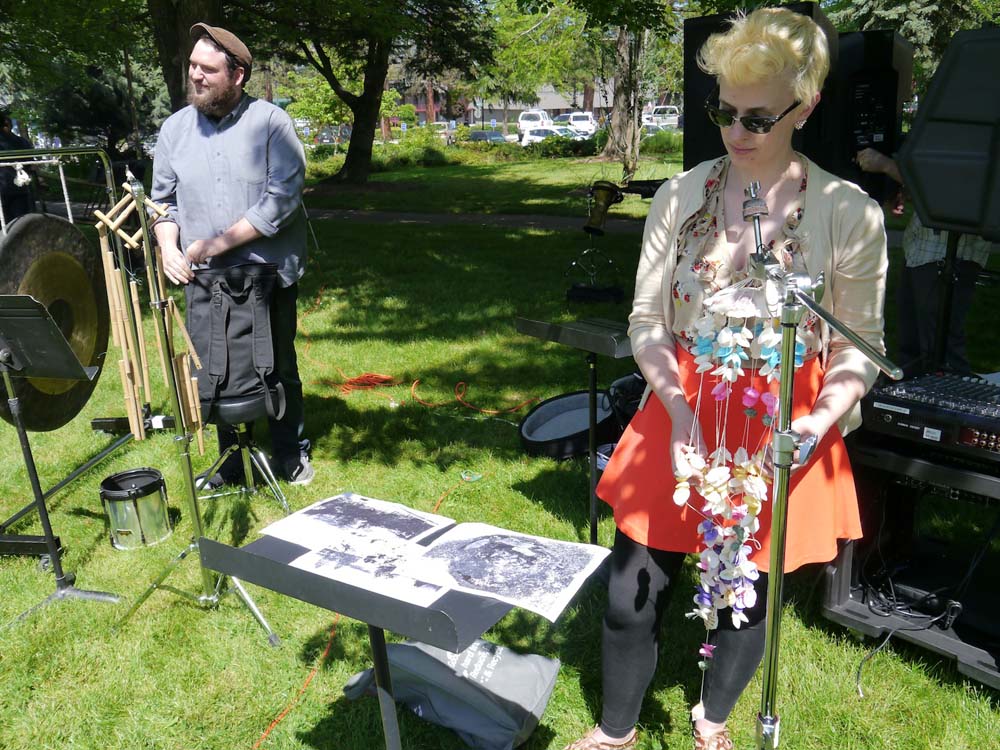
SOU Percussion Ensemble performing in park 2016

My new composition, Cascade, will be premiered by the amazing SOU Percussion Ensemble on May 17, 2016. Cascade is for three channel soundscape and percussion. The soundscape is made entirely from sound recordings made at the Cascade-Siskiyou National Monument; and the scores for the players are made from photographs of the Monument.

 The Musical Score and Percussion Instrument

view from Pilot Rock by Collin Malloy

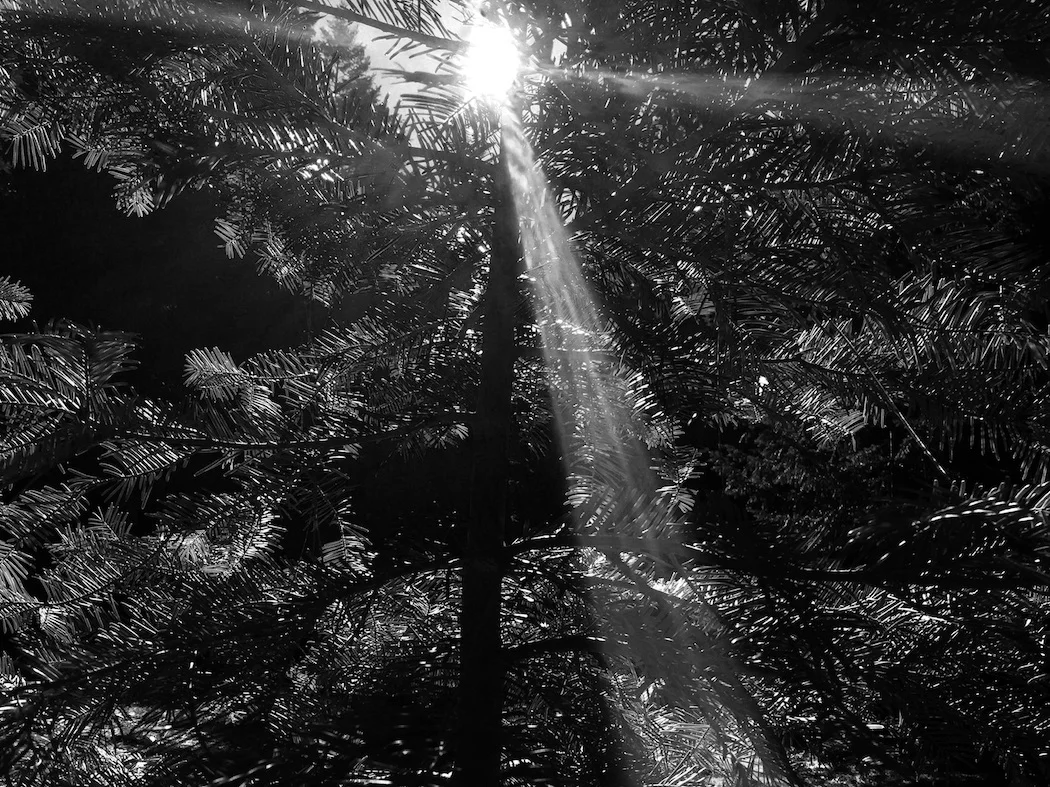
sunlight through trees by Collin Malloy

Colin Malloy, 2015 Grant Recipient, Friends Research Fund

This project was born out of a desire to create music reflective of my life and experience in southern Oregon. Cascade is a sonic exploration of the life and landscape that comprise the Cascade-Siskiyou National Monument and our relation to them. It also takes advantage of its outdoor performance space. The piece is set up in such a way that part of the performance is directed away from each audience member, no matter where they are. Thus each person’s experience will be unique and audience members are encouraged to move around to experience different vantage points.

Cascade is made possible by the generous support from the Friends of Cascade-Siskiyou National Monument, the SOU Percussion Ensemble, and Terry Longshore.

Colin Malloy, 2015 Grant Recipient, Friends Research Fund.

The performance will be on May 17 at 2pm on the lawn in front of Britt Hall on the SOU campus as a part of the Southern Oregon Arts & Research Conference. Read Colin’s field notes about his soundscape process.

_ _ _ _ _ _

Music and soundscape can inspire us to care for our national public lands. For several generations, hearing a few notes from the Grand Canyon Suite (1929-1931) by Ferde Grofe can evoke that dramatic landscape.

On July 29 and 30, 2016, Britt Orchestra members and Music Director Teddy Abrams will perform outdoors at Crater Lake National Park. This world premiere composition by Michael Gordon, is a part the Imagine Your Parks, celebrating the centennial of the National Parks, founded in 1916. Free performance.

Earth Day 2016 Recap

 Earth Day 2016 hike on Greensprings trail images by katie boehnlein © 2016
Earth Day 2016 hike on Greensprings trail images by katie boehnlein © 2016

Children eagerly stroked the animal pelts, bones, and feathers while studying with magnifying glasses. Several students exhibited high proficiency in recognizing the animals from which these originated. 
   Thanks to our Friends of CSNM volunteers who hosted our booth at Rogue Valley Earth Day on April 23, 2016! Parents and adults signed up for our Hike and Learn events, and joined our membership. Though the weather was chilly, breezy and intermittently sprinkling, it did not deter Earth Day enthusiasts this year!  Many folks requested maps and more information on hiking in the monument. 
   
We joined KS Wild to hike the Greensprings Mountain trail on April 24. Though the snowy weather discouraged most while approaching the monument, the hike was spectacular. 
   We saw lots of signs of spring life poking through the snow—flowering current, calypso orchids, blue dicks, snow queens, yellow and purple violets, larkspur, several varieties of yellow lomatium and trillium. Hikers watched clouds stunningly rise to reveal the green and purple hills of the Rogue Valley. 
   Following the scenic hike, hikers convened in the Greenspring Inn toasty warm yurt for a fabulous public lands video and talk by Dave Willis addressing the monument’s lands.

   — Susan Roudebush, Friends of CSNM Boardmember