Artist-in-Residence Shares Her Experience 

I served as Artist in Residence in Cascade Siskiyou National Monument during the last week of June, 2023. It was a glorious time, with spring flowers and new growth everywhere, and the weather was pleasant. The strongest impression I had, though, was that everything was green. Overwhelmingly green. 

             I live on Washington’s dry side where the predominate color is desiccated brown. There really aren’t many shades of brown: light brown, medium brown, dark brown, brown in sunlight, brown in shadow. And for most of the year, the occasional touches of green are faded, like the pale green of sagebrush. In contrast, green was not at all reticent at Cascade Siskiyou National Monument in June.

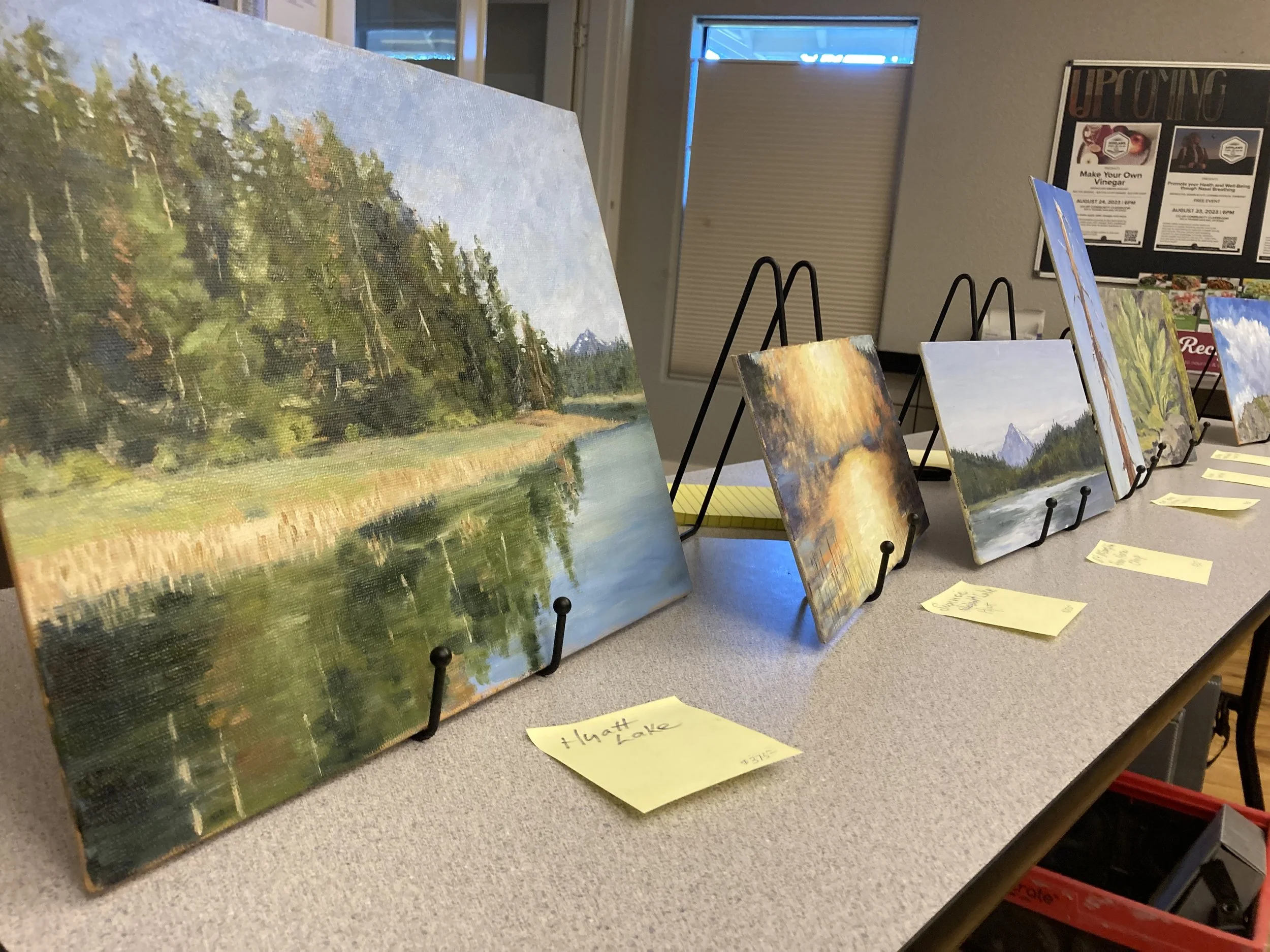
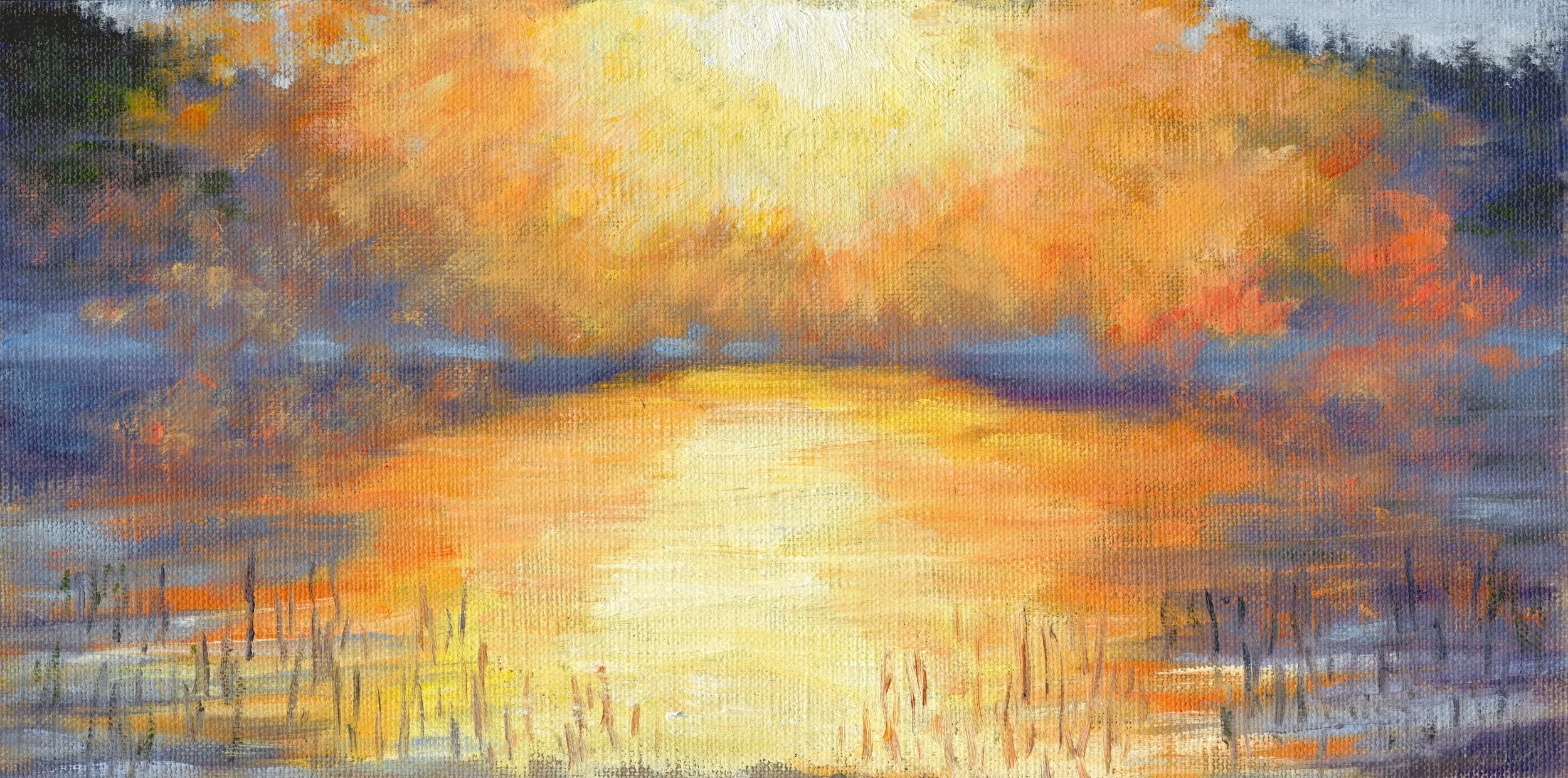
            Cascade Siskiyou has a full palette of greens. “50 Shades of Green” could have been the title for at least one of the paintings! I frequently work en plein air and try to replicate the feeling of a specific place. It’s challenging when everything is green because green comes in such an amazing variety: Pine tree green is not fir tree green; grass green is not moss green; dogwood tree green is not aspen tree green, along with random touches of contrasting burnt orange and russet. Furthermore, green is not easy to reproduce. Yellow plus blue is green, of course, but which yellow (bright cadmium, earthy yellow ochre) and which blue (sky blue cerulean or deep-water ultramarine)? Each combination produces a different range of tones. And any yellow-blue mixture must be moderated with its complement, a red hue, so it looks like it belongs in nature rather than in a coloring book.

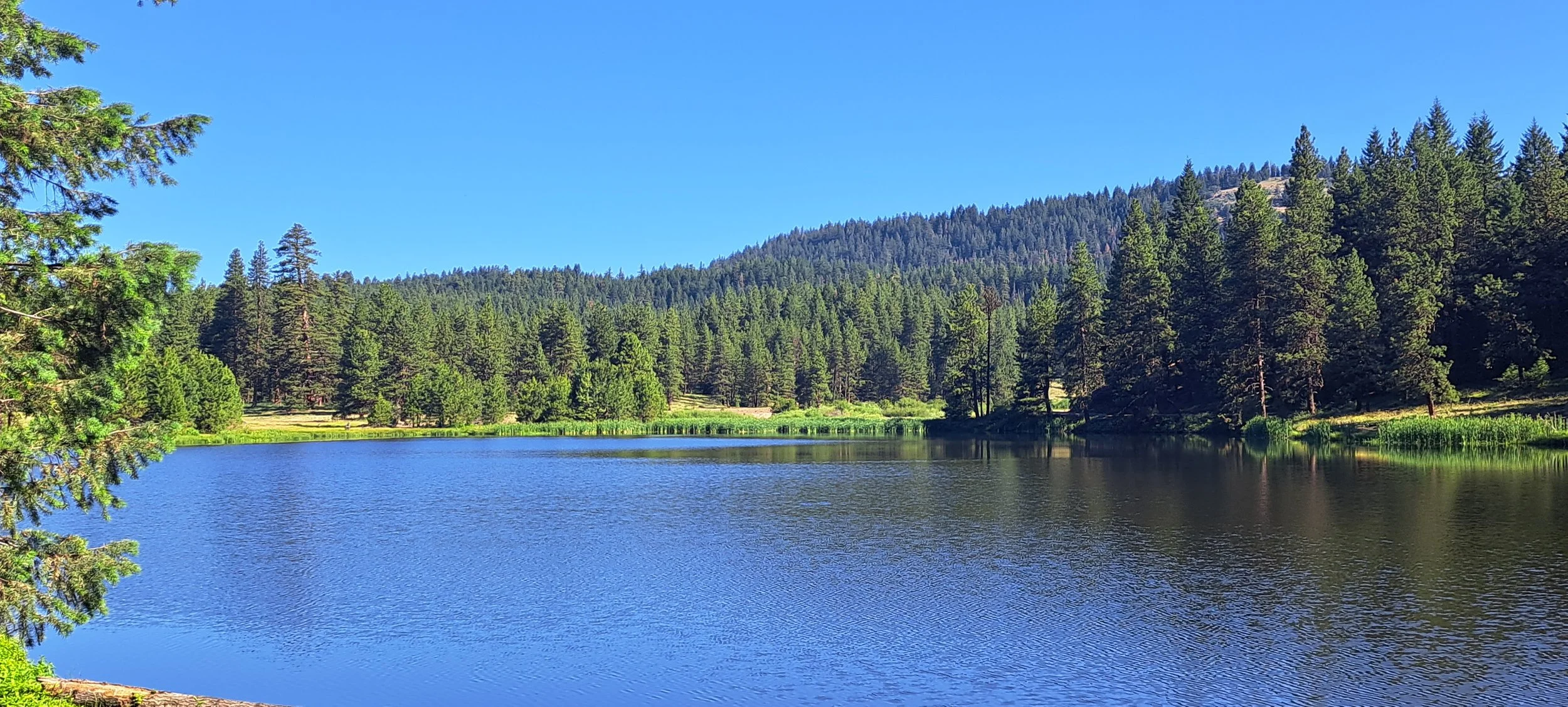
            So I spent my time in the Monument painting green in all its glory. I painted the variety of greens in the forest and in the reflections in Hyatt Lake, and I painted the delicate soft pale green of mullein and the chartreuse green of moss on a fence. There were more greens, lots more, reflecting the variety of plants and ecosystems in the Monument. I suppose the overwhelming green was, in part, a seasonal condition and that summer, fall, and winter would bring a different set of colors. And that will be a challenge for another Artist in Residence!

Words and paintings by Leslie Ann Hauer

2023 Nature Camp – An Unforgettable Season!

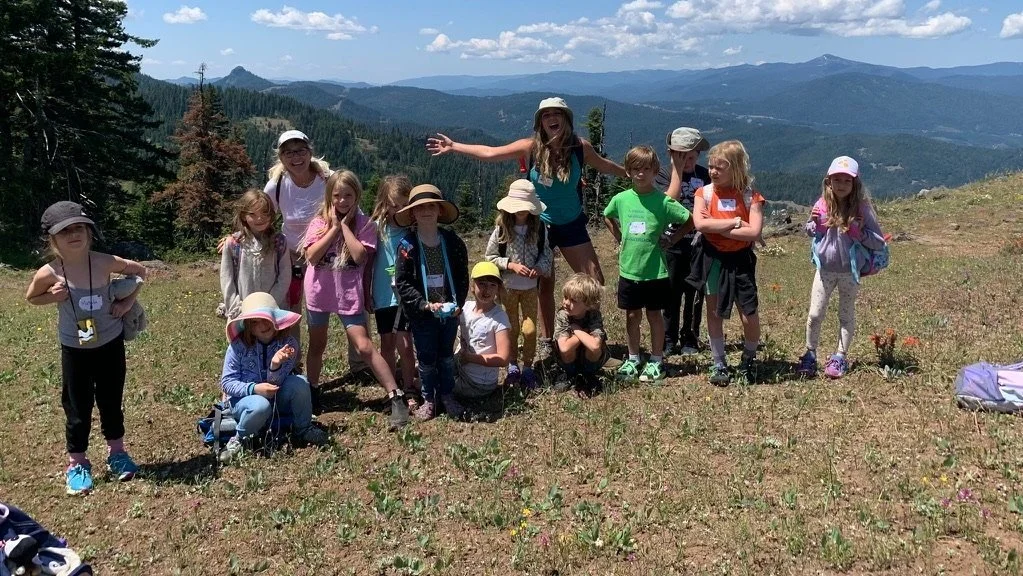
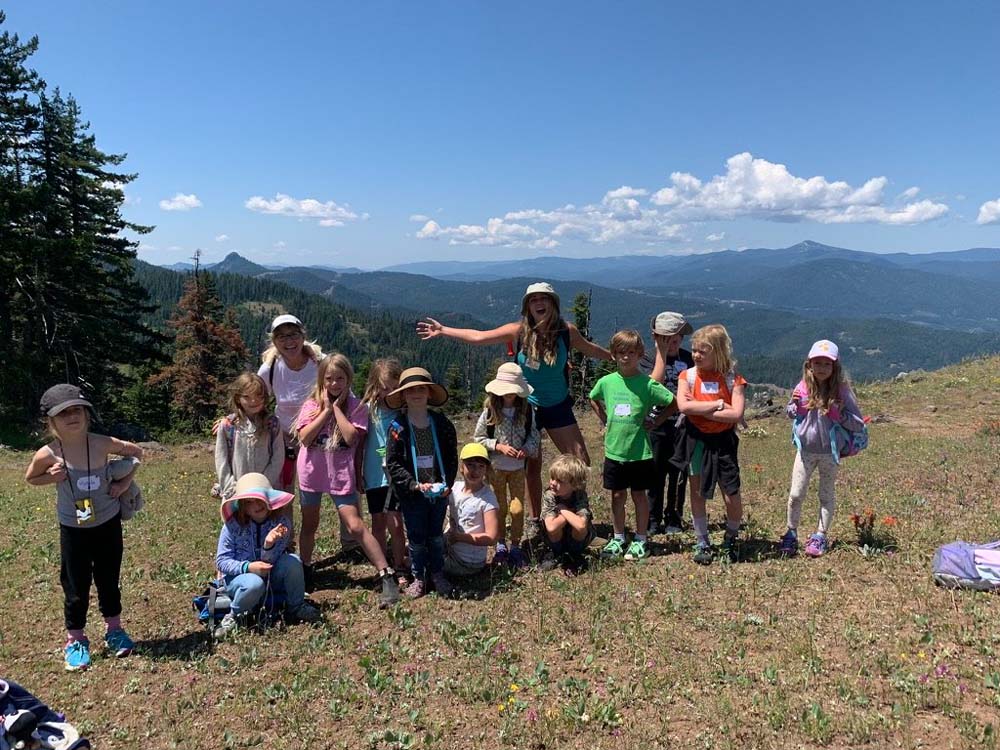
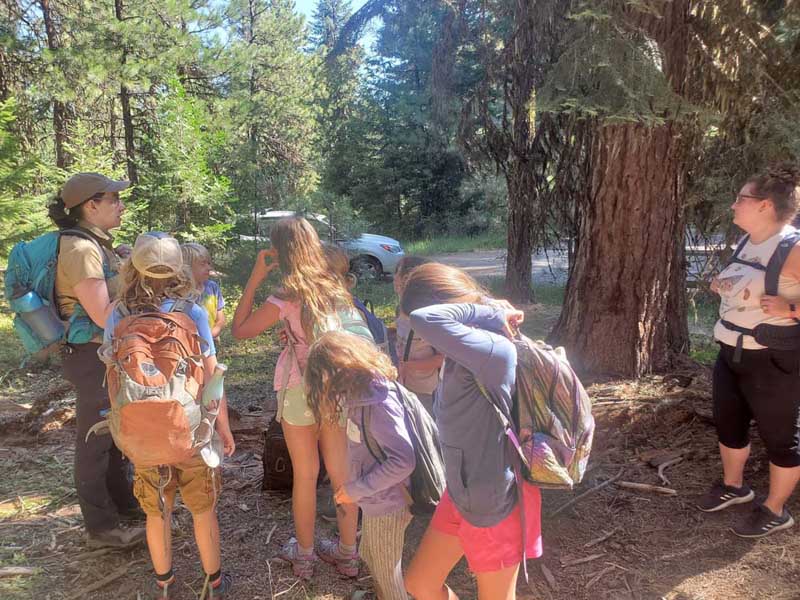
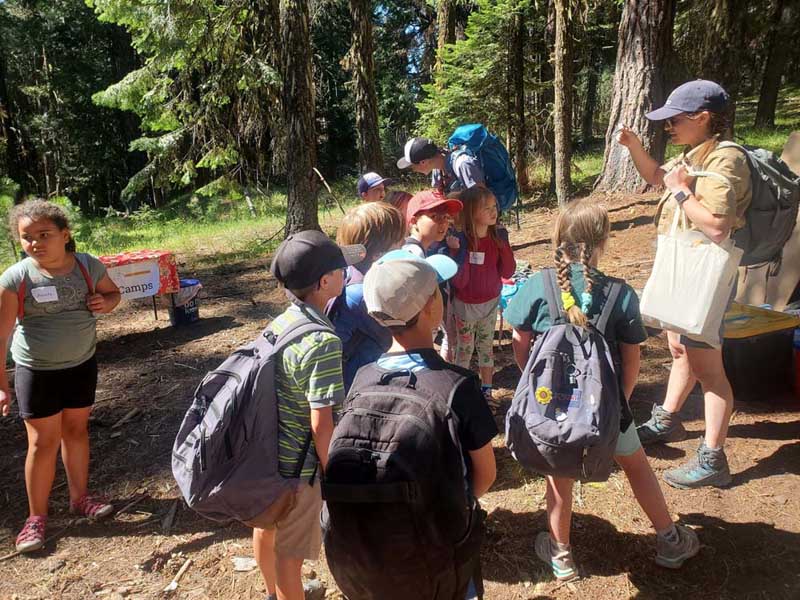
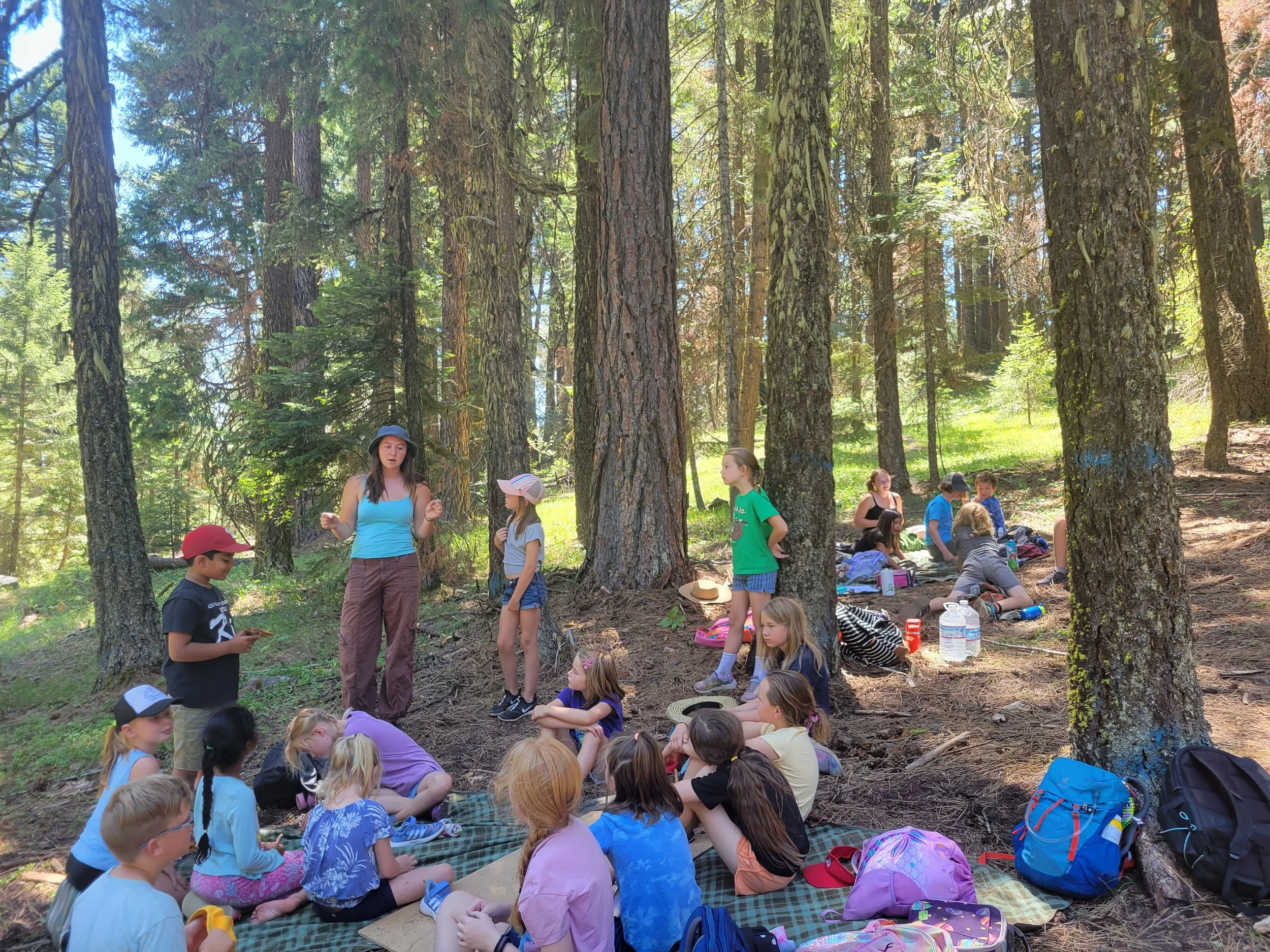
The 2023 Monument Days with The Crest’s Nature Day Camp have recently concluded an unforgettable season. The program spanned seven weeks and served about 150 students aged 5 to 12. These days provided the perfect backdrop for young explorers to forge connections with nature, engage in captivating discussions, and cultivate collaborative skills. Participants were not only immersed in the beauty of the outdoors but also had the opportunity to deepen their understanding of the environment through hands-on activities and educational sessions. The diverse range of age groups allowed for the exchange of unique perspectives. 

This program holds immense value as it enables children to spend more time in nature, fostering a lifelong appreciation for the world around them. The increased duration spent amidst natural surroundings has been correlated with enhanced physical and mental well-being, the nurturing of curiosity, and the fortification of critical thinking skills. As the children hiked through trails, observed local wildlife, and participated in interactive workshops, it helped them develop a sense of interconnectedness with the ecosystem while learning information that will be highly relevant to their futures.

Looking forward, we are eagerly anticipating an ongoing collaboration with The Crest, envisioning further growth and refinement to the program. Our goal is to continue inspiring and nurturing the next generation of nature enthusiasts and environmental stewards.

Learning About Water Rights at Little Hyatt Reservoir

By Meaghen O’Rourke

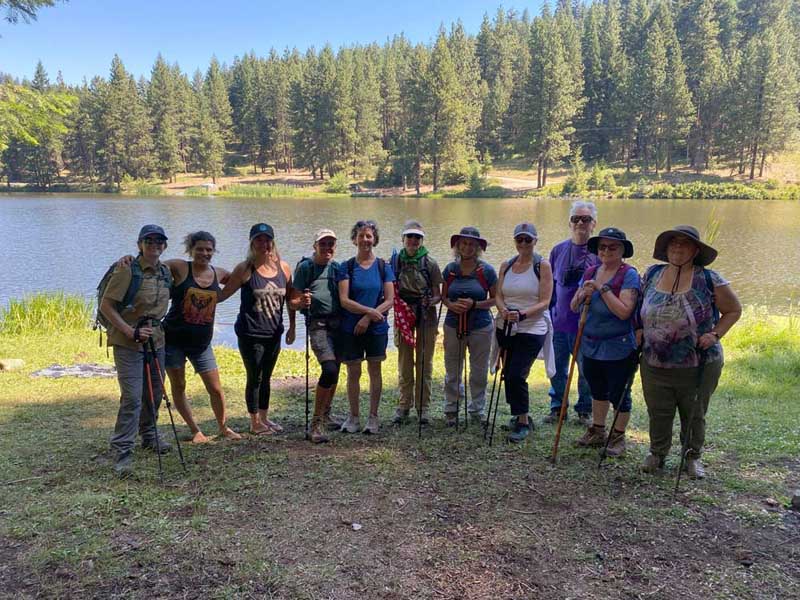
Last weekend, our adventure led us through the awe-inspiring landscape of the Cascade-Siskiyou National Monument. We set out to hike to peaceful Little Hyatt Reservoir, following a section of the iconic PCT. The journey began in a dense and secluded forest, where nature enveloped us in its beauty. As we ventured further along the trail, the trees gradually gave way to rays of sunlight cascading down to the forest floor.

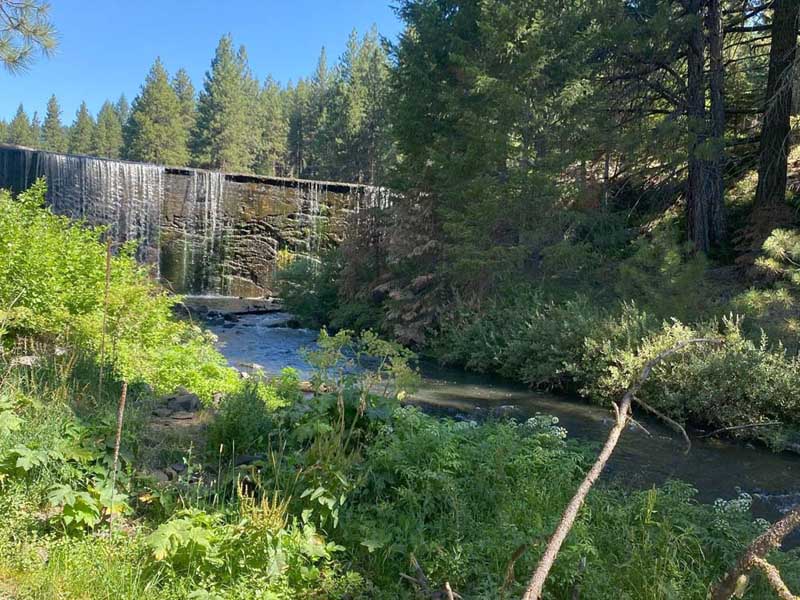
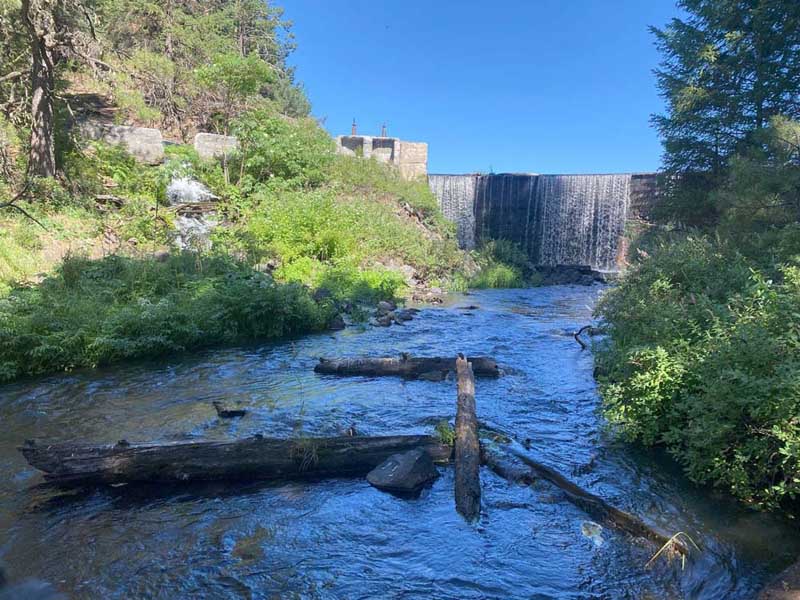
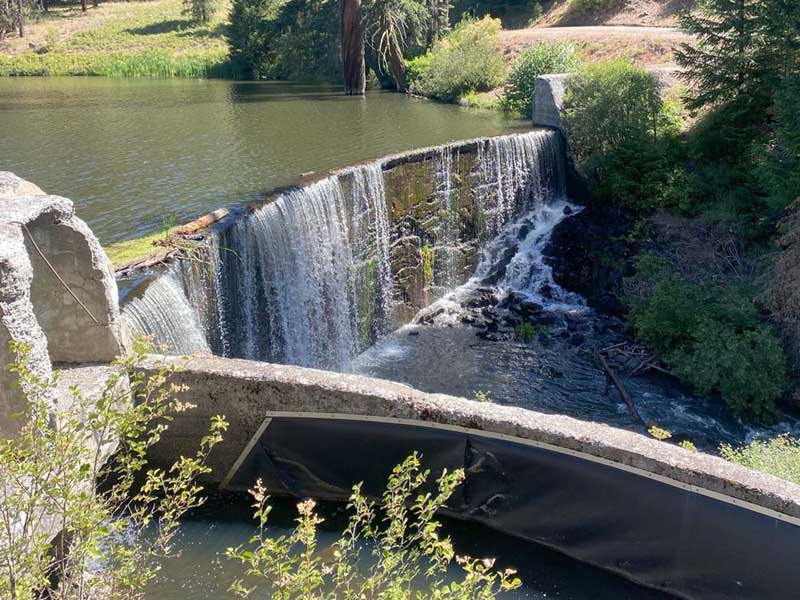
Approaching the trail’s end, the pleasant sound of rushing water reached our ears, beckoning us closer even before it came into view. Emerging from the forest’s embrace, we encountered a gravel road that led us towards an intriguing sight – a weathered and time-worn dark barrier. Atop this barrier, crystal clear water flowed gracefully, sparkling as it descended into the tranquil flow of Keene Creek.

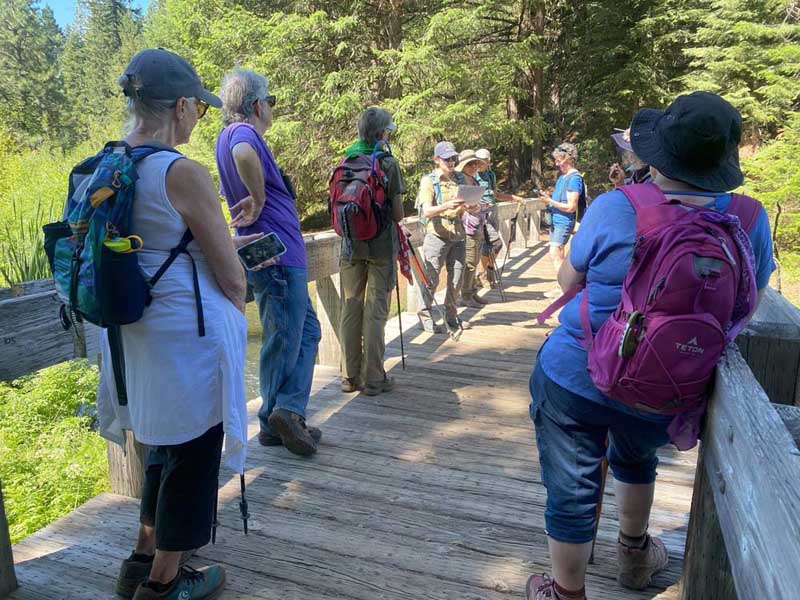
Little Hyatt Reservoir, the destination of our hike, holds a place in the region’s history of water rights and natural resource usage. As we gathered together, I transported the group back in time, sharing the history of the early 1900s and mid-1920s when irrigation districts in the area completed several water diversion and delivery systems. The complexity of water resources is evident in the presence of transbasin usage throughout this region. In 1923, the construction of Hyatt Reservoir in the Klamath Basin was completed, with the purpose of transferring water to users in the Rogue River Basin. Subsequently, Little Hyatt Reservoir became another addition to the system at a later time.

In 2003, the Bureau of Land Management (BLM) applied for water rights to Little Hyatt Reservoir, and by 2010, they had secured a recreational, aesthetic, and wildlife water right. As we discussed the acquisition of water rights, we examined the dam, observing large cracks spanning its length. Concerns had surfaced during a 1999 structural review about the dam’s stability, as it relied on the support of a deteriorating concrete canal. The KPFF Consulting Engineers recommended repairs to prevent potential dam failure.

A subsequent 2007 assessment confirmed the dam’s precarious state, mirroring the 1999 report’s findings. By 2010, the BLM made the decision to buttress the dam as the primary option, with a contingency plan of partially removing the dam by lowering it to about 6 feet. However, the implementation of repair options depended on securing the necessary funds.

Taking a moment to absorb all this information and gaze at the old structure, we stood in contemplation. The reservoir had transformed into a captivating case study, showcasing the intricate complexities of water rights and usage. Yet, there was more to explore. To gain a vantage point above the dam, we had to navigate over old concrete slabs and clamber up a small rock face, a challenging endeavor. Undeterred, the adventurous group bravely embraced the task, and our efforts were richly rewarded with a breathtaking view of the reservoir from above.

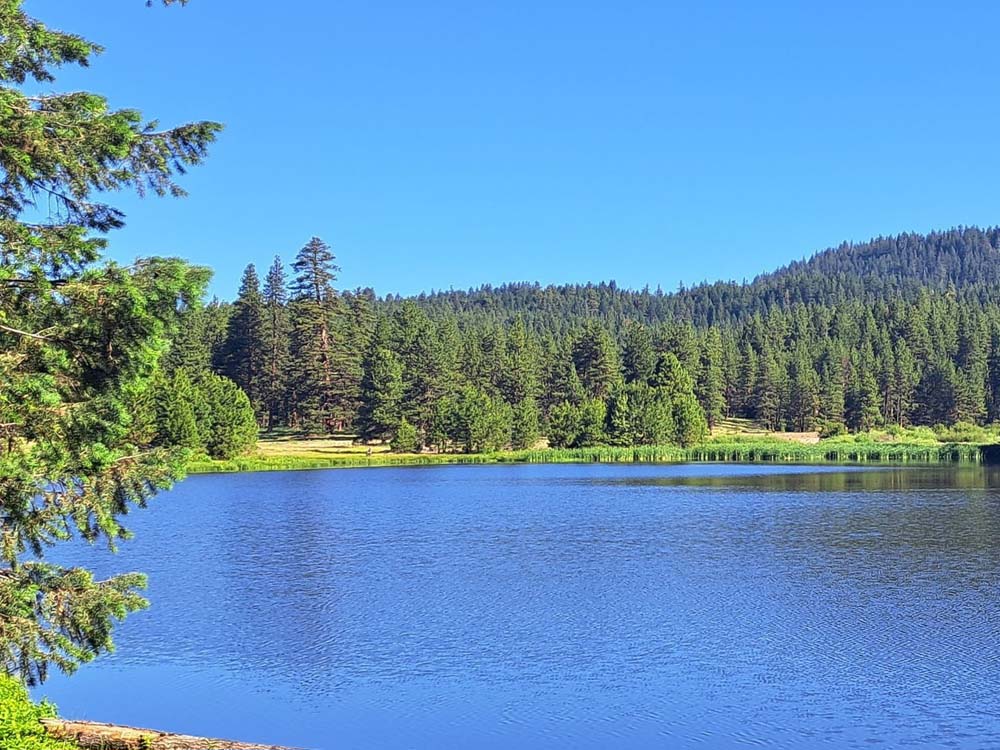
Sitting amidst the serene beauty of the water and the lush forested surroundings, the day exuded tranquility. Reflecting on the reservoir’s history and contemplating its future added an extra layer of meaning to the experience, making it all the more gratifying. Our hike to Little Hyatt Reservoir was both relaxing and informative as we examined the intricate relationship between the natural world and human needs.

Partnering with Beavers

As a resident of Oregon, I had always taken beavers for granted. Oregon is the “Beaver State” after all. I thought they were like elk or black bears, present in the Monument but secretive. So it was to my surprise when, at the Beavers in the Monument Friday Night Talk, I learned that there are only two known populations in the entire 114,000 acre Cascade-Siskiyou National Monument. This fact on its own is shocking. However, as Jakob Shockey, Executive Director of Project Beaver and leader of July’s Hike and Learn, explained their historic prevalence on the landscape, their absence became even more disquieting. 

Beavers were once the engineers of much of our landscapes in the Northern Hemisphere. They dammed streams and rivers to create wetlands areas where they were protected from predators and their foods of choice (willow, aquatic plants, etc.) grew abundantly. But it wasn’t only the beavers benefitting. Through thousands of years of coevolution, entire ecosystems grew reliant on these riparian areas. Yet that all changed with the arrival of the European colonists to North America. It didn’t take long for economic demand for beaver pelts to result in unmitigated trapping and removal of them from the environment. 

Over time, without their stalwart creators maintaining them, those precious wetlands began to drain and shrink. No longer was water being spread across meadows by beaver dams. Instead, it began carving a path through the ground as it raced toward the ocean. These are the incised streams we are used to seeing today. 

It is not a mystery that healthy riparian habitat is crucial to water quality and ecosystem resiliency. Every year, millions of dollars are poured into improving this habitat through human intervention. Jakob, however, pointed out an obvious strategy that is often overlooked: Reestablishing beavers. Not only do beavers work for free, they also do a better job at it than people ever could. While a person might check on a restoration site a couple times a year after completion, the beaver is out every single day caulking holes, digging canals, and moving vegetation. Juvenile fish find protection in their wetlands and adults are not stymied by their dams. As the saying goes “Beavers taught salmon to jump!” 

While reintroducing beavers might seem like a perfect solution, humans have long had a complicated relationship with these aquatic mammals, one that has been fraught with misunderstandings. It seemed that every person in attendance on Friday had a question or myth about beavers that they wanted debunked. In fact, the law itself in Oregon perpetuated one of these myths by categorizing beavers as predators until only recently with the passage of Representative Pam Marsh’s Beaver Believer Bill. The new law, once signed by Governor Kotek, will categorize them as furbearers, with the same protection as racoons or foxes. 

After stressing the importance of beavers and their precarious position, Jakob introduced Project Beaver’s new partnership with the Cascade-Siskiyou National Monument. Working with Bureau of Land Management (BLM) and area ecologists, Project Beaver mapped the waterways of the Monument and determined areas of “high intrinsic potential habitat” for beavers. This is where the Friends of the Cascade-Siskiyou National Monument and volunteers come in. At the end of the Friday lecture, after we were all fully convinced of the essential function of beavers, Jakob introduced a new initiative to survey and monitor the waterways using citizen science. 

On Saturday morning, a group of enthusiastic volunteers came armed with two new apps: Avenza (with a map of potential beaver habitat) and ArcGIS Survey123. Once we were done with the obligatory tech support, we took a convoy up to Friedenberg Springs. Friedenberg Springs is a special area in the Cascade-Siskiyou National Monument where Jenny Creek flows through what was a historic beaver meadow. It is also the site of many Beaver Dam Analogues (BDAs) installed last fall by Project Beaver and the BLM. Our expedition that day had two goals: To learn how to collect and report data using the Survey123 form and to check on the potential presence of beavers. 

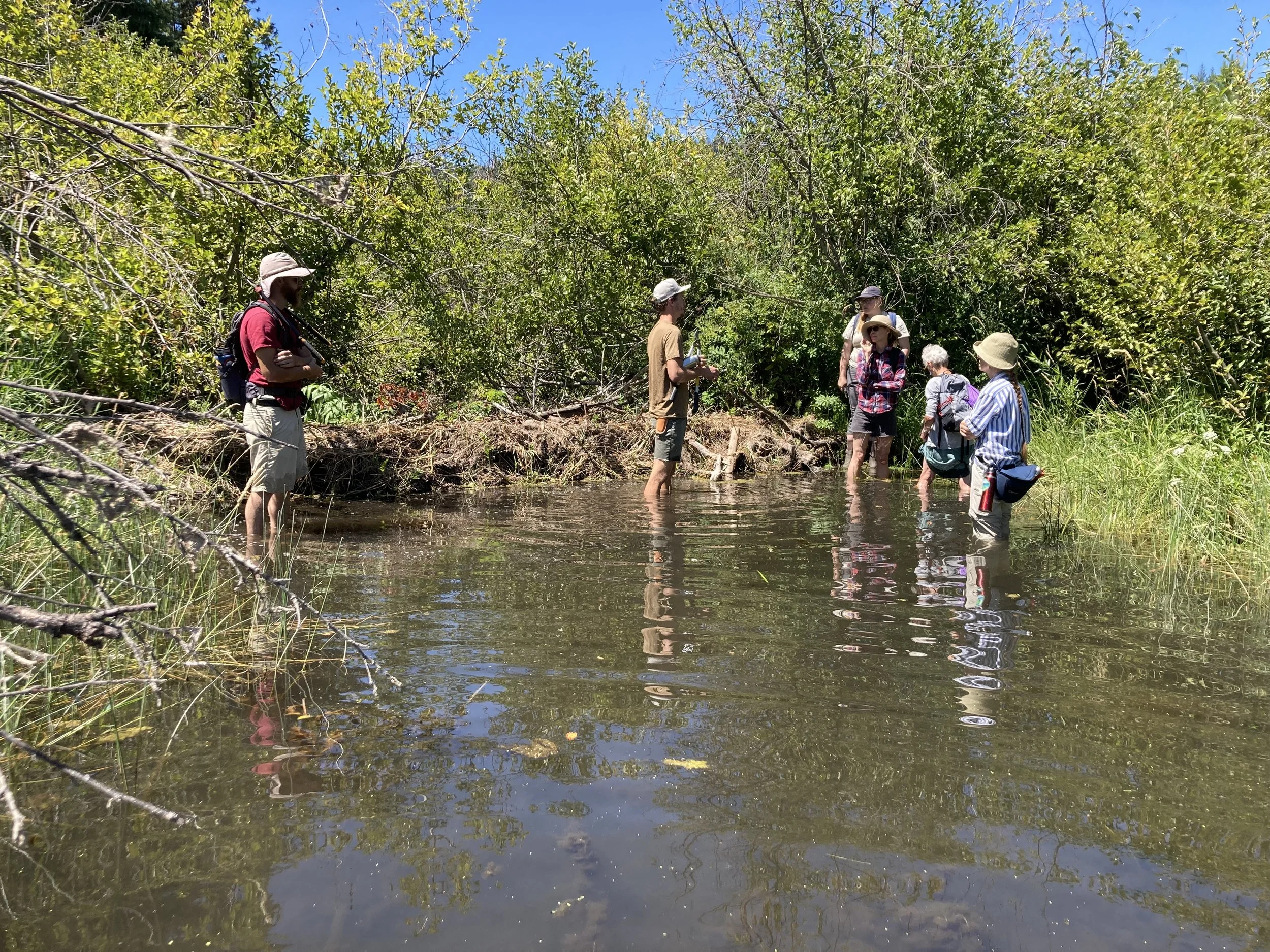
As we waded down into the creek –blissfully cool on that hot July day– we stood amongst the willows as Jakob showed us how to identify beaver sticks. What for many people would look like an unassuming stick resting on the creek bed took on new meaning as we noticed the scraped lines of a beaver’s teeth on the ends and the patches of stripped bark and cambium. There was noticeable excitement amongst the group as we realized we may be in the vicinity of these elusive rodents. 

Splitting up into small groups, we journeyed down the creek. Along our way we used loppers and hand pruners to cut down willows and plant their stakes along the bank so they could propagate and provide further food and habitat. Like finding easter eggs, we exclaimed in delight as beaver sticks were found and logged in the app. The ultimate goal, however, was to find the beaver dam that Jakob had spoken about where he had confirmed beaver activity a couple months before. We had some false starts as we mistakenly identified BDAs as actual dams. But soon the density of the beaver sticks began to increase and chutes and canals became visible along the bank. We knew we were close. Then, we saw it. 

Unlike the previous BDAs, this dam was covered in plant matter, additional sticks, and caulked with mud and rocks. Since the dam was originally a BDA the beavers had improved upon, you could still see the posts sticking out along the top. However, the joy was short lived as Jakob informed us that the dam was no longer being maintained since he had last been there. The beavers were gone. It is possible that the beavers simply went on a “summer vacation,” an observed phenomenon where beavers will explore other waterways during the summer months, perhaps looking for a different site to settle down. Yet a more ominous possibility hung over us; That they had been trapped. 

There are no rules against trapping in the Monument, and if a person does trap a beaver they do not have to report that they did. The beaver simply disappears. This poses a serious challenge to bringing them back into the landscape. 

While this disappointment hung heavy in the hearts of all the staff and volunteers, it also brought a sense of urgency and enthusiasm. What other beaver populations might exist within the Monument that we don’t know about? With better monitoring, we might be able to get a more accurate idea of where beavers are moving and why. Even as we sat down for lunch after removing our wet shoes, the air was thick with questions. The waterways highlighted in neon green on the map were both a mystery and cautious reassurance. We couldn’t wait to get back out there. 

Please stay tuned for volunteer opportunities for beaver monitoring and riparian restoration within the Cascade-Siskiyou National Monument. We will be announcing further dates on our website and through our newsletter. 

2023 Nature Camp Continues at Greensprings Loop Trail!

Monument Days with The Crest’s Nature Day Camp have moved to Greensprings Mountain Loop Trail! Our Summer Interpretive Rangers, Meaghen O’Rourke and Christina Gilbert, hosted their first amazing group of campers at this scenic and lushly-forested trail on July 19, 2023.

The younger students, aged 6 to 8, known as the “turtles” took a short hike to a viewpoint overlooking the valley below. While hiking they practiced “zooming in and zooming out,” by playing games that encouraged their curiosity and practiced their skills for closely examining their environment. The kids learned how to identify pinecones, examined what makes up a lichen, and compared the shapes of different types of bird feathers. Sometimes the best hikes are the ones where you don’t go very far from the trailhead!

The older students, aged 9 to 11, went on a more adventurous hike around the entire loop trail. They examined the many different types of trees that can be found on this trail, and enjoyed the many vistas. They also had some exciting animal encounters where they got to observe a ribbon snake and several lizards basking in the sun.

At the end of the day, we all gathered together to share stories and play more games. It was a wonderful ending to an educational and fun day.

2023 Nature Camp Kicks Off

Nestled within the lush surroundings of the CSNM, the first Monument Day of The Crest’s Nature Day Camp unfolded on the picture-perfect day of June 28, 2023. As the kids arrived by bus, their excitement was palpable; they were ready to embark on an adventure filled with exploration and discovery. The group, known as the “foxes,” consisting of kids aged 6-11 years, gathered together to begin their journey to Hobart Bluff with the Friends’ Interpretive Rangers.

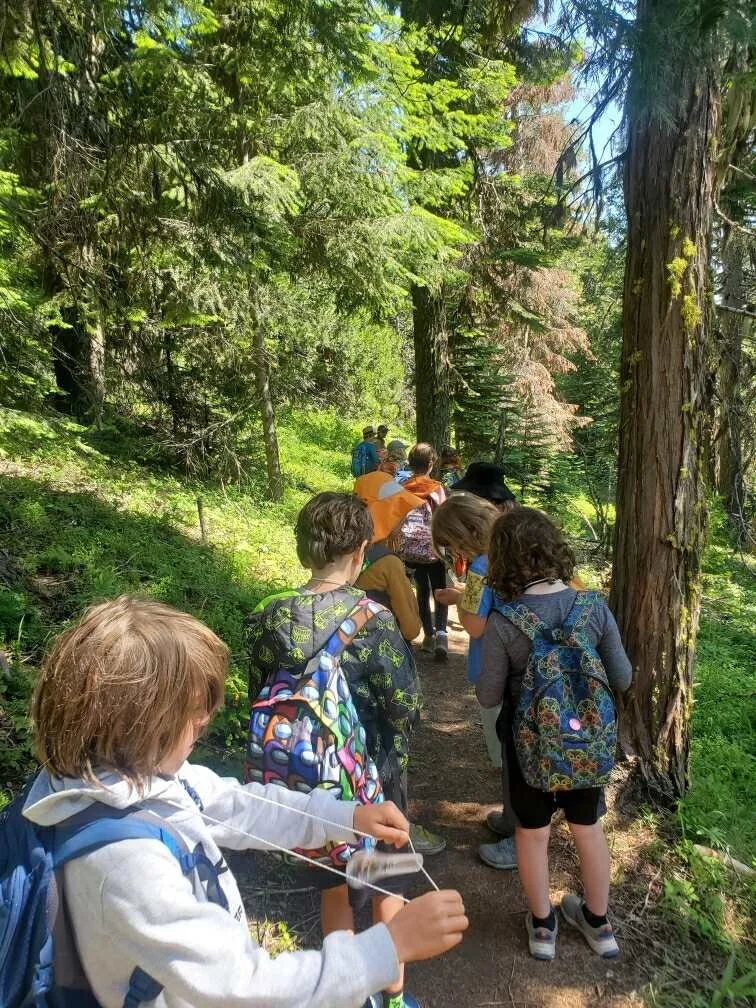
While on the trail, the kids were encouraged to contemplate the concept of an ecosystem. With their curious minds at work, they shared insightful answers, demonstrating their understanding of the intricate relationships between living organisms and their environment. As the group traversed the trail, the kids observed various elements that corroborated their initial responses, reinforcing their comprehension of how ecosystems function.

In addition to becoming familiar with the concept of a healthy ecosystem, the kids learned the potential impacts that can disrupt an ecosystem’s delicate balance including how human activities and natural occurrences can influence the overall well-being of an ecosystem. By understanding the significance of maintaining ecosystem health, these young explorers developed a greater appreciation for their role as stewards of the environment.

At the first viewpoint along the trail, the kids practiced a “sit spot”, an exercise that fosters a deeper connection with nature. They found a comfortable spot and quietly observed their surroundings. They absorbed the sights and sounds of the Monument’s biodiversity, and captured their experiences and emotions in their personal journals.

As the educational hike drew to a close, the kids returned from their immersive adventure, brimming with newfound knowledge and excitement. The hike had not only provided them with a chance to explore the landscapes of the Monument, but also ignited a sense of wonder and curiosity within them. Our hope is that experiences such as this one will broaden the children’s understanding of and foster a love for the natural world, contributing to a generation of environmentally-conscious individuals. 

The Nature Camp Monument Days that we run in partnership with The Crest will continue for eight weeks, during which our Summer Interpretive Rangers, Meaghen O’Rourke and Christina Gilbert, will lead all-day educational adventures in the Monument for 6-11 year olds. If you want to sign your child up for Nature Day Camp, visit The Crest’s website at https://thecrestatwillowwitt.org/programs/summer-camps/nature-day-camps/.

Artist-in-Residence Reception

When you’re up in the Monument, do you ever wish that you could capture a moment perfectly? Not just with your phone, where the greens don’t seem as vibrant and blue sky lacks a certain brilliance contrasted with a rolling cumulus cloud. Perhaps you want to freeze an emotion that floods over you as you look across the landscape swaying gently in a warm breeze, the almost invisible birds and insects flitting between the boughs and blades of grass. Even though the technology in our pockets always seems to be improving, it more often than not lacks the vividness of life. This is where artists come in. 

Every year, the Bureau of Land Management (BLM) selects artists for a one to two week stay in the Monument. During this time, the artists dedicate themselves to capturing the natural beauty of the landscape, its biodiversity, and unique character. Not only do they donate a digital copy of one of their pieces to the BLM, but they also participate in a reception hosted by Friends of the Cascade-Siskiyou National Monument. It was at this reception that we got to meet this year’s artists in person. 

Leslie Ann Hauer, who is from the east side of Washington State, set up her gorgeous oil paintings along a table. While she has no formal art training, you wouldn’t be able to tell. Her paintings all captured a snapshot of the Monument in colorful detail. From a gorgeous landscape at Hyatt Lake –with “50 shades of green”– to a detailed study of a mossy fence post, you truly felt as though her subjects came alive. 

Nisty Tharp, a native of Colorado who currently resides in Utah, worked primarily in acrylic paint and markers. She represented the Monument and its wildlife in punchy colors that evoked the vitality of its biodiversity. An art teacher by profession, Nisty spoke about her process and also the challenges of working on unconventional materials such as pieces of local pine wood. 

It was great to see so many beautiful pieces and we look forward to experiencing what next year’s artists create. 

We would like to thank Leslie and Nisty for donating 20% of their sales at the reception to FCSNM. To learn more about the artists and explore more of their work, please visit their websites: 

Nisty Tharp: https://www.nistyartwork.com/

Leslie Ann Hauer: https://hauerart.com/

Sunday Hike at Horseshoe Ranch Wildlife Area

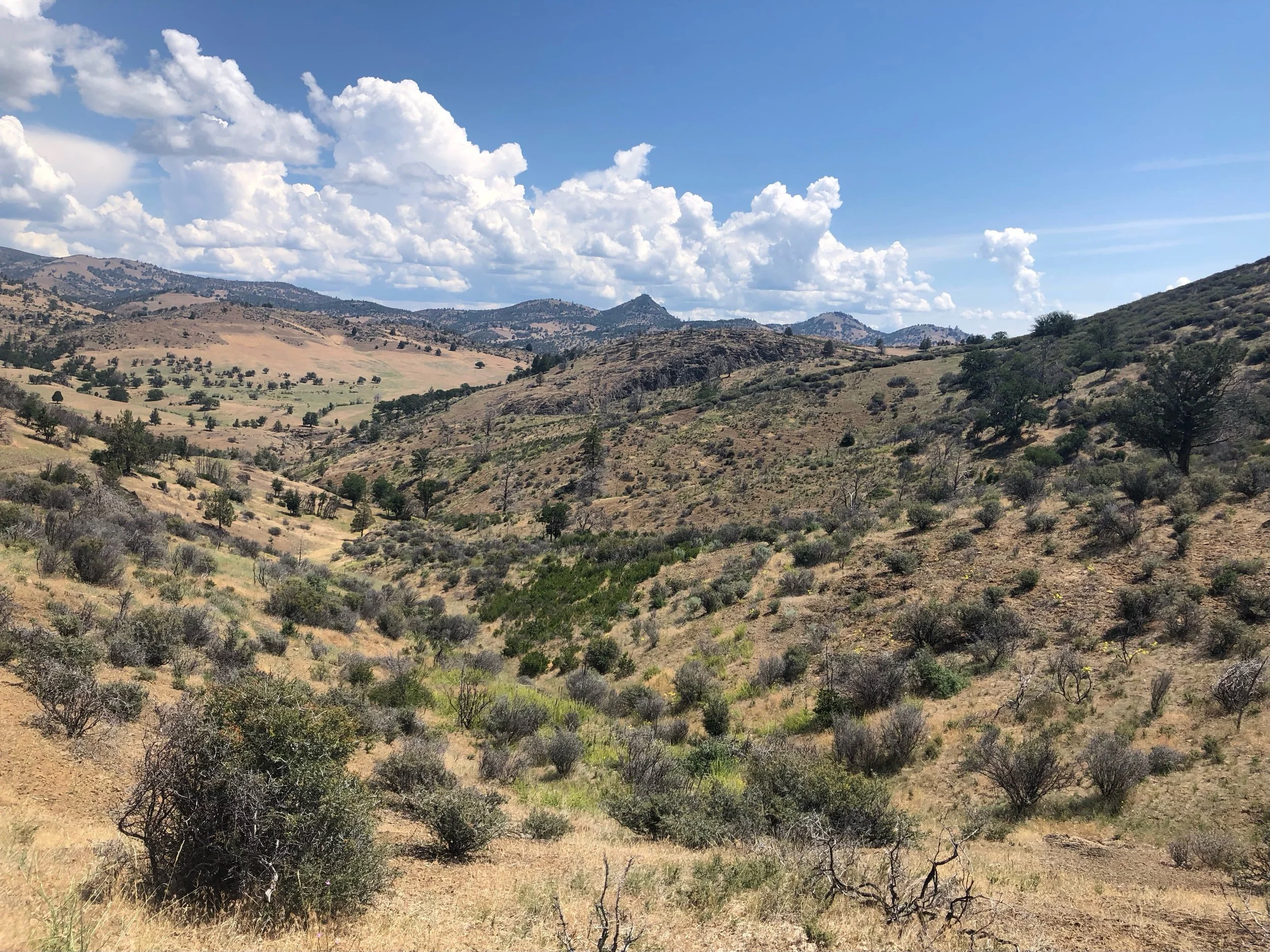
Horseshoe Ranch, formerly a working Cattle Ranch spanning from 1908 to 1970, underwent a transformation in 1977 when it was converted into a wildlife area by California Fish and Game. Recognizing its significance for biodiversity and maintaining habitat connectivity, the Ranch was incorporated into the Cascade-Siskiyou National Monument in 2017. The hike through Horseshoe Ranch Wildlife Area offers a captivating experience, showcasing remnants of the ranching industry amidst rolling hills adorned with native vegetation and abundant wildlife.

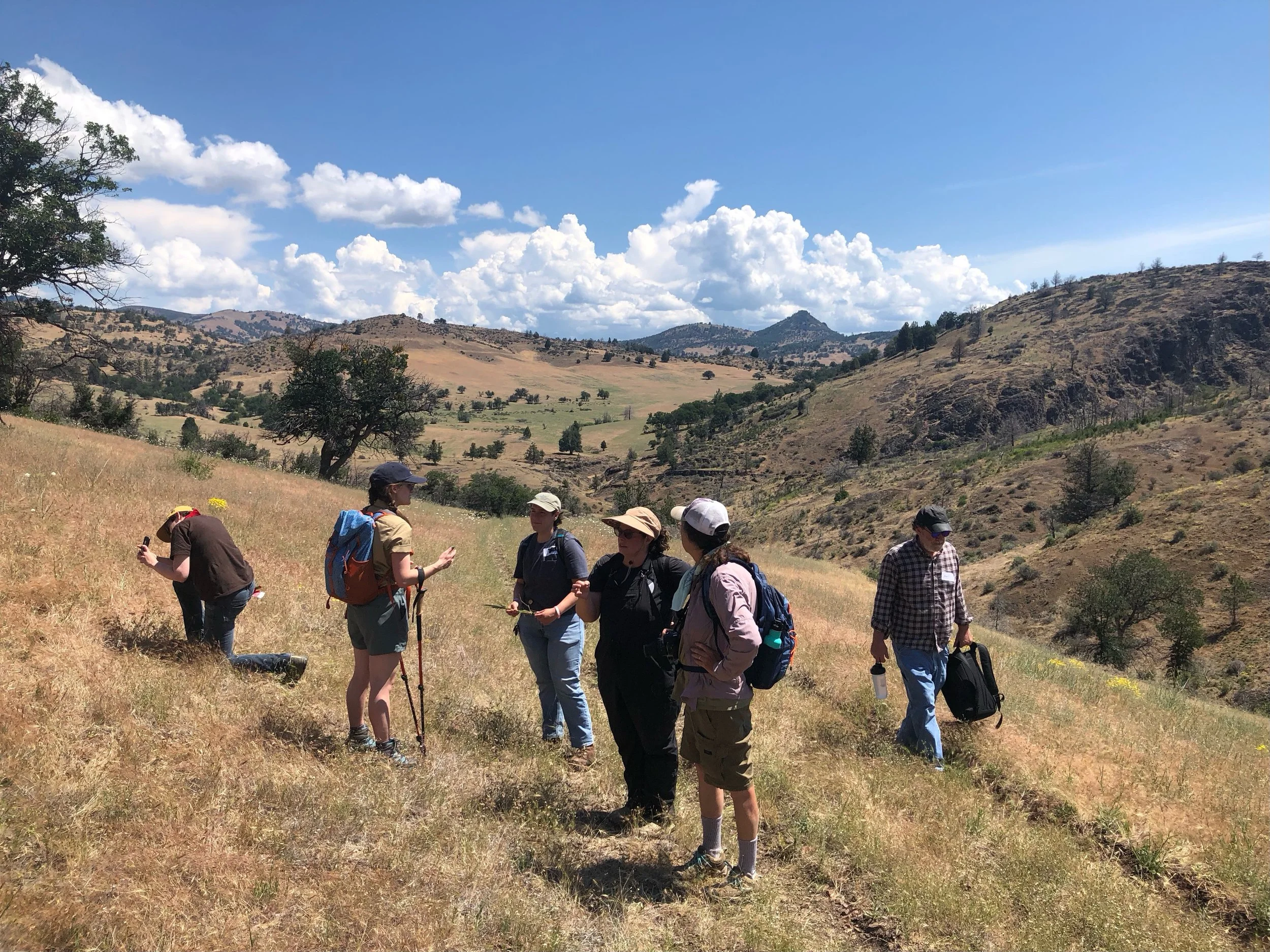
As we embarked on the trail, we encountered native plants and nesting birds, witnessing the resilience of the ecosystem in the fire-scarred trees. Heather Stewart-Ahn, a Master’s student in biology at Eastern Washington University and a 2022 Friends Research Fund recipient, co-lead our hike. Heather has been studying an extremely rare, vividly red lichen, Umbilicaria phaea var. coccinea, found in the Monument. Heather showed us a population of Umbilicaria phaea var. coccinea and we explored the micro ecosystem of the red lichens clinging to the basalt and learned about their structure, reproduction, and vulnerabilities. To hear more about Heather’s research, check out her presentation at our 2023 Monument Research Symposium HERE

Continuing our trek, we came upon a crumbling ranch spring house. Nestled near Scotch Creek enveloped by grasses and wildflowers, with Pilot Rock proudly standing in the Oregonian backdrop, its metal roof glinted in the sunlight. There were many bird species around, one of which was the Killdeer whose nests they guarded along the rocky creekside.

Ascending the old fire road, we hoped to glimpse the expansive grasslands beyond Scotch Creek, frequented by feral horses whose impact on the riparian area was evident, eroding the creekside. Despite reaching the hilltop, the horses eluded our sight, perhaps avoiding the hot sunlight. On a level stretch of terrain, an exclamation redirected our attention. Swiftly grabbing binoculars, we witnessed small specks in the distance swiftly moving – the feral horses were there taking advantage of the area’s nourishing grasses and riparian areas.

Throughout our hike in the Horseshoe Ranch Wildlife Area, we encountered remnants of a bygone era, witnessed the preciousness of rare lichens, and marveled at the resilience of nature. Whether you’re a nature enthusiast, a history buff, or simply seeking a rejuvenating outdoor activity, exploring this wildlife area within the Monument promises a rewarding and memorable hiking experience.

2nd Annual CSNM Painting Days

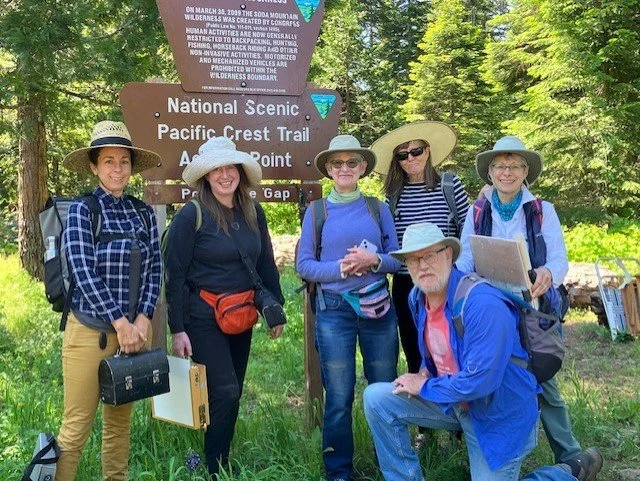
The 2nd Annual CSNM Painting Days took place June 15, 16, & 17, 2023. The group of experienced artists returned to Babbitt Saddle, just east of Pilot Rock, and to the high point above the Hobart Bluff trailhead to take in the amazing array of wildflowers, grand vistas, and engaging rock and tree formations. They also made a visit to Hobart Lake and to a location in the Siskiyou Mountains outside of the Monument near the campground on Mt. Ashland. 

They painted images in the Cascade-Siskiyou National Monument to share the natural qualities of these unique wildlands and to call attention to the way they benefit society whether you visit them or not. Wildlands contribute to clean air and water, and provide habitat for a wide range of life forms whose very existence supports our own. 

The painters Midge Black (midgeblack.com), Sarah Burns (sarahfburns.com), Erik Sandgren (eriksandgren.com), Kathryn Cotnoir (artshine.org/artist/kathryn-cotnoir/), Desmond Seratorre (desmondserratore.com), Howard Hunter, and organizer Katy Cauker were joined this year by Mary Hills and Nicole Pizziconi. All of the artists strive to paint steadily throughout the year and most have websites with work available for viewing pleasure and purchase. 

Event Leader – Katy Cauker: Draw  Paint Print, www.kcgallery6.com

Words by Katy Cauker.