Author: Friends of Cascade-Siskiyou National Monument

Thank you SOU Laboratory of Archeology for recent Hike & Learn

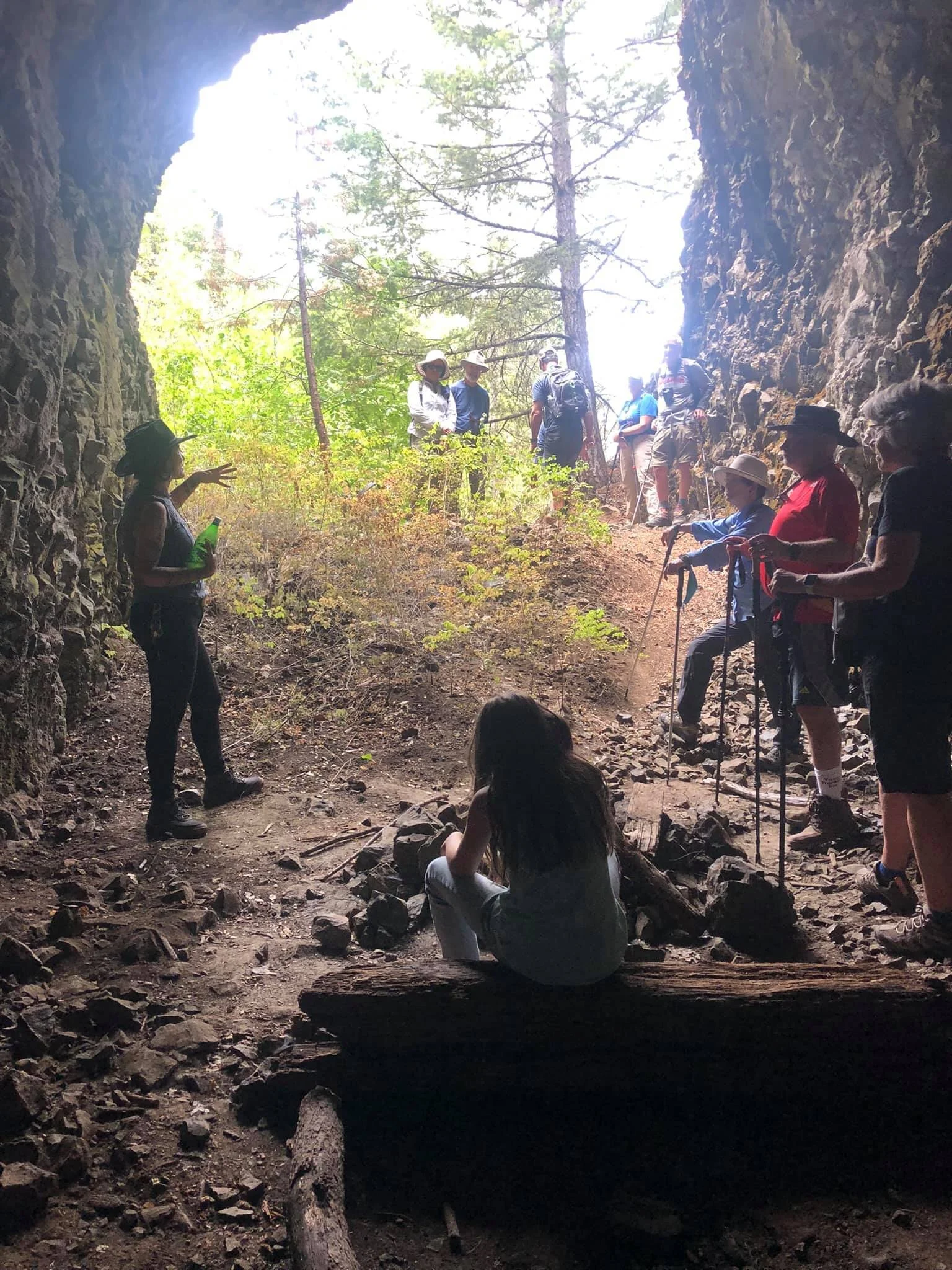
We wish to thank Professor Chelsea Rose of SOU, her great volunteers, the BLM Archeologist Lisa Rice and BLM Rangers and Friends of the Monument Rangers for helping sixty friends make the 5 mile hike to Buck Tunnel with informational tables and displays along the way! We had a terrific lecture on Thursday evening and hike on Saturday.

Thank you partners and volunteers!

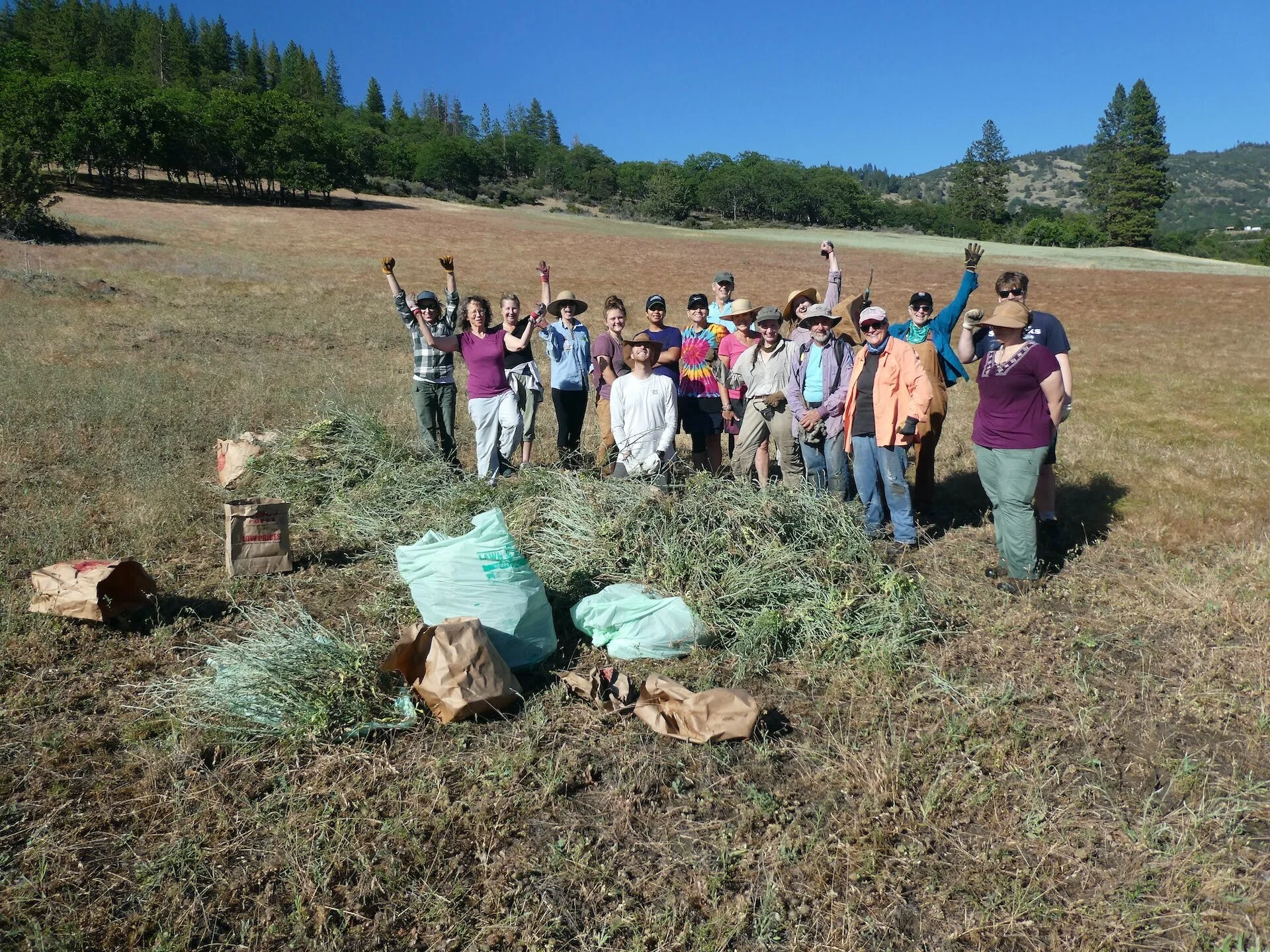
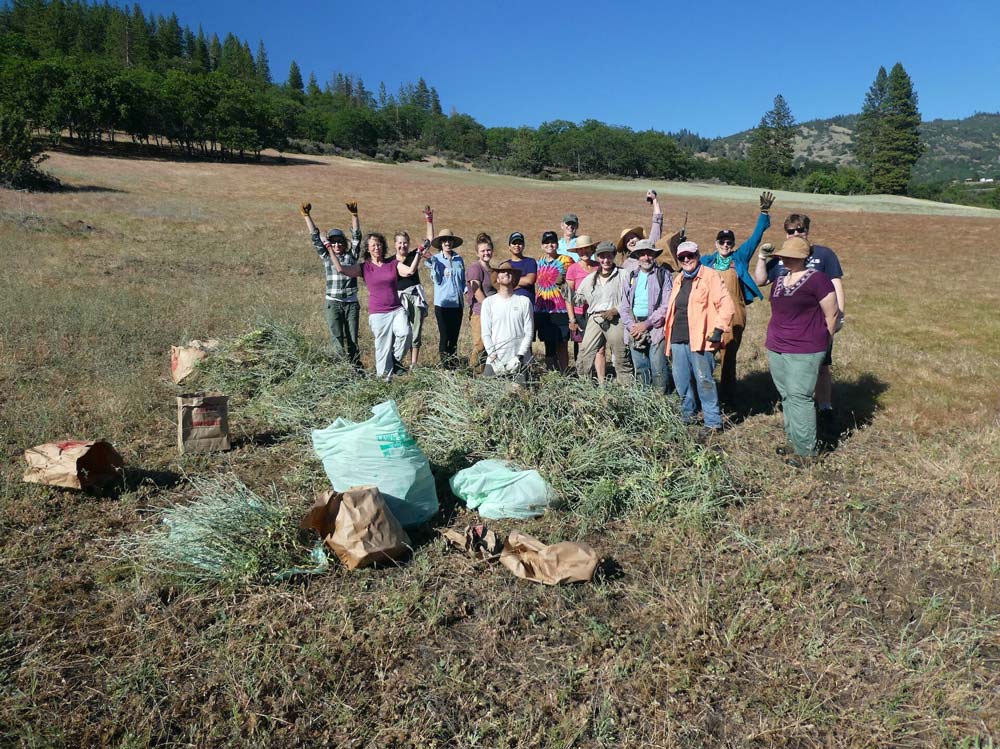
Thank you to every volunteer for participating in the Star Thistle pull at the Mariposa Preserve in the Cascade Siskiyou National Monument last week. Each and every one of you made a huge difference in protecting and conserving this special place. It was also fun getting drenched in the rain with you all!

Thank you to our partners and friends at the Siskiyou Chapter of the Native Plant Society of Oregon and especially K.S. WILD and Allee Gustafson for doing the registration and coordination for this partnership! Shout out to Charles “Charlie” Schelz the BLM Ecologist for the Cascade Siskiyou National Monument for making a Star Thistle pull so fun! This effort was to protect the preserve for Greene’s Mariposa Lily.

 Photo from K.S. Wild
Photo from K.S. Wild

2021 Artists in Residence in Cascade-Siskiyou

Watercolorist Julie Hutslar and quilter Susan Roudebush are selected for the 2021 Artist-in-Residence program at the Cascade-Siskiyou National Monument. Each artist will receive a one- to two-week residency at CSNM facilities during this summer, and will use their artistic efforts to support the public lands.

The Cascade-Siskiyou Monument was established for its biodiversity and celebrates its 21st anniversary. The Monument is part of the National Conservation Lands, set to conserve special features, from winding rivers to mountain vistas.

Julie, Bitterroot Valley, Montana, will create works in the Monument in June; and Susan, from Ashland and Bend, Oregon, will create and exhibit in October. More about the artists.

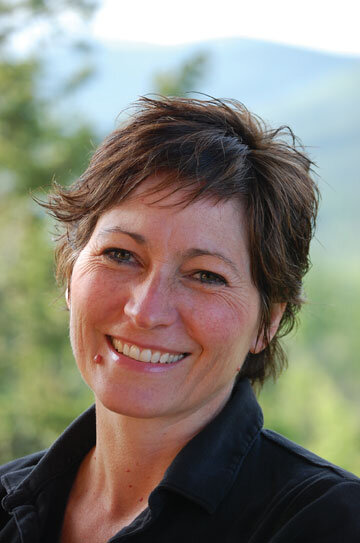
Julie Hutslar says, “A joyful camper, I have loved exploring the west for four decades now. This area of Oregon is one I welcome the chance to get more intimate with. Hiking is the way I reconnect and mountains are my constant source of inspiration!”

Julie will meet the community and exhibit her work from the residency on Friday, June 11, from 5-8pm, at the Green Springs Inn – Forest Room.

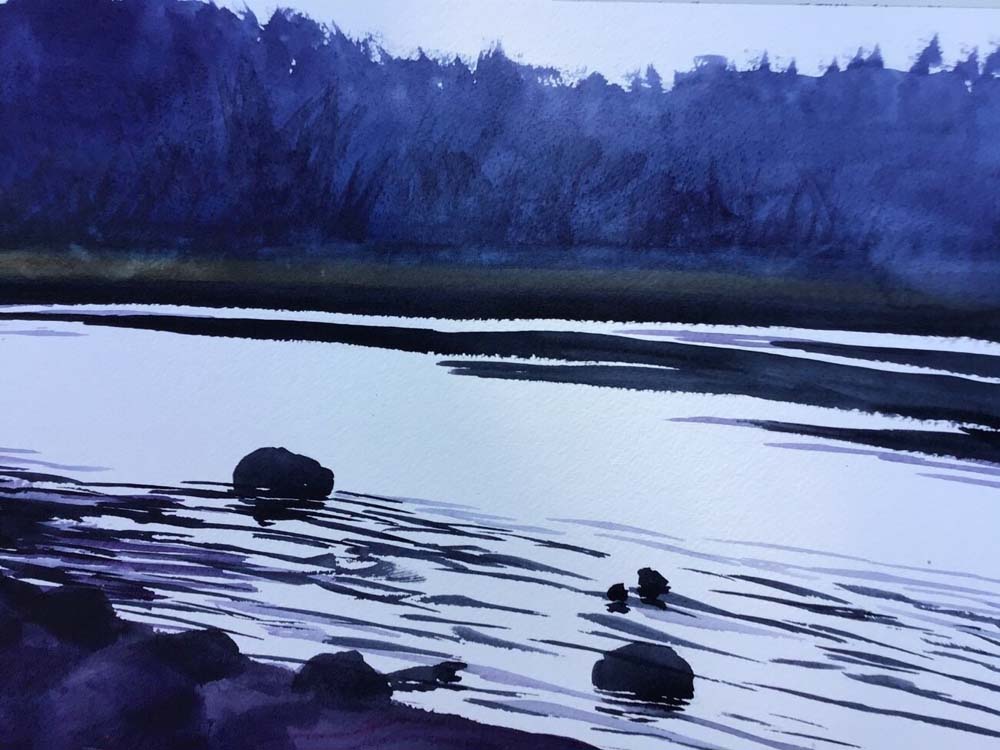
Images: Julie Hutslar, watercolor in progress; PCT By Little Hyatt; Hyatt Lake At Dusk; a sketch.

Watch for future updates on Susan Roudebush’s residency in autumn. Roudebush, an avid hiker, wants to create quilt panels that show regions of the monument: oak savanna, grasslands and high-elevation areas—showing the biodiversity that may not be easily understood.

Launch YouTube Friends of Cascade-Siskiyou Channel

“Thank you.  A humbling introduction, so much covered.  Learning and knowing more of the native peoples’ history, culture, contributions will enrich us all. For me, I hope to learn so much more. I’ll look for your blog, and the YouTube channel.” — Allison-Lama Susi:

“I would love to have a video of the presentation to share with others on our school staff. Thanks for this presentation..” —Marcia Thomason

“I would like to have the opportunity to view this presentation one more time so I can go back and take detailed notes.” Thank you. — Ce Yanez

These comments from the David Lewis lecture (Native American History in Southern Oregon) encouraged us to record and make accessible our presentations.

You can view our recorded lectures and presentations on our newly launched YouTube Channel. The first two titles and speakers are: Volcanic Rock’n and Roll’n in the Cascade-Siskiyou National Monument, by Jad D’Allura, SOU Professor Emeritus; and Native American History in Southern Oregon by David Lewis, Oregon State University Professor. Any recorded video will be added to the channel.

Just in time for the 21st anniversary of the Monument and in response to the social distancing of the Covid pandemic, the Friends’ education programing transformed to online presentations. Recorded presentations connected presenters to audience from around the world. More people could learn about the Monument at a time of their own convenience.

Lisa James, Executive Director, Friends of CSNM said, “By sharing our videos on YouTube and linking them to our website, our loyal friends and subscribers can easily view the recordings at their convenience.  We also want to draw new audience members who are searching for topics of interest not found elsewhere.” 

From Jad D’Allura’s talk about the 35-million year-old rocks of the Cascade-Siskiyou National Monument to the David Lewis’ talk about indigenous peoples who traveled through and lived in this area; the Monument, as one of America’s public lands, holds so much for us yet to know.

We thank our presenters for sharing their knowledge with us; and we thank you for your support to care for this place we call home.

We stay humble and are learning together.

Friends Research Fund 2021 Awards Four Student Researchers

The Friends Research Fund (FRF) awarded grants totaling $ 3,856 to four undergraduate students to conduct botanical and geological studies in the Monument. Britton Glenn and Andrew Restrepo, both enrolled at Evergreen State College, will research varient lichen; Lauren Castro, University of Oregon, will focus on mapping geological areas near Grizzly Peak, and Samuel Barrus, Oregon State University, will investigate the geological age and properties of the Barron Mine located on the Sampson Creek Preserve.

These student will present their finding in next year at the Monument Research Symposium, held annually in March. Final Reports will be held with the Friends and the Bureau of Land Management (BLM).

Thank you to the FRF 2021 review committee members: Scot Loring, Botanist and Friends Board member; Hans Stroo, Environmental Scientist; Maia Black, Community Member; and Matthew McClintock, BLM Geologist. The Committee was chaired by Friends Board Members Jacqueline Blanchette and Elaney Marcotte, and advised by Lisa James, Friends CSNM Executive Director.

Descriptions of the 2021 research grants

Project Title: Vagrant Lichens in Cascade-Siskiyou National Monument
Britton Glenn and Andrew Restrepo, Botany / Ecology, Evergreen State College

Britton and Andrew will be working together to study vagrant lichen in the Cascade-Siskiyou National Monument under their faculty advisor, Lalita Calabria, Professor of Botany. Vagrant lichens are likely sensitive to human-induced habitat changes and invasion by non-native plant species. Britton and Andrew will be documenting how the unique vagrant lichen populations of the Monument interact with native and non-native grasses. The data they collect will be used to update the current distribution and ecology of vagrant lichens.

Project Title: CSNM Geological Mapping
Lauren Castro, Earth Science, University of Oregon

This summer and fall, Lauren will be working with Jad D’Allura, Professor Emeritus of Geology at Southern Oregon University. Lauren will focus on mapping the northwest portion of the Monument near Grizzly Peak, as well as sample and analyze welded tuffs in the Little Hyatt Reservoir area. This study will improve and update current geological studies of the Monument.

Project Title: Barron Mine
Samuel Barrus, Geology, Oregon State University

Samuel will be working with professors Dr. Jad D’Allura, SOU Professor Emeritus and Dr. John Dilles, OSU Professor of Geology. His project focuses on analyzing the geology of the now abandoned Barron Mine, located on the Sampson Creek Preserve owned by the Selburg Institute, also a project co-funder with the Friends. This project will help determine the geologic age and properties of the Barron Mine.

Reading Notes: Native American Tribes of Southern Oregon

Know Your Monument

History of the Native American Tribes of Southern Oregon

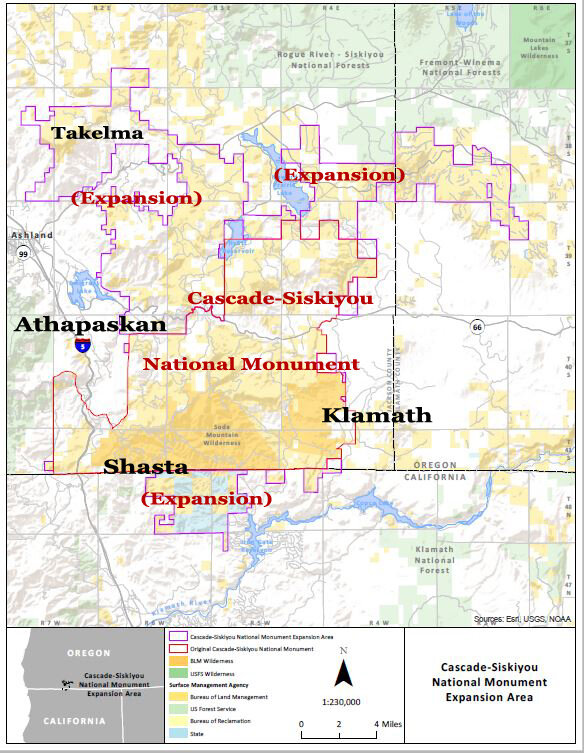
The Cascade- Siskiyou National Monument was established in 2000 and then expanded in 2016, to span over 114,000 acres of land. The monument is located on the traditional homelands of the Takelmans, Athapaskans, Shastans, and Klamath peoples. Before their removal to the reservations of the Grande Ronde and Siletz in the 1850s, the tribes of this region lived here for time immemorial, with dates of occupation older than 10,000 years.
“Establishing this monument preserved the landscape for the future of all Americans. For Native peoples to return and find community in the original landscapes of our peoples is priceless. In this environment we can practice restoring cultural practices. Many people in the Grand Ronde tribe have an affinity to the Rogue region and this monument preserves the wilderness for them and their descendants. In addition, tribal peoples in the region are using the landscape for their own cultural practices. This place is an important vault of information about tribal lifeways.”

  • David Lewis, PhD, The Land is Our Heart: Protect the Cascade-Siskiyou National Monument, 2017

Dr. David Lewis is a member of the Confederated Tribes of Grand Ronde, a descendant of the Santiam, Chinook and Takelma Peoples of Western Oregon. Dr. Lewis is a recognized researcher, scholar, educator, and writer of original histories of the peoples of Oregon and California, with an extensive record of collaborative projects with regional scholars, tribes, local governments, and communities for over 20 years. He is an adjunct professor at Oregon State University in Anthropology and Ethnic Studies (Native Studies).

 Dr. David Lewis
Dr. David Lewis

He has generously shared additional readings that are on his website: ndnhistoryresearch.com
See Dr. Lewis’ presentation Native American History in Southern Oregon (2021).

His recent articles about the CSNM are listed below:

The Land is Our Heart: Protect the Cascade-Siskiyou National Monument (2017)

Repealing National Monuments? Why Tribal People Should Care! (2017)

 This map and nformation in this article comes from   The Land is Our Heart: Protect the Cascade-Siskiyou National Monument    ( 2017), David Lewis, PhD
This map and nformation in this article comes from The Land is Our Heart: Protect the Cascade-Siskiyou National Monument ( 2017), David Lewis, PhD

Additional publications by Dr. David Lewis: 

Restoring Indigenous Knowledge, Western Humanities Review, Fall. (2020)

White American Violence on Tribal Peoples of the Oregon Coast. Oregon Historical Quarterly. Vol. 120(4). Winter. (2019)

Four Deaths: The Near Destruction of Western Oregon Tribes and Native Lifeways, Removal to the Reservation and Erasure from History. Oregon Historical Quarterly. Fall, Vol. 115(3):414-437. Lewis, David G. and Thomas J. Connolly. (2014)

Natural Foresters: Native Timber Traditions and Logging from the Grand Ronde Tribe. Willamette Valley Voices: Connecting Generations. Vol. 3(1). Winter. (2014)

Native American Archives Special Issue: Dedication. Journal of Western Archives, Vol. 6:1. Lewis, David G. and Jennifer O’Neill. (2014) 

Developing and Organizing a Professional Development Gathering for Oregon’s Tribal Communities: The Oregon Tribal Archives Institute. Journal of Western Archives, Vol. 6(1). Lewis, David G. and Natalie Fernandez. (2014)

History of the Native American Tribes of Southern Oregon – FREE online Lecture May 6 at 6:00pm

As part of the INSPIRING CONNECTIONS WITH NATURE LECTURE SERIES, The Friends of the Cascade Siskiyou National Monument invite you to join us with our esteemed Oregon State University Professor David Lewis. You’ll hear about:
• History of the Tribes from Southern Oregon
• Lifeways
• Rogue River Wars
• Forced Removal
• Treaties
• Environmental Focus: Changes to the lands after the removal and impacts of farms and grazing by settlers
• Most accounts of this history we hear are not the point of view of the Native perspective. This lecture is designed to tell the history and dispel repeated stereotypes

6:00 p.m. May 6th Pacific Time

Student Board Members Channel Attention to Monument

 2020 Monument Research Symposium organizers and student board members Monique Streit and Courtney Buel with chair Terry Dickey and Jackie Markin, co-chair (2018-2020). WChin photo
2020 Monument Research Symposium organizers and student board members Monique Streit and Courtney Buel with chair Terry Dickey and Jackie Markin, co-chair (2018-2020). WChin photo

Just two weeks before the Covid pandemic hit Ashland in March 2020, the Friends last gathered together publicly as a group for the annual Monument Research Symposium.

Student board members Courtney Buel and Monica Streit were able to present student researchers from as far away as an Internet café in rural Guatemala via Zoom to the audience sitting in the SOU Science auditorium. Four student researchers, funded by a Friends Research Fund were presenting their final reports about the Monument.

At the end of her term in August 2020, Courtney Buel reported, “I was able to join the Friends of the Cascade-Siskiyou National Monument as a student board member during my 18-month stint at Southern Oregon University while pursuing my graduate degree in Environmental Education. As soon as the opportunity was presented to me, I knew this was an experience that I could not pass on.”

“As a board member, I’ve been able to lend my hand in various projects. My most esteemed moments were working with fellow student board member Monique Streit to plan, coordinate, and host the 2020 Monument Research Symposium. I am so grateful for the opportunity to work with the four brilliant student researchers that presented at this Symposium.”

In the belief that students can expand the leadership capacity of community and public lands, the Friends have recruited and appointed a student board member since 2015.

Students bring their own life experiences and perspectives to advance Friends capacity to advocate on behalf of the Cascade-Siskiyou National Monument. Alexandra Harding, the first student board member initiated the first Giving Tuesday fundraiser for the Friends.

Former Sierra Club staff member Shannon Browne advanced from being a student board member to become the Friends’ first executive director. She coordinated Friends’ advocacy efforts with other community groups during the campaign for the 2017 Monument expansion. She went on to recruit and mentor students to work on the Friends Hike & Learn, BioBlitz and the Friends’ first Gala fundraiser in 2019.

SOU graduate students Jacqueline Blanchette and Laney Marcotte joined the Friends Board in October. The ongoing pandemic requires everyone to conduct business with an abundance of caution. Meetings are conducted socially distanced. Jacqueline graduated from SOU with a B.S. in Environmental Science & Policy and a Certificate in Sustainability Leadership. Elaney has taught students about science and the environment through place-based education in Texas and Wyoming. Jacqueline and Elaney are working toward an MS in Environmental Education at SOU.

Courtney reflected on her year, “This experience proved the impact the Friends Research Fund has in supporting budding scientists and jump-starting their careers. In addition to the Symposium, I participated in the Fall Birds Hike and Learn, where I saw my first Hairy Woodpecker!”

“Additionally, I was able to help plan and put on the Friend’s first Gala event, an exciting and successful time. While my time with the Friends is short, it was still nonetheless jam-packed.”

In December 2020, student board members Courtney Buel and Monique Streit will each earn a M.S. in Environmental Education as well as a Certificate in Nonprofit Management at Southern Oregon University.

Monument RE-OPENS

Bureau of Land Management Medford District re-opens public lands  

 Medford, Oregon – Thanks to recent rains and an increase in availability of initial attack resources to respond to new starts, the Bureau of Land Management Medford District is rescinding public lands closure notices across much of the District. Public lands closures remain in effect near the Slater Fire and the South Obenchain Fire.  

Despite the re-opening of these public lands, fuel conditions remain dry and new starts are possible. Help us thank firefighters, and protect your community, by doing your part to prevent new fires by following the public use restrictions that are still in place. Campfires are prohibited on all public lands in the Medford District, and smoking is only allowed while inside a vehicle or in an area that is at least three feet in diameter clear of flammable vegetation.  

The Bureau of Land Management Medford District works with the Oregon Department of Forestry to provide initial attack resources when new fires start. A combination of heavy smoke, limited resource availability and low fuel moisture content prompted the initial public lands closures. Significant progress and slow fire growth on the Slater Fire and South Obenchain Fires has also increased availability of resources should a new fire occur. The shorter days, higher humidity recovery at night and lower temperatures are important factors that fire managers consider when determining fire risk.  

 Public lands closures remain in effect near the Slater Fire and the South Obenchain Fire to reduce interference with emergency crews and allow for fire suppression and burned area recovery.  Members of the public may not enter closed areas, all uses are prohibited in the area, and Bureau of Land Management roads and trails are closed.   

 The Slater Fire Closure includes all Bureau of Land Management public lands south of Cave Junction and south of Highway 46 from Cave Junction east to the boundary of the National Forest. The South Obenchain Fire closure includes all public lands south of Highway 62, north of Highway 140, east of Range 01W (approximately 2.5 miles west of Shady Cove) and west of Range 02E (approximately 2 miles east of  Butte Falls).  

 Maps of the closure areas are available on the Bureau of Land Management’s website:  https://www.blm.gov/programs/public-safety-and-fire/fire-and-aviation/regional-info/oregon-washington/fire-restrictions  

 Please call 911 to report any signs of new fires. 

 Thank a firefighter by observing public use fire restrictions to help us limit new starts during this time:  

  • Campfires or any other type of open fire, including the use of charcoal briquettes, is prohibited on BLM-managed land. 

  • Power-driven machinery is prohibited in forested areas. This restriction includes power saws; equipment used for the cutting, grinding, or welding of metal; mowing of dry, cured grass with power equipment; and the use of any other spark-emitting equipment using an internal combustion engine. 

  • Smoking is only allowed while inside a vehicle or while stopped in an area at least three (3) feet in diameter that is clear of flammable vegetation.   

  • Operating a motor vehicle and parking off road (including motorcycles and all-terrain vehicles) is only allowed on roadways clear of flammable vegetation.   

  • Using fireworks, exploding targets, or tracer ammunition is prohibited.   

  • Using a chainsaw or other equipment with internal combustion engines for felling, bucking, skidding, woodcutting, or any other operation is prohibited.  

  • Welding or operating a torch with an open flame is prohibited.   

 Visitors to lands managed by the Bureau of Land Management are also required to carry tools with them to ensure small fires can be put out quickly, including a shovel, axe, and at least one gallon of water or a 2.5-pound fire extinguisher.  

 A list of personal use restrictions, as well as closure orders, are available at https://www.blm.gov/programs/public-safety-and-fire/fire-and-aviation/regional-info/oregon-washington/fire-restrictions. You can also follow us on Facebook and Twitter @BLMOregon. 

-BLM- 


Kyle Sullivan, Public Affairs Specialist
Bureau of Land Management – Medford District Office
(o) 541-618-2340 (c) 541-613-1418