
October 2022 Newsletter
To read about our latest news and events, please check out our October newsletter.
To read about our latest news and events, please check out our October newsletter.
National Public Lands Day 2022
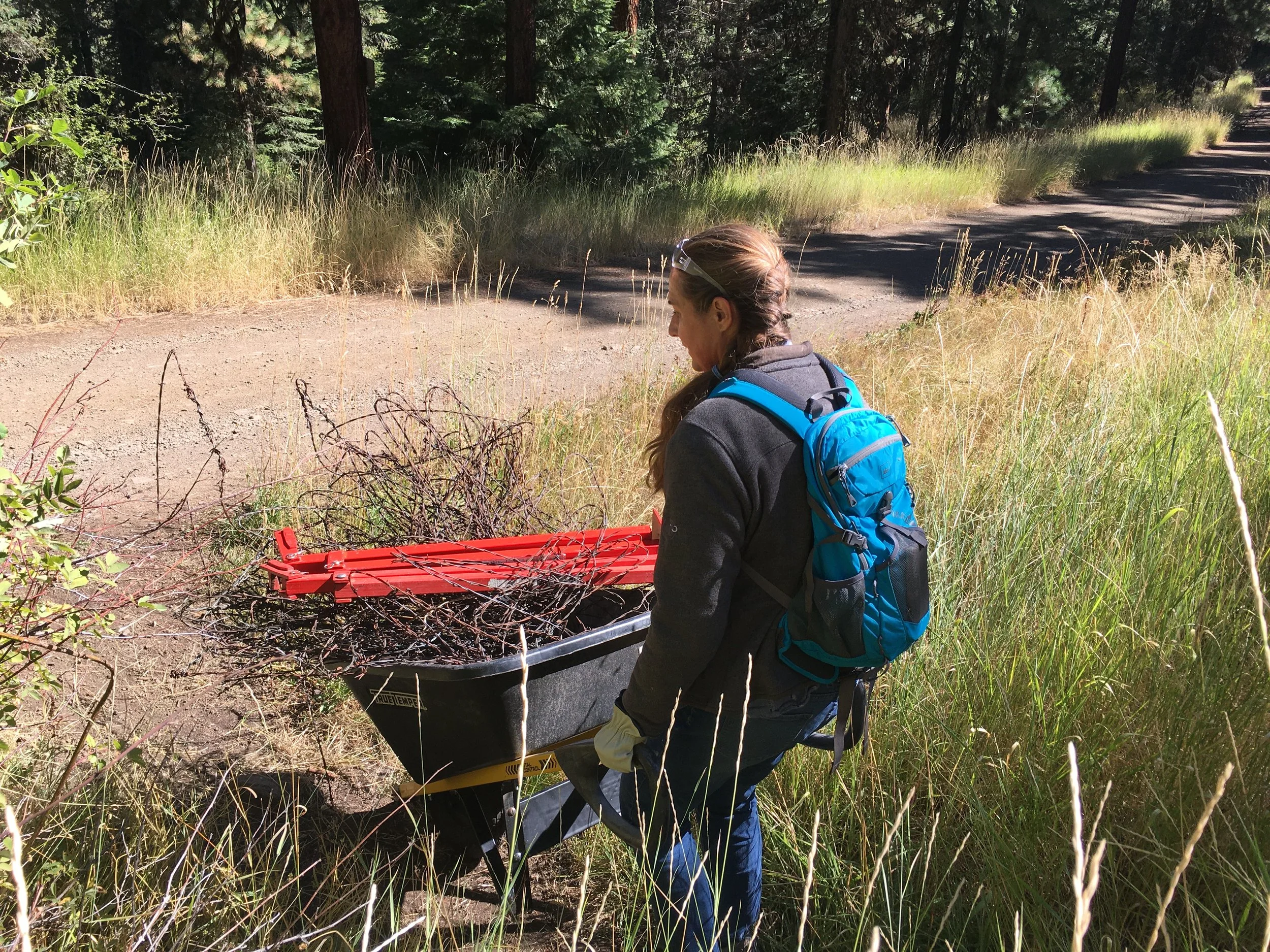
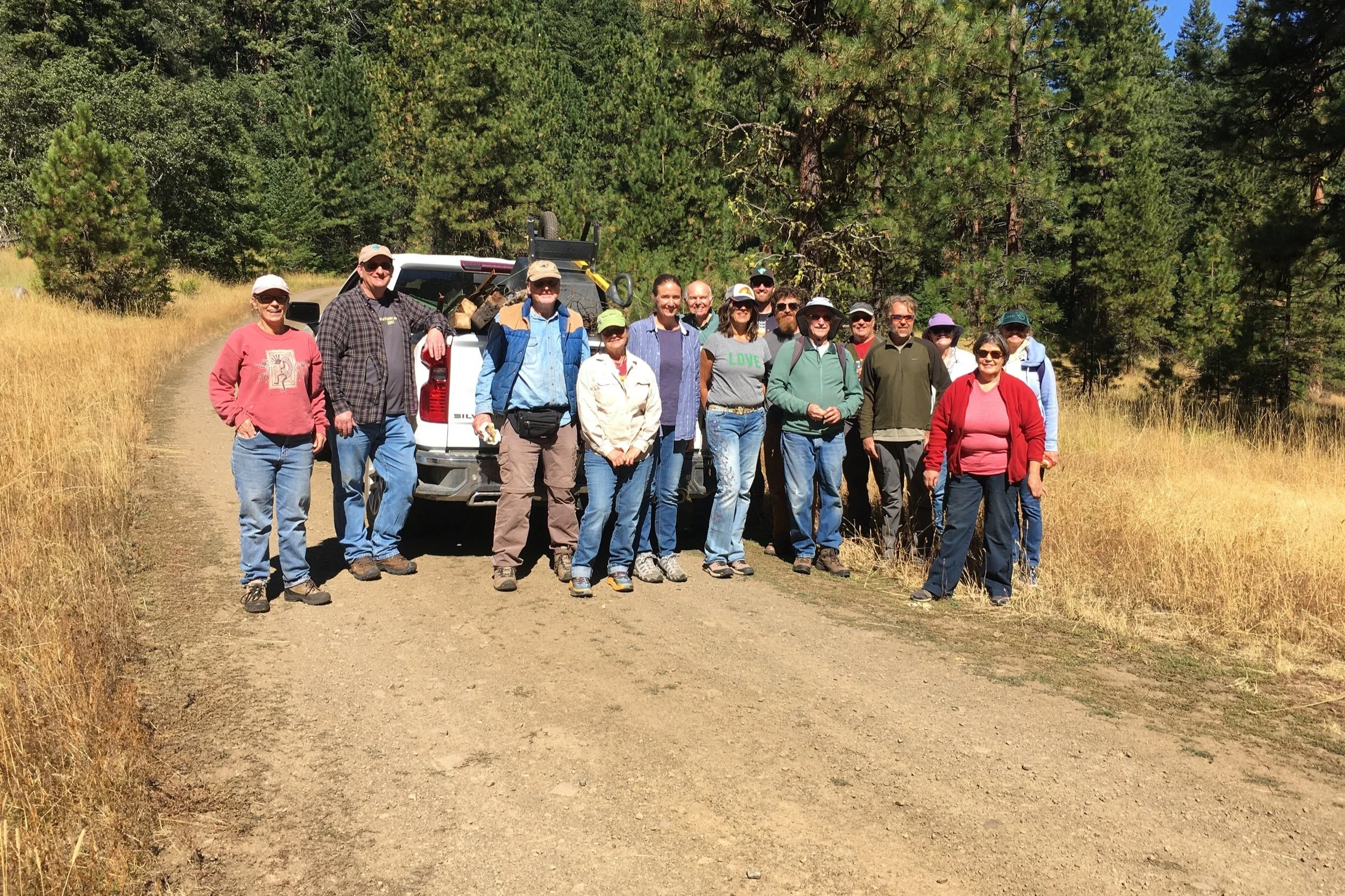
On Saturday, September 24, a group of hardy souls celebrated National Public Lands Day by removing about 1,000 feet of barbed wire fencing in the Cascade-Siskiyou National Monument. After donning gloves and grabbing tools at the Green Springs Mountain Loop trailhead, we headed up the Pacific Crest Trail (PCT) about a half mile to where the fencing spread out from the trail in both directions.
We quickly divided into two teams – Team Extreme who charged fearlessly up a steep slope to remove fencing that ran east of the trail and Team Daniel who boldly took on the fence to the west of the trail. Each team cut the strands of barbed wire at the metal t-posts, folded them up accordion-style and placed them in a pile. The t-posts were removed from the ground with a tool designed for just that purpose and were also staged for later hauling to the parking lot.
Each team worked with good cheer and determination, uplifted by the calls of red-breasted nuthatches, pileated woodpeckers, and chickadees, moving further into the forest to ultimately remove thousands of feet of barbed wire and dozens of t-posts. On a team of his own, Brian Long, the Recreation Planner for the BLM, was tasked with removing the wooden posts that were immediately adjacent to either side of the trail that had been used to support a gate that crossed the PCT adjoining the two sides of fencing.
After a couple of hours, prompted by John Duwe, BLM’s new Interpretive Specialist, we began the long haul of materials from the woods to the parking lot where the BLM truck awaited. When the last of the materials were tightly secured for transport to a scrap metal recycler, we had lunch while celebrating that our efforts that day will make life easier for the wildlife who call the Monument home.
Inspired by the energy and motivation shown by our volunteers, we are already thinking about our next Monument stewardship day!
Words and photos by Executive Director Collette Streight.


Sunday Hike #8 – Historic Buck Rock Tunnel, 8/28/2022
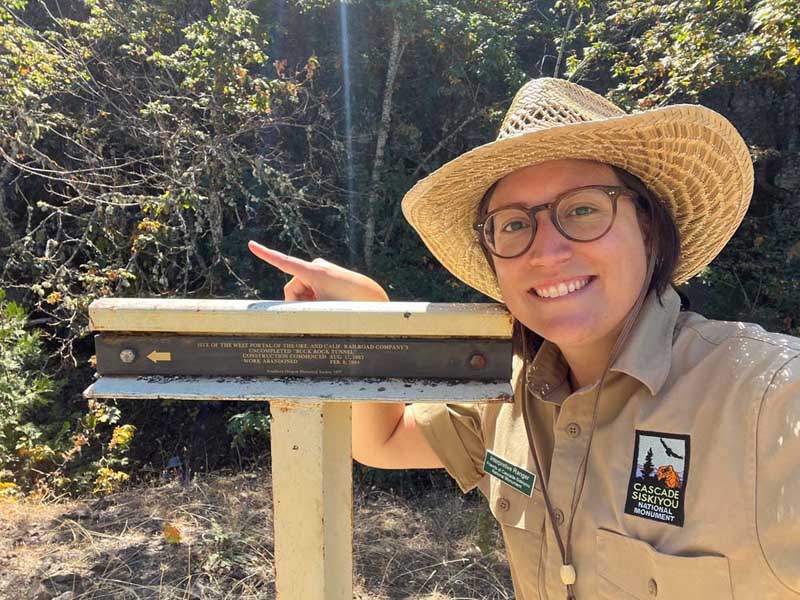
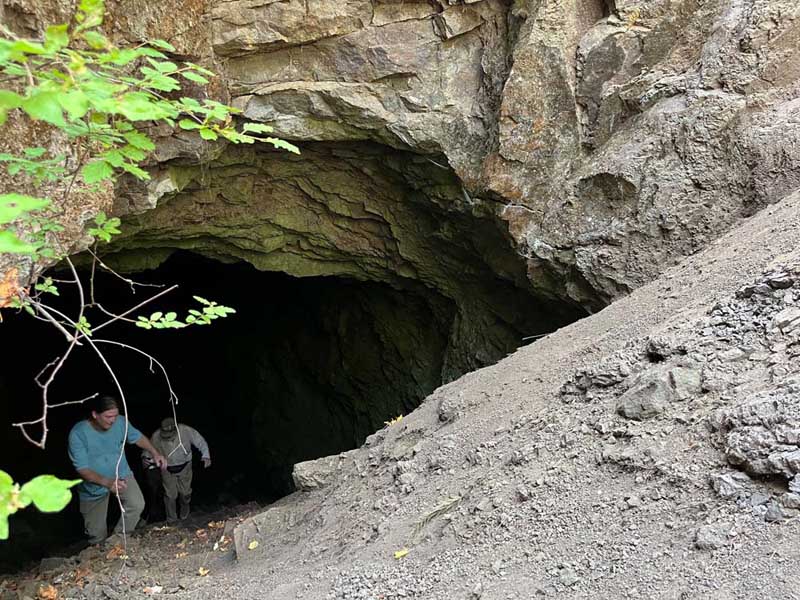
For the final Sunday Hike of the summer, we went back in time to the late 1800s, deep into the Monument to the site of the Buck Rock Tunnel, a railroad construction project that was never completed, left abandoned for decades, and, years later, rediscovered as an archaeological site with a fascinating story to tell.
Here’s the short version. By the mid-1800s, the Transcontinental Railroad had been completed for several years, but a north-south route in the western US was still in development. The final section of the route was the most challenging to construct, across the border of Oregon and California through what is now the Monument. Of course, the Monument is known for its biodiversity, a product of the complex “knot” of terrain where several mountain ranges and ecosystems converge. An engineer hired by one of the railroad companies, John Quincy Adams Hurlbut, surveyed several options before deciding that the Buck Rock Tunnel route was the best option, mostly due to the lower grade. Work started on the tunnel in 1883.
Most of the railroad workers were Chinese immigrants, earning more than what they would working for a farm, but less than their white counterparts on the job. Working for the railroad also came with much greater hazards: dynamite explosions, long hours of hard manual labor, and heat exhaustion, as well as treacherous terrain and an abundance of poison oak, which you can still witness on a hike to the site to this day. They worked day in and day out on both the east and west portals, tunneling on each side to eventually meet in the middle.
However, in 1884 the funds ran low. The tunnel was abandoned. The railroad company prioritized another shorter option over Siskiyou Pass, where I-5 currently runs. That route still exists today, but it’s not often used. Though less miles of track were laid, the grade was much higher; this was fine for the short-term, but over the years the trains found difficulty with the elevation change and snow piling on the tracks. The Natron Cutoff was constructed over the next several years and completed in 1926, which took trains east of the Cascades through Klamath Falls at a much lower grade – where the Amtrak and other routes still run today.
The Buck Rock Tunnel was left unfinished and abandoned for decades until a BLM forester rediscovered the site in the 1970s. Since the tunnel was left mid-construction, it presents a unique look into the building methods employed back in the day. An archaeological investigation found evidence of day-to-day life, like ceramic pieces (some with Chinese calligraphy detail), traces of temporary dwellings, and scraps of food that had been preserved for years. In 2014, the BLM acquired this piece of land and designated it as a historical and cultural site within the Monument. One hopeful future for the Buck Rock area is an interpretive trail to the tunnel entrances, which are currently what we’d call “off the beaten path.”
I really enjoyed sharing this story with a group of 20 hikers, including Friends board member Howard Hunter, who offered a lot of guidance and support in establishing the Sunday Hiking Series for the 2022 season. I would like to give credit to Chelsea Rose, SOU anthropologist and historical archaeologist, who has published numerous papers and articles about her research at the Buck Rock Tunnel site, as well as the Oregon Historical Society and the Chinese Diaspora Project, all of which informed my research on this interesting subject.
Thanks for a great summer, and happy trails!
Words by Interpretive Ranger Sarah Martinez. Photos by Sarah Martinez and Board Member Howard Hunter.




September 7, 2022
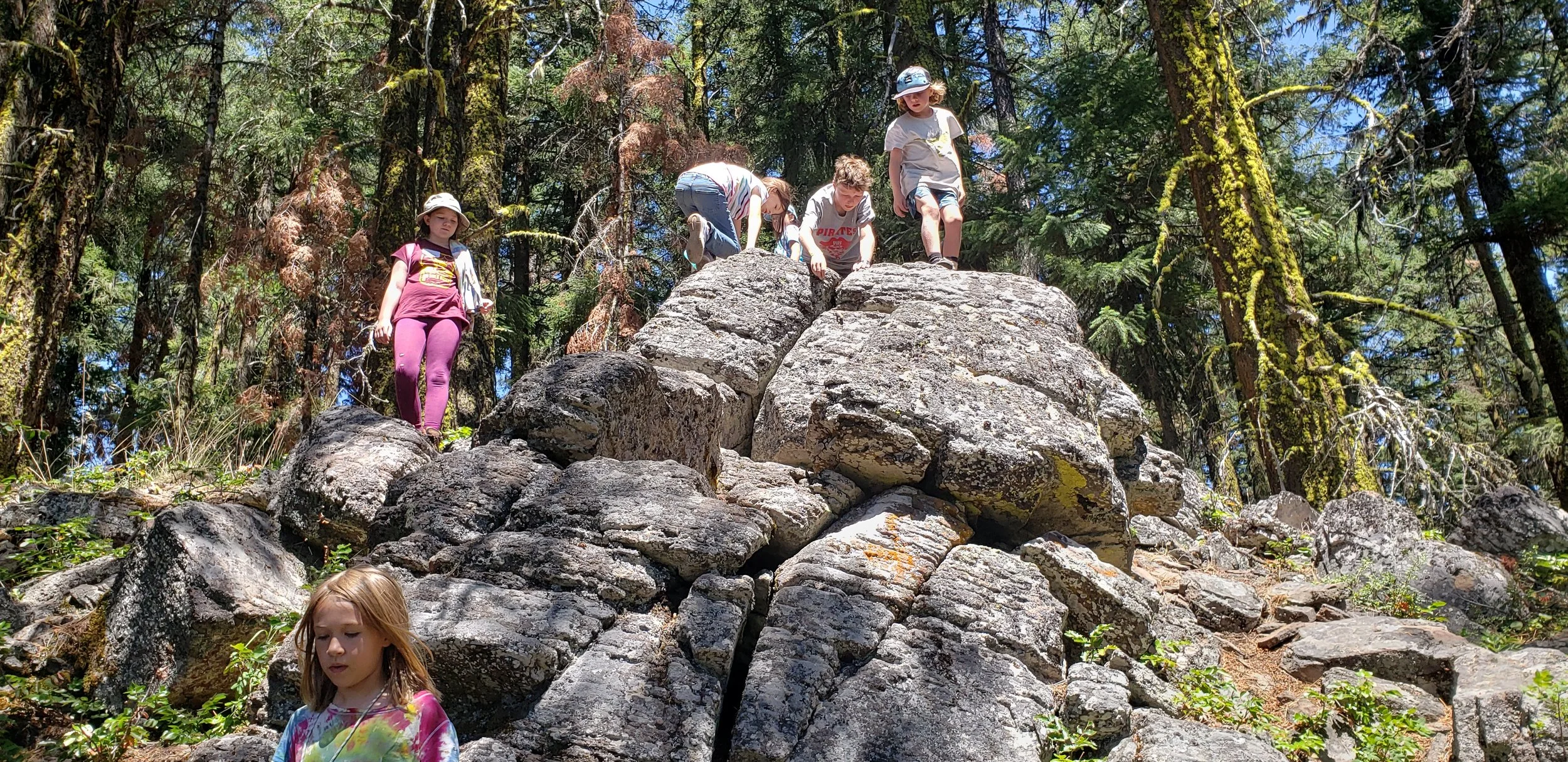
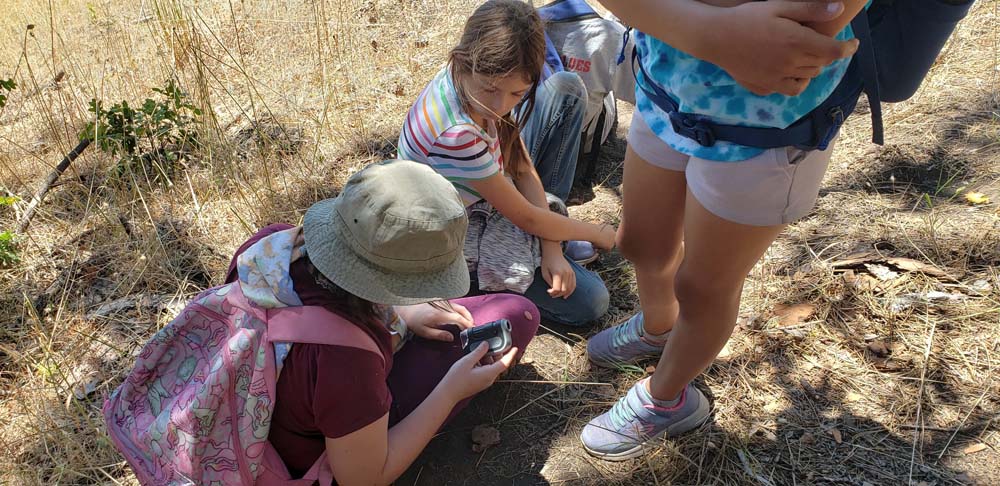
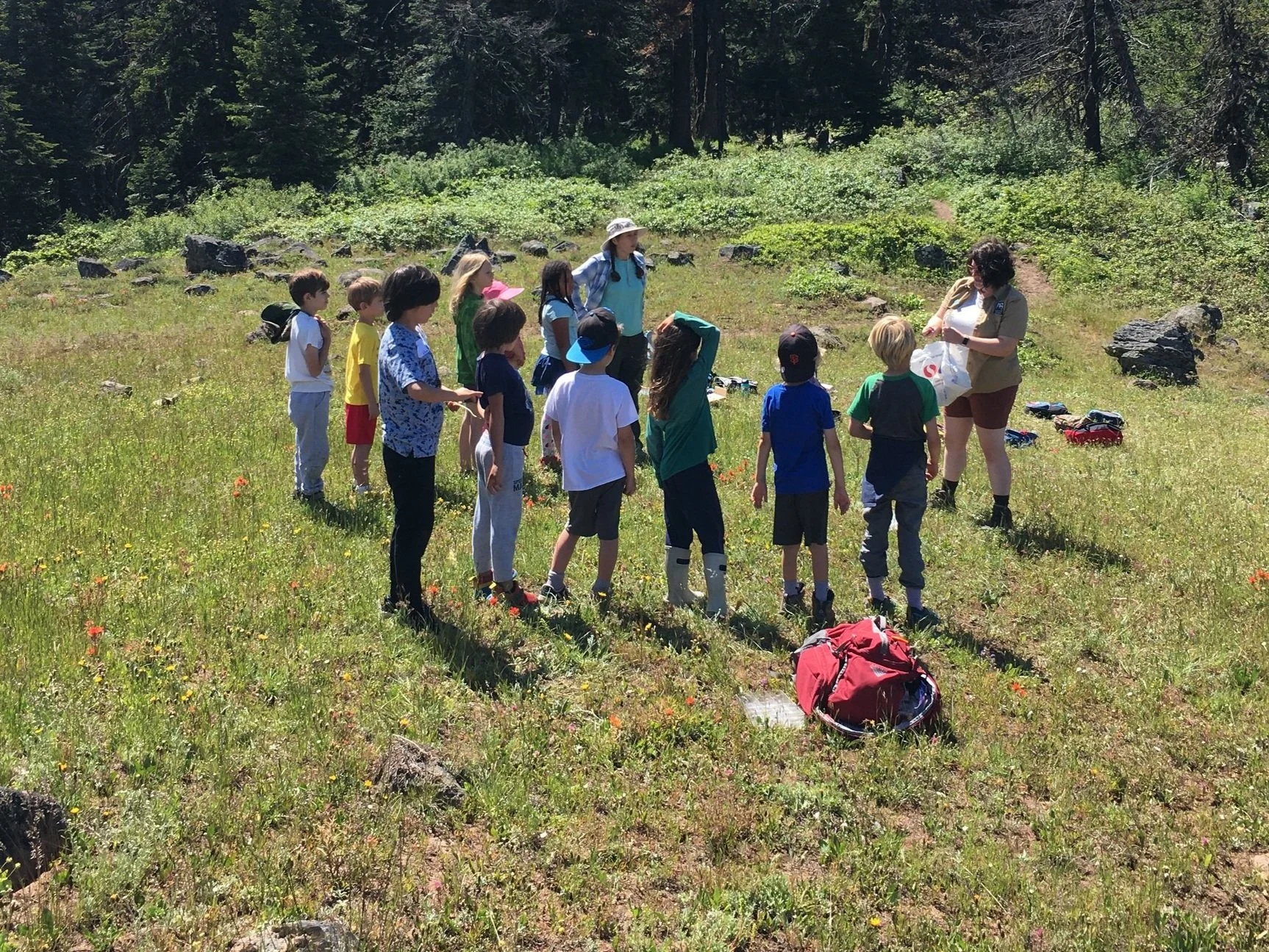
As the long summer days slowly wane, the Friends of the Cascade-Siskiyou National Monument summer K-12 educational program has also come to a close. We are thrilled by the success of our very first season of Nature Day Camps in partnership with The Crest at Willow-Witt and BLM’s Medford District. Between June-August 2022, we offered nine full-day environmental education programs at two different sites within the Cascade-Siskiyou National Monument. In total, our Interpretive Rangers served over 200 local Kindergarten – 6th grade camper Monument Days! Participating students traveled from all over the Rogue Valley to join us at the Greensprings Mountain Loop and Hobart Bluff trails, including places as far as Eagle Point and Northern California.
Friends Executive staff, Board Members, and Interpretive Rangers recently met with lead staff and educators from The Crest to celebrate our educational accomplishments for the year and to discuss potential improvements to our “Monument Days” for next year. We look forward to planning new program sites, new lesson themes and topics, and to increasing our capacity to connect with additional local communities in future.
Words by Interpretive Ranger Elizabeth Mackey.




June 24 & 25 Hike and Learn
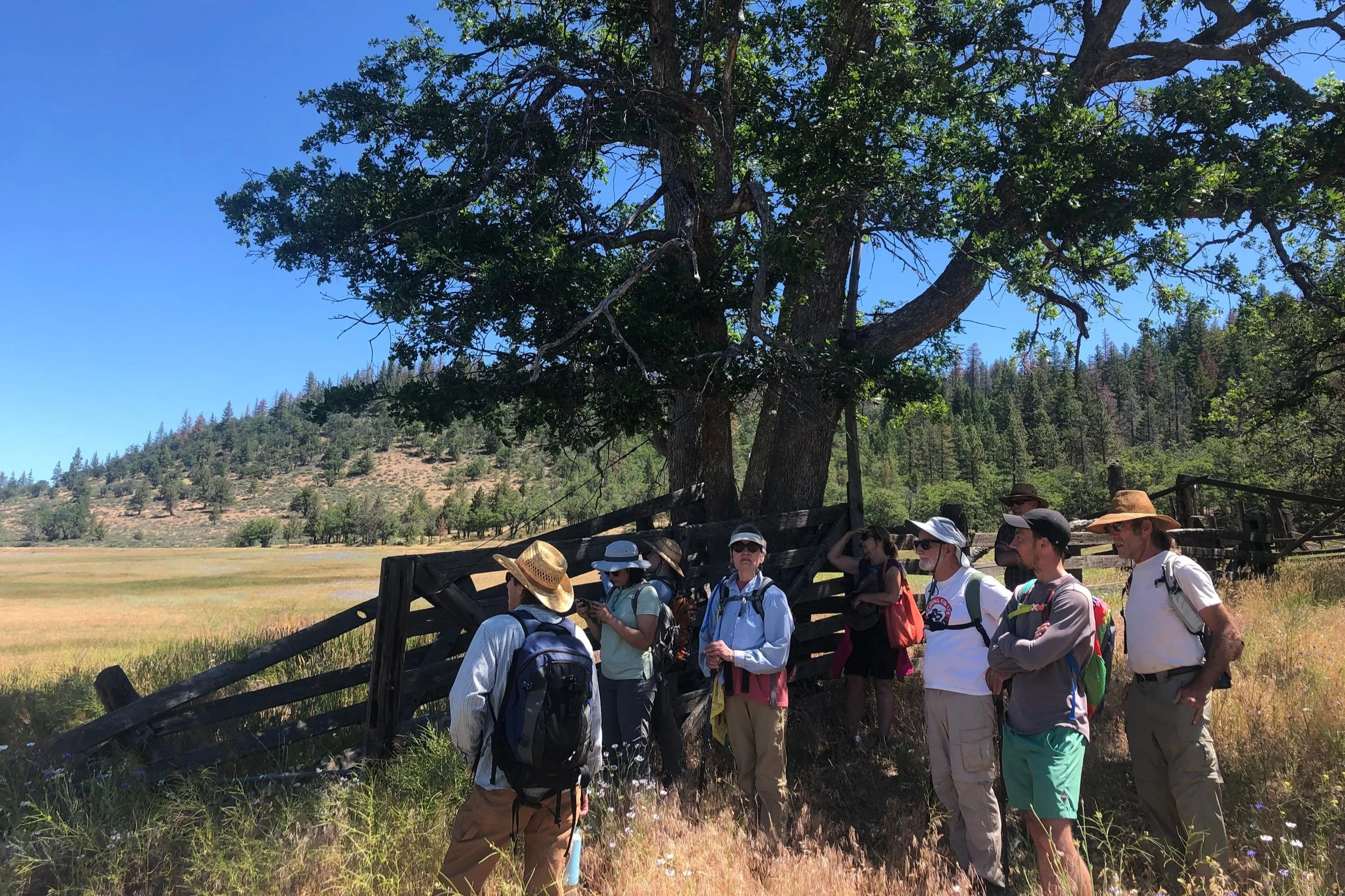
A group of us had the pleasure of learning from Tim Montfort, a long time Hydrologist with the Bureau of Land Management. He presented on the acquisition and extensive restoration work of the former Box O’ Ranch. Jenny Creek, a tributary of the Klamath flows through the site and is the main focus of the restoration work. Over years the ranch sustained damage from continuous cattle grazing which degraded the meadows and riparian habitat. Once the BLM acquired the property, restoration work quickly began recontouring the stream, removing ditches, and replanting riparian vegetation. The Soda Mountain Wilderness was designated in 2009 fully encompassing and further protecting the site. In 2019, Jenny Creek was designated as “Scenic” under The Wild and Scenic Rivers Act. These numerous protections help preserve this fragile and diverse ecosystem as refugia for The Jenny Creek Sucker and other important species.
After our Friday evening talk, we ventured out on a hot Saturday in June to visit the site. Tim took us on a tour of the many obvious historical elements present there, barns, farm equipment, and now remediated irrigation ditches. We visited the banks of Jenny Creek to observe lush patches of Willow, Oregon Ash, and Ponderosa Pine. As we walked along, we compared before and after photos turning back time to examine how restoration truly works. It was amazing to witness the vast effort put in to restore and improve this landscape. A lot has happened in the last 30 years to see what we saw that day, and there is still more work to do. While not the most accessible site, if you are fortunate enough to visit, you can take in the sweeping meadows, interesting history, and rejuvenating Jenny Creek. While you’re there, close your eyes and imagine what another generation of conservation will have in store for this landscape.
Words and photos by FCSNM Board Chair Daniel Collay.


To read about our latest news and events, please check out our September newsletter!
Sunday Hike #7 – Porcupine Mountain, 8/14/2022
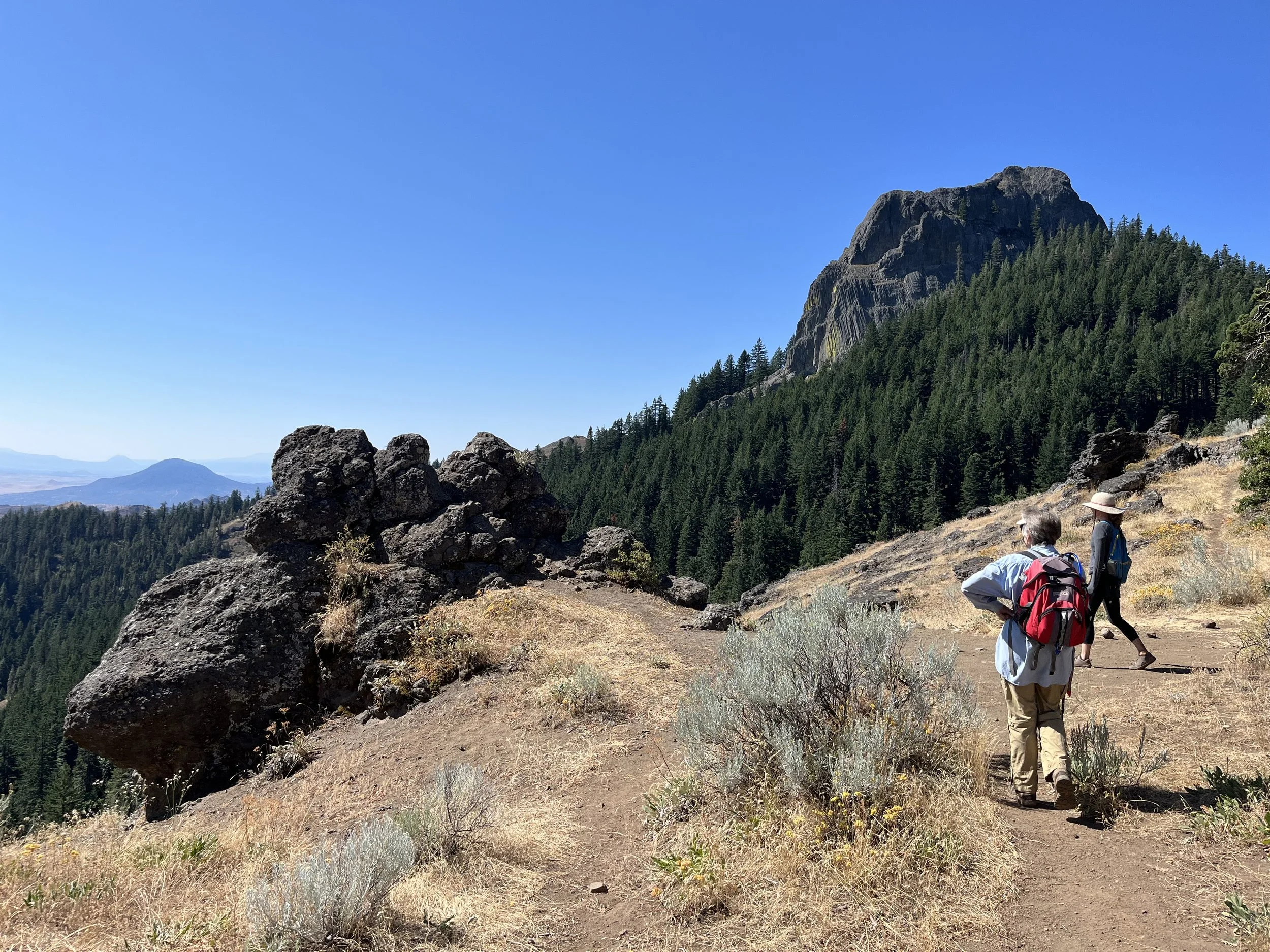
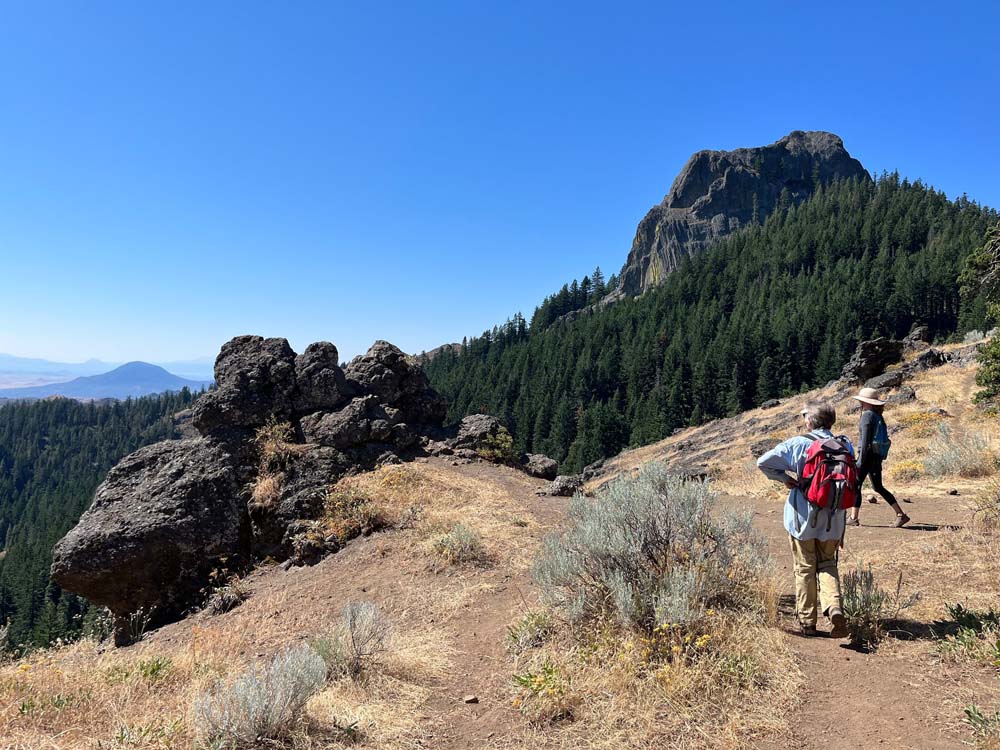
On our longest hike yet, we made it to the top of Porcupine Mountain, a lesser known peak tucked between Pilot Rock and Soda Mountain just outside of the Soda Mountain Wilderness Area. We started our journey at the Pilot Rock Trailhead, taking the spur trail to link up with the PCT and heading “north-bound” on the trail. After about 3 miles one way on the PCT, passing by the signed Porcupine Gap, we veered off trail, marked by a characteristic old juniper snag. Like Rhyolite Ridge (which we hiked a few weeks back) this hike requires a bit of off-trail navigation, this time along an old, decommissioned road to the plateaued summit.
The ascent to Porcupine Mountain isn’t too treacherous, but for some fallen logs, rocks, and brush piles used to make the road impassable to OHVs, which is important for the protection of the sensitive vegetation and lichens that populate this area. However, it’s much steeper than any sections of the PCT. Treading carefully, we hiked up to the summit, catching views to the south of Mt. Shasta and the Iron Gate Reservoir along the way. Once at the top, there are several viewpoints to take in. Continuing along the ridge-like summit, we were able to get 360 views towards Pilot Rock (our constant companion on this trail), Mt. McLoughlin, Soda Mountain, and all the spaces in between. We enjoyed our lunch with a view, and retraced our steps back to the PCT to get back to the trailhead, totaling about 8.5 miles!
With August comes some signs of the approaching fall. Red Baneberry (Actaea rubra) with its bright red berries was plentiful in shady sections of the PCT. We enjoyed some thimbleberries (Rubus parviflorus) and noticed yellowed Western wild-cucumber (Marah oreganus) waning away. There were some marvelous old-growth Douglas-fir trees, as well as a few Incense cedars and Ponderosa pines of enormous size. The Friends’ Executive Director, Collette Streight, was able to join us on this trek and encouraged us to take a closer look at the bark of some of the older trees where we spotted ever-so-tiny pin lichens growing! Too small to take a photo, but worth investigating on your next hike in an old-growth stand.
Check out this hike next time you’re eager for a grand adventure in the Monument! It should be noted that a more robust vehicle could make it to the end of Pilot Rock Road, to the Porcupine Gap trailhead, which would shorten this hike to about 3.5 miles round trip. As always, be sure to consult a map, bring lots of water, and tread carefully in our beautiful public lands.
Words and photos by Interpretive Ranger Sarah Martinez




Sunday Hike #6 – Lost Falls, 8/7/2022
Lost Falls is known as an easy hike in a location that’s hard to get to. The drive involves taking the windy Shale City Road, past the well-marked turn for the trailhead to Grizzly Peak, beyond the turn for Willow-Witt Ranch, into the woods and down a few barely-marked roads until you come to a little clearing with enough space for a few cars to park. Unlike some of the other roads in the Monument, this is one that any car can handle, as long as you know the right direction. With a little internet research, you’ll find several blogs that describe the way to get to this trailhead. Whatever you do, don’t rely on Google Maps!
Once we parked, we could breathe in the fresh, watery air and take a sigh of relief. What’s ahead is a gentle trail that follows along Lost Creek through pines, firs, and fun riparian plants and shrubs that make great habitat for birds. Our hiking group was small but mighty, with an avid birder among us who was able to identify a few small Dusky flycatchers in a clearing. That’s one of the best things about Sunday Hikes with the Friends – there’s bound to be an expert or two in the group who loves this land and the creatures that inhabit it.
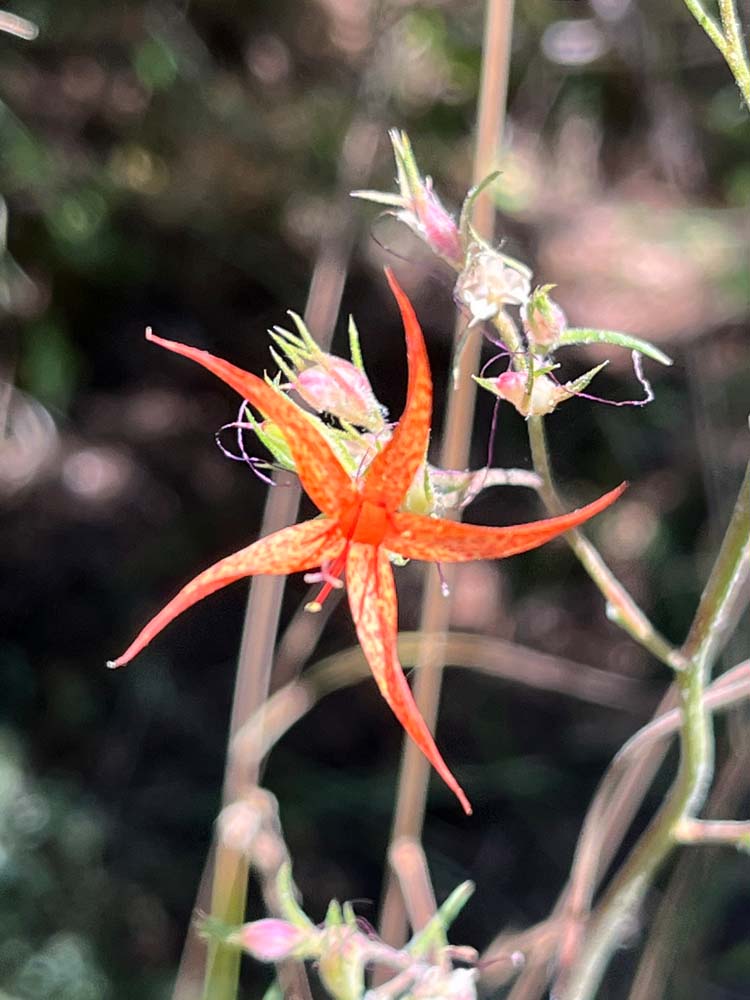
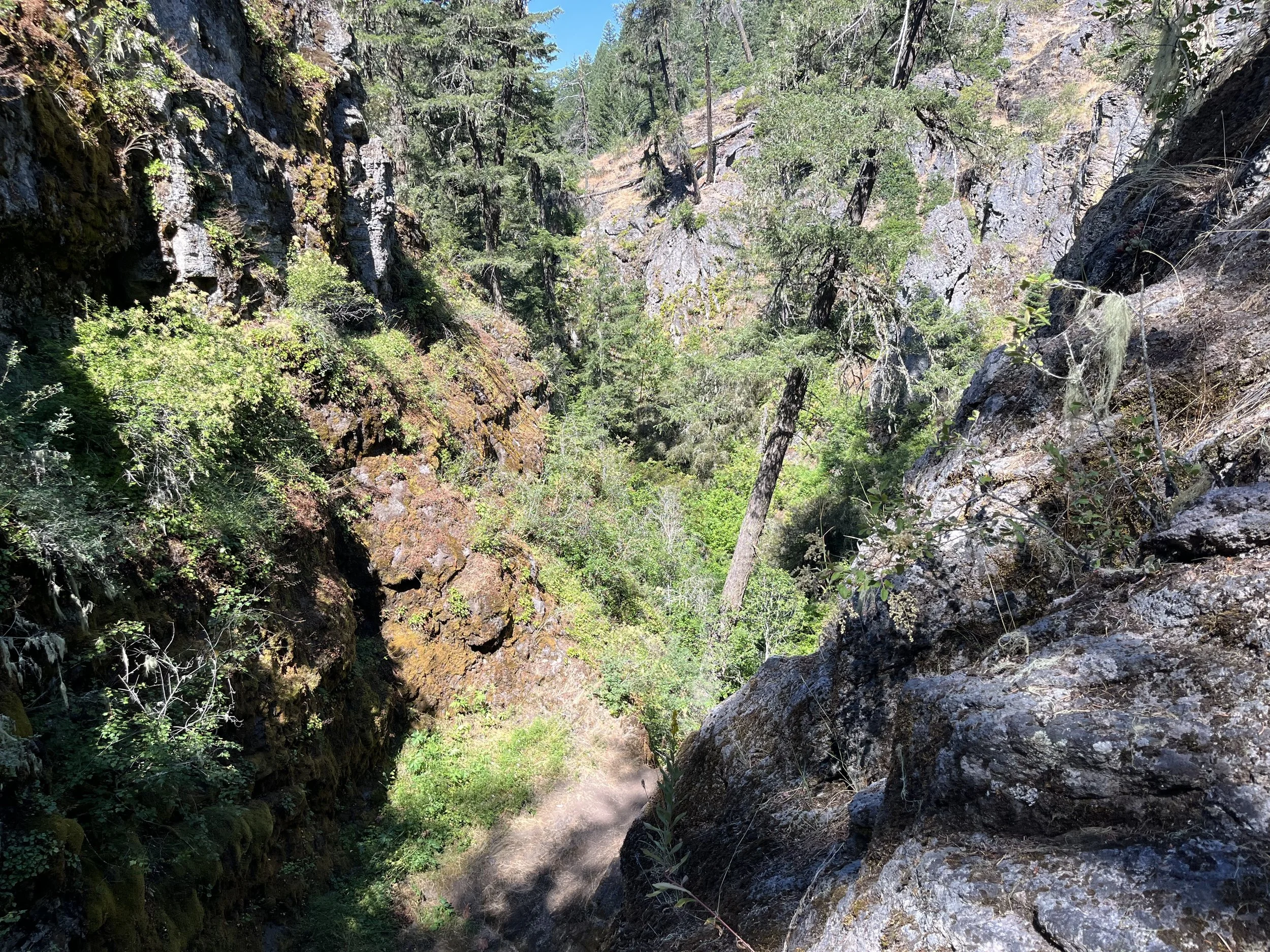
As we walked along the trail, we found a few wildflowers hanging on into late summer, most notably the Harvest brodiaea (Brodiaea elegans). At this point in the year, the falls are more like a trickle, but the view of the canyon, Bybee Gulch, is always stunning. The pools at the top and bottom of the falls are still full, with a wall of bright green moss connecting the two. Seeing the tops of various conifers and tracing their trunks all the way down to the bottom of the canyon was a highlight. Getting to the bottom of the creek would be quite hazardous, but there is the opportunity to continue ascending through the pines and over some rocks to a view of a lake.
I recommend checking out this hike in late spring, once the snow has melted from Shale City Road. Bring shoes you don’t mind getting wet, and spend some time thanking this small creek for being a source of cooling hydration for the plants and animals in this quiet corner of the Monument!
Words and photos by Interpretive Ranger Sarah Martinez.


August 5th/6th Hike and Learn
About 30 miles of the Pacific Crest Trail run through Cascade-Siskiyou National Monument. Though this is a small fraction of the total 2,650 miles of the PCT, there is much to enjoy within the Monument and plenty of opportunities for day hikes and backpacking trips alike.
On Friday evening, a group of inquisitive PCT-enthusiasts came together to hear a talk by Ian Nelson, the Northern California/Southern Oregon Regional Representative for the Pacific Crest Trail Association (PCTA). The PCTA is a non-profit organization devoted to the preservation, protection, and promotion of the PCT, one of 11 National Scenic Trails in the United States. The region Ian stewards spans Burney Falls State Park in Northern California up to Windigo Pass in the Umpqua National Forest. He had tons of facts and statistics to share and was able to answer all our questions about trail maintenance, laws, and history, as well as more pertinent questions about the recent fires (McKinney, Windigo) that led to temporary trail closures.
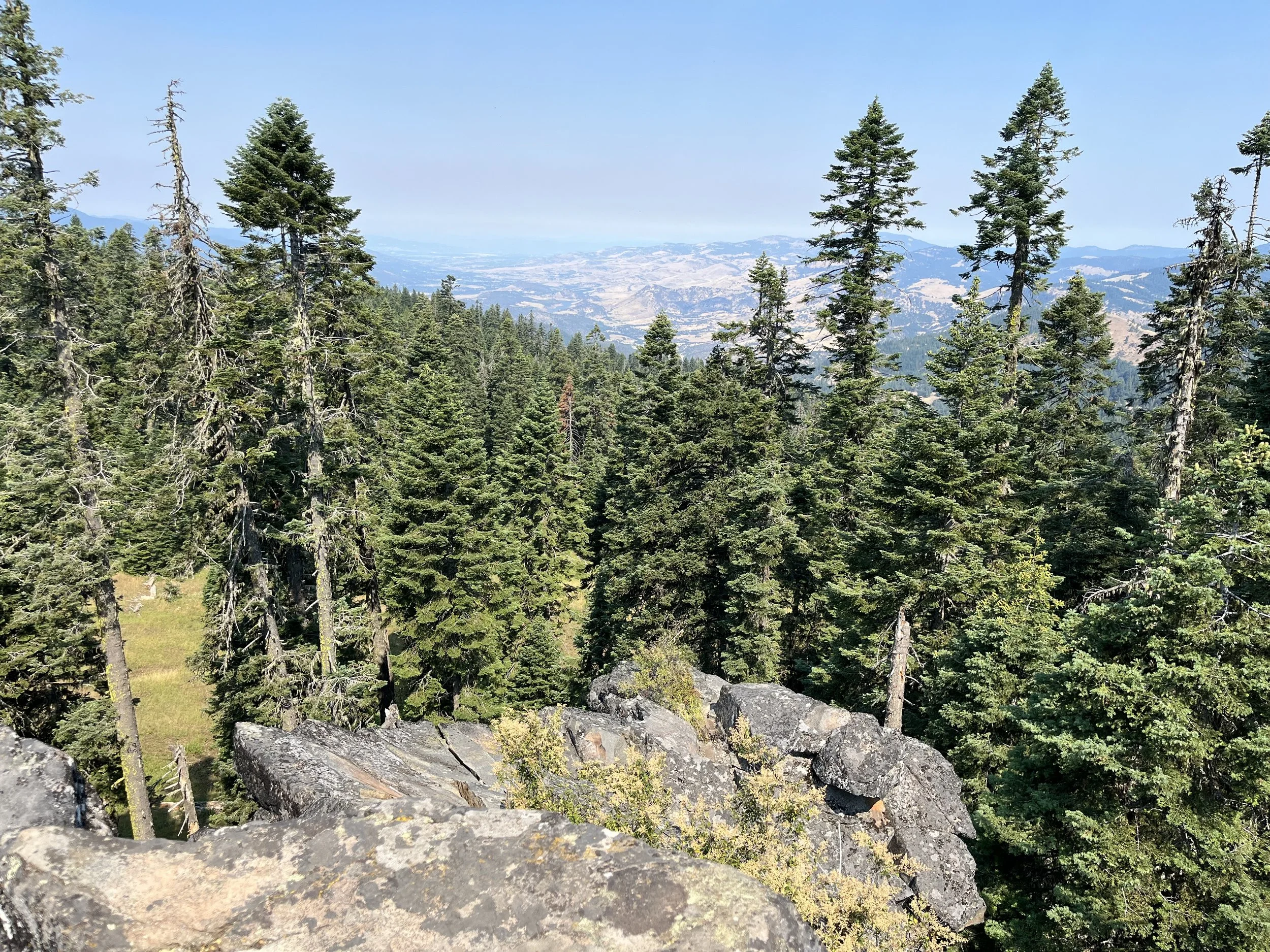
On the following Saturday morning, the group joined Ian to hike about four miles of the PCT leaving from the Hobart Bluff trailhead, heading south. The landscape alternated between lush conifer forests and open meadows with sweeping views – Ian made sure to bring us to one of his favorite sections of trail within the Monument. We got to see some of the work volunteer crews did under his leadership to decrease erosion and level the tread. This hike was a great reminder that the work of protecting and maintaining trails is often an unseen effort, but there are many people working every day to keep trails accessible through advocacy, education, and boots on the ground, hands in the dirt hard work!
The Friends of CSNM thank Ian for taking the time to share his knowledge of a trail that is a key part of the Monument’s story. We appreciate the PCTA for their work; please check out their website for more information: https://www.pcta.org/.
Words and photos by Interpretive Ranger Sarah Martinez.


