August 2022 Newsletter
To read about our latest news and events, please check out our August newsletter!
July 28, 2022
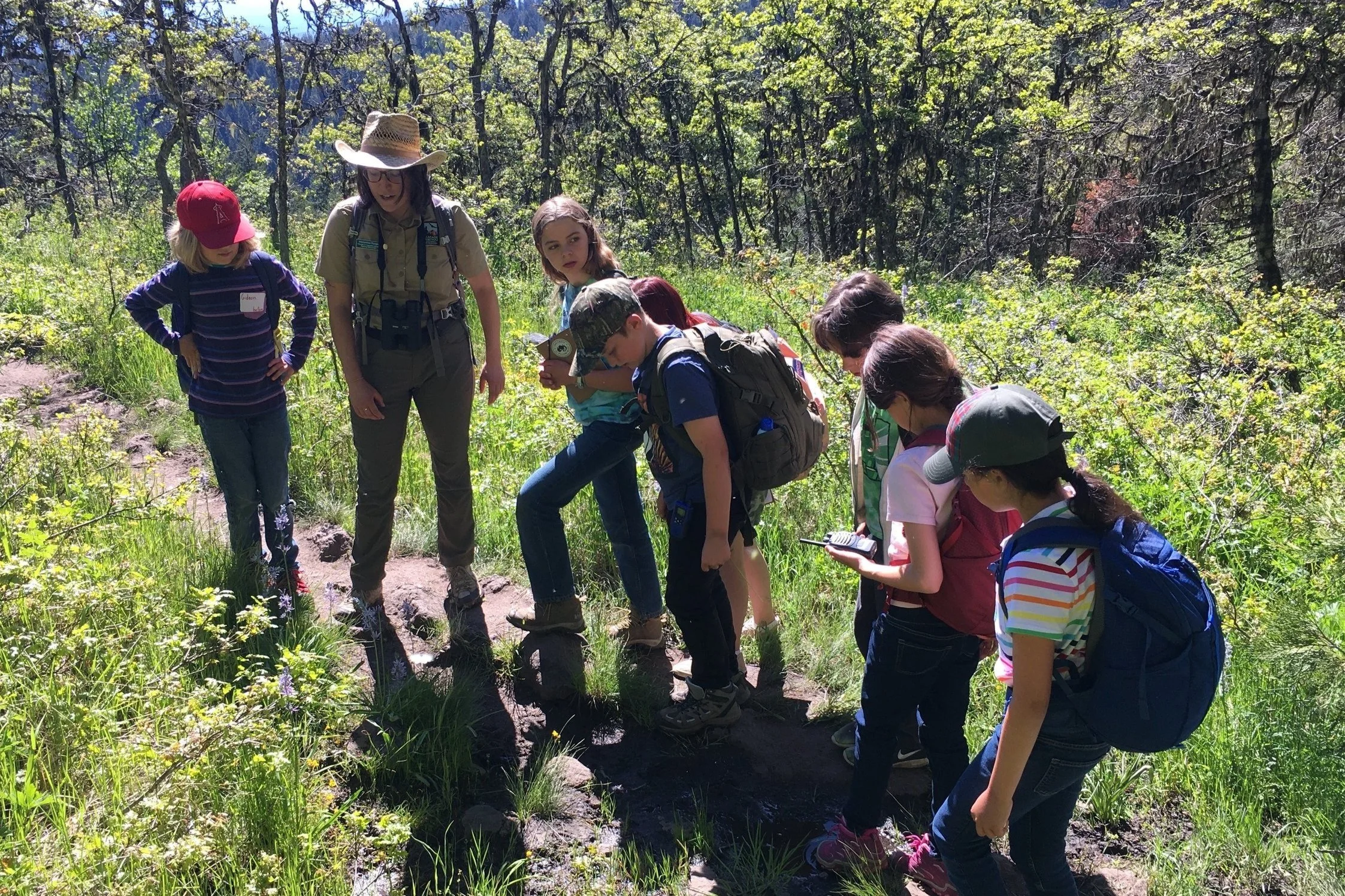
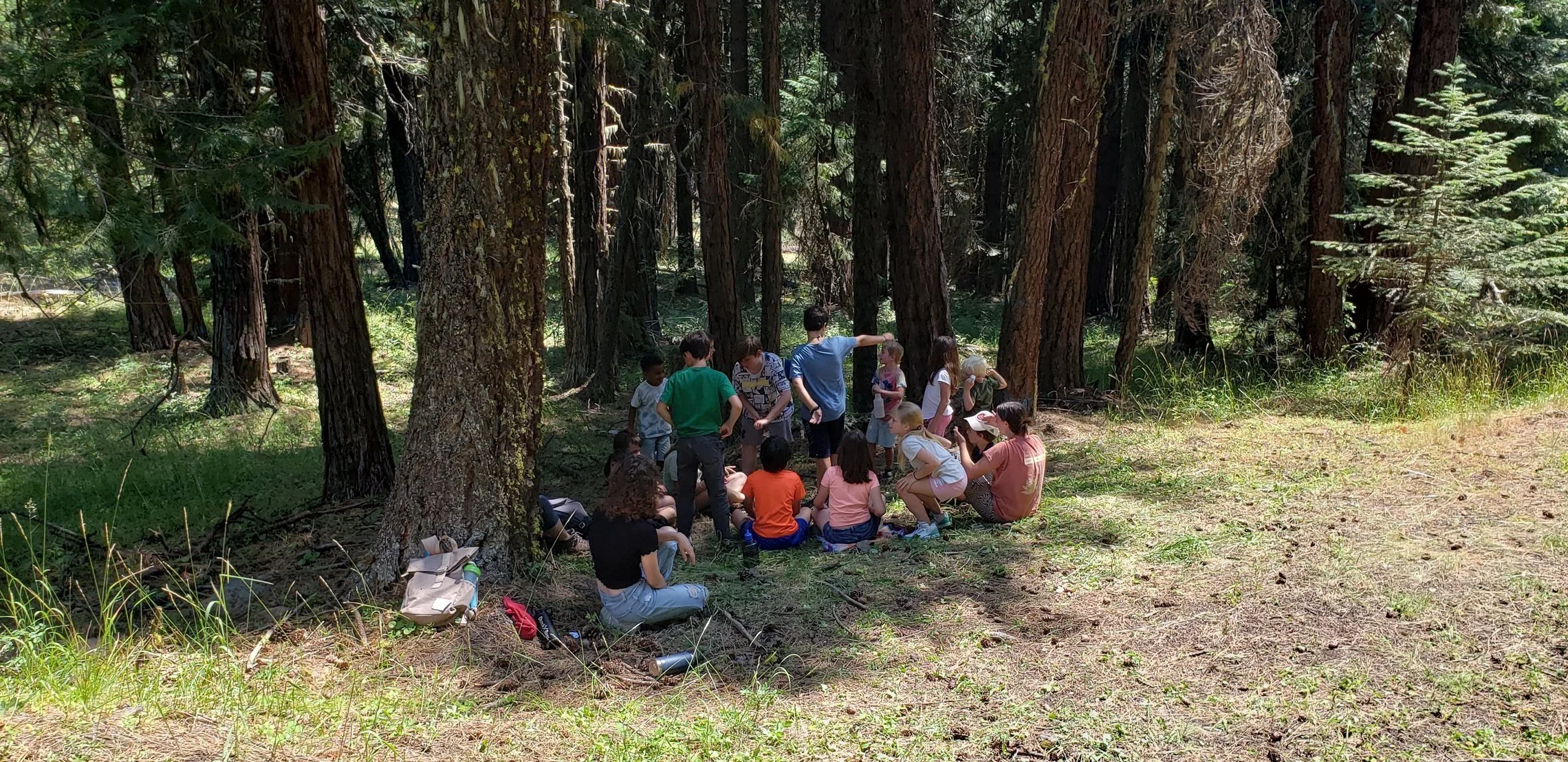
Our Interpretive Rangers have wrapped up Week 7 of our 2022 Nature Day Camps with 6-11 year-old students from The Crest at Willow-Witt! It’s been a jam-packed summer so far, full of hiking, games, and exploration in the Cascade-Siskiyou National Monument.
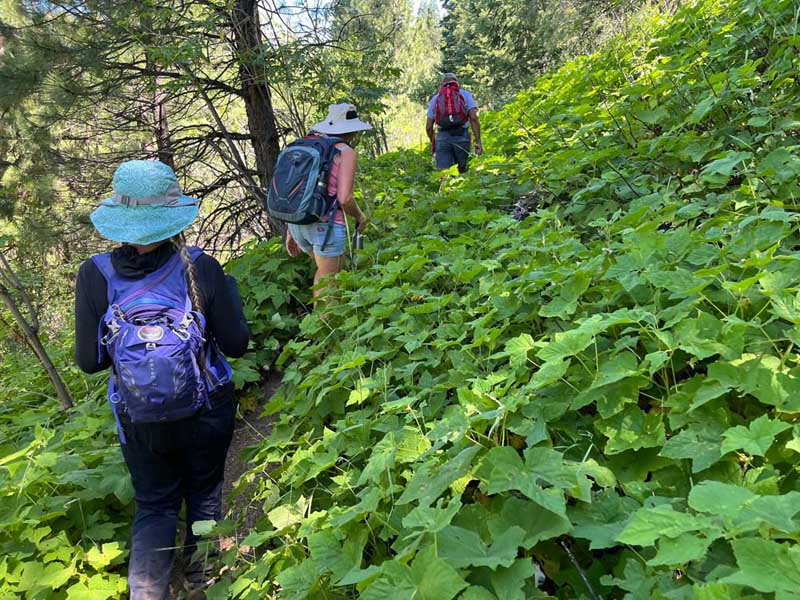
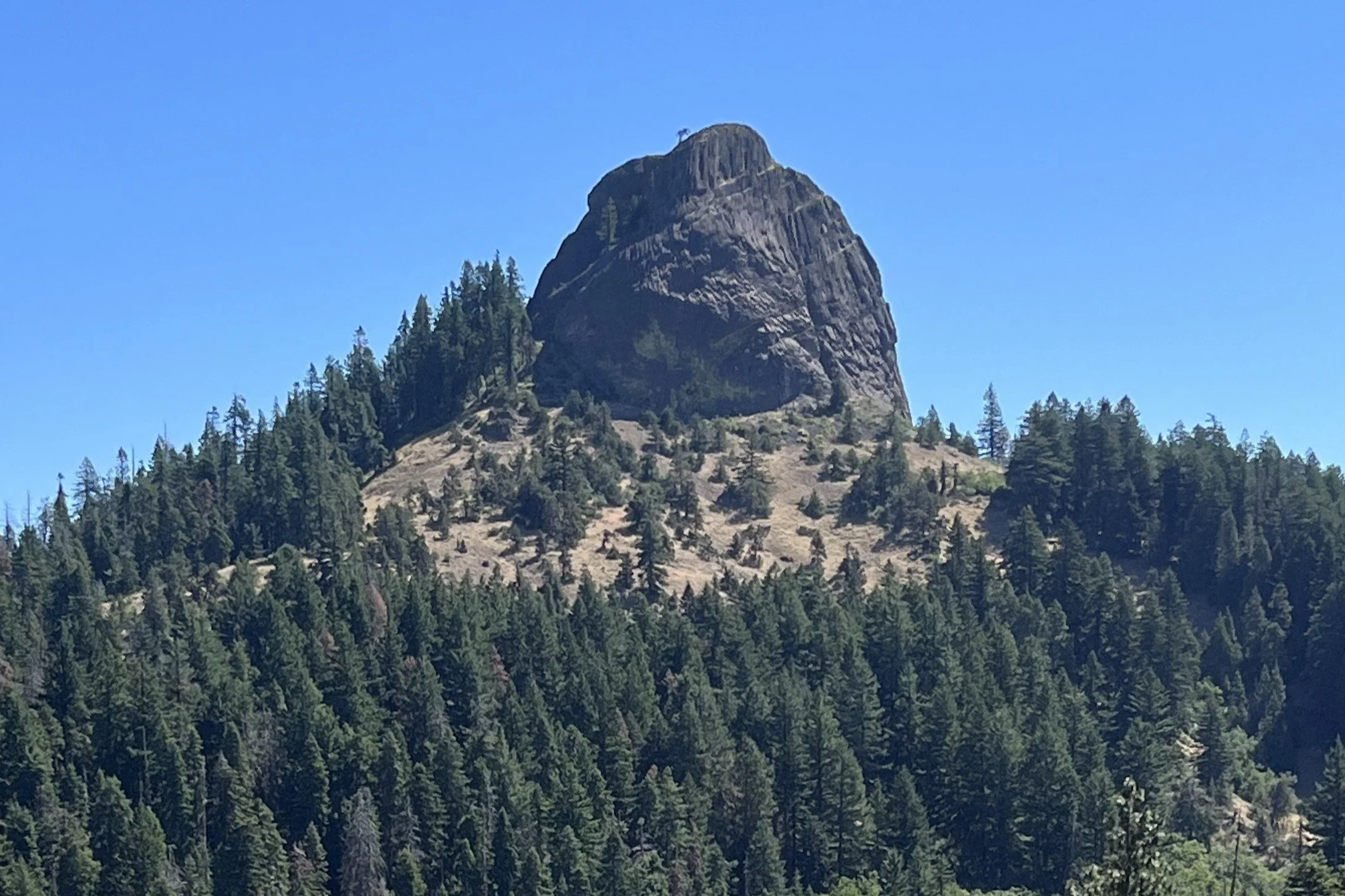
Following the first few weeks of programming at Hobart Bluff, we moved Day Programs to the Green Springs Mountain Loop, an approximately three mile trail of moderate difficulty that pivots off of the Pacific Crest Trail. The Green Springs Mountain Loop trail is a wonderful place to bring children during the hot summer months as ample shade is provided by the surrounding forest. Multiple viewpoints along this trail offer new perspectives of nearby landmarks in the Monument, such as Pilot Rock.
Lesson subjects at this site have included butterflies & insects, coniferous trees, biodiversity, and trail building and maintenance. Students also love to discuss the concept of hiking the entire Pacific Crest Trail, as many thru-hikers can be seen passing by with large backpacks fully equipped with gear.
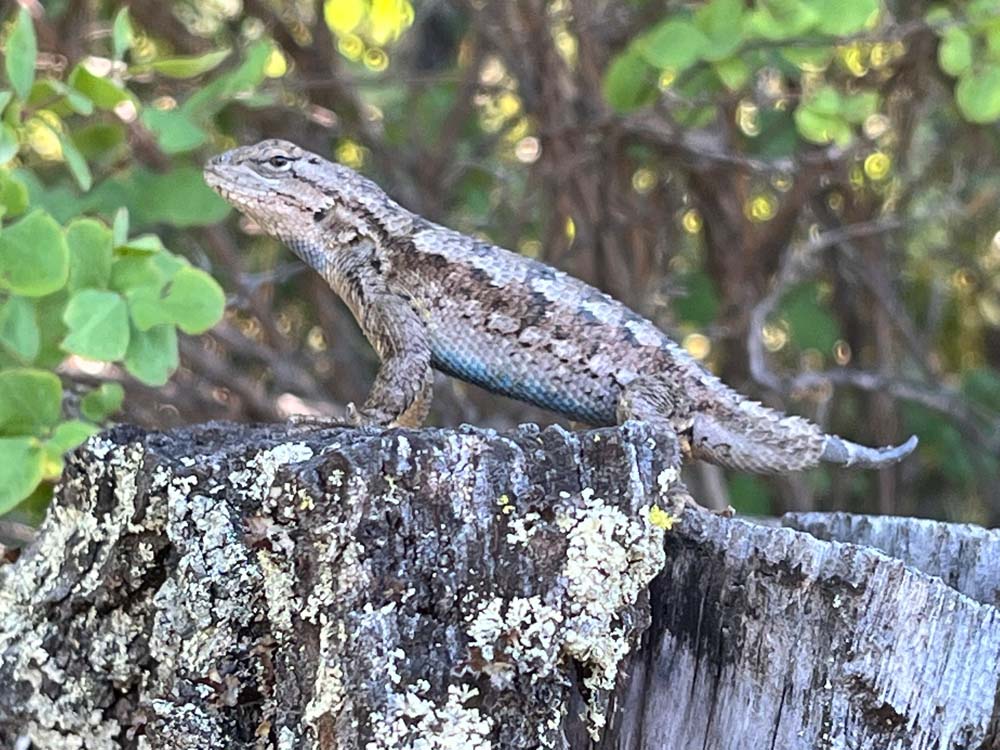
Local wildlife, such as red-tailed hawks, turkey vultures, western fence lizards, and the western gray squirrel provide additional teachable moments. More fun to come!
Words by Interpretive Ranger Elizabeth Mackey.


Sunday Hike #4 – Hobart Bluff, 7/17/2022
Hobart Bluff is an iconic hike in the Monument. From the bluff’s high point at 5,502 ft, there are views in all directions: Pilot Rock, Mount Ashland, Emigrant Lake and the Rogue Valley below, Mount McLoughlin, and Mount Shasta all visible. We took a nice break up at the top, as one should on any hike, enjoying lunch with a view and a little geology talk. The Cascade Range is volcanic and very young, geologically speaking (the two conical volcanoes in view age about 5 million years old). The rocks we stood on at Hobart Bluff were around 25 million years old, an igneous intrusion of harder rock that is now exposed after years of weathering and erosion to the softer rock that used to encase the bluff.
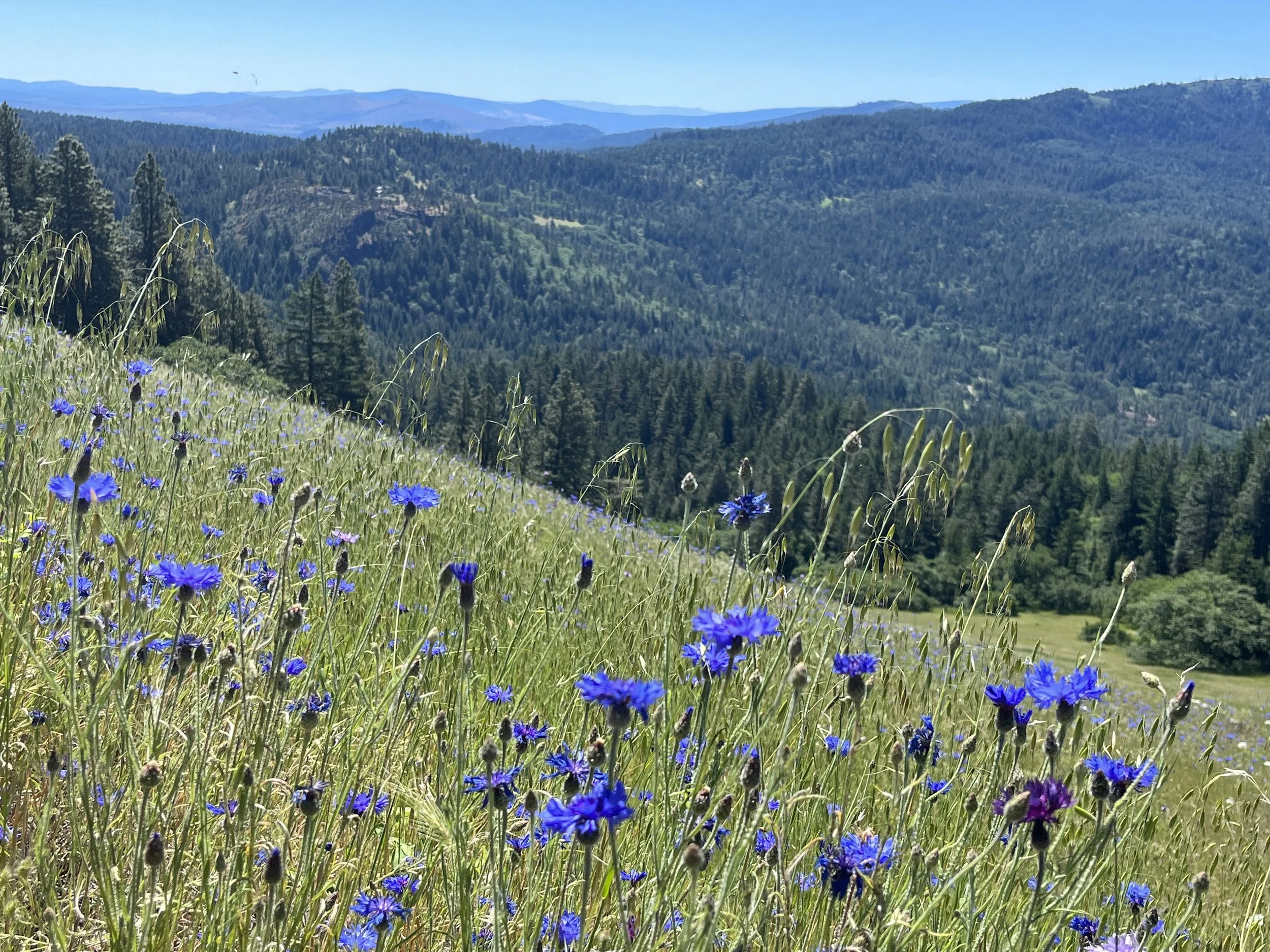
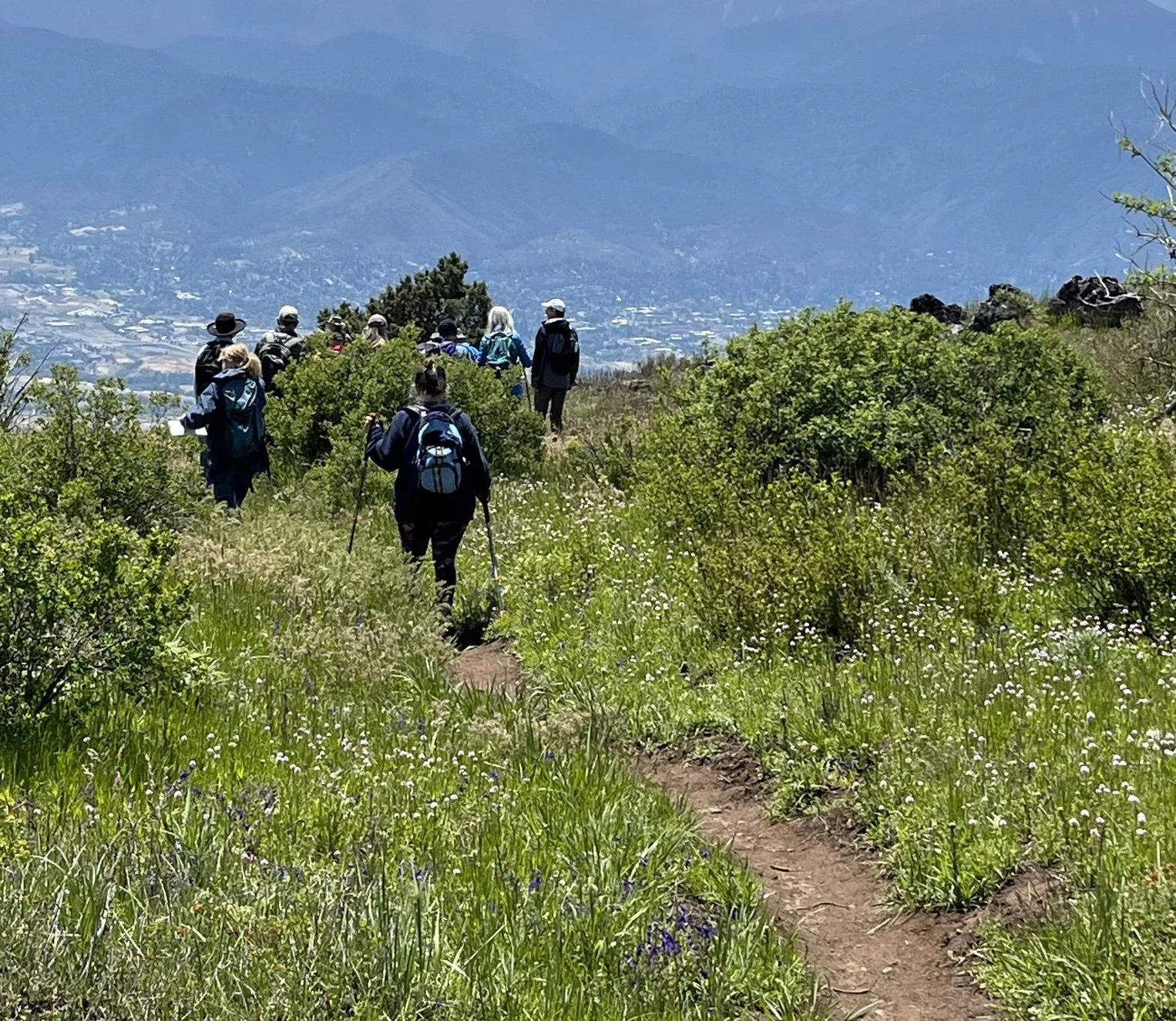
To get to this amazing viewpoint, we took the PCT northbound, with thru-hikers passing us by on their hundredth or so day out on the trail as we slowly ambled along admiring butterflies soaring, birds singing, and some late-season blooms, including some rarities!
Looking up at one of the steep hillside meadows along the trail, we noticed the spectacular Washington lily (Lilium washingtonianum) standing at 6.5 feet tall with a big white blossom. I recalled seeing the leaves and stem of this plant on the Grizzly Peak hike about a month ago, so this off-trail flower merited a look through a pair of binoculars we passed around.
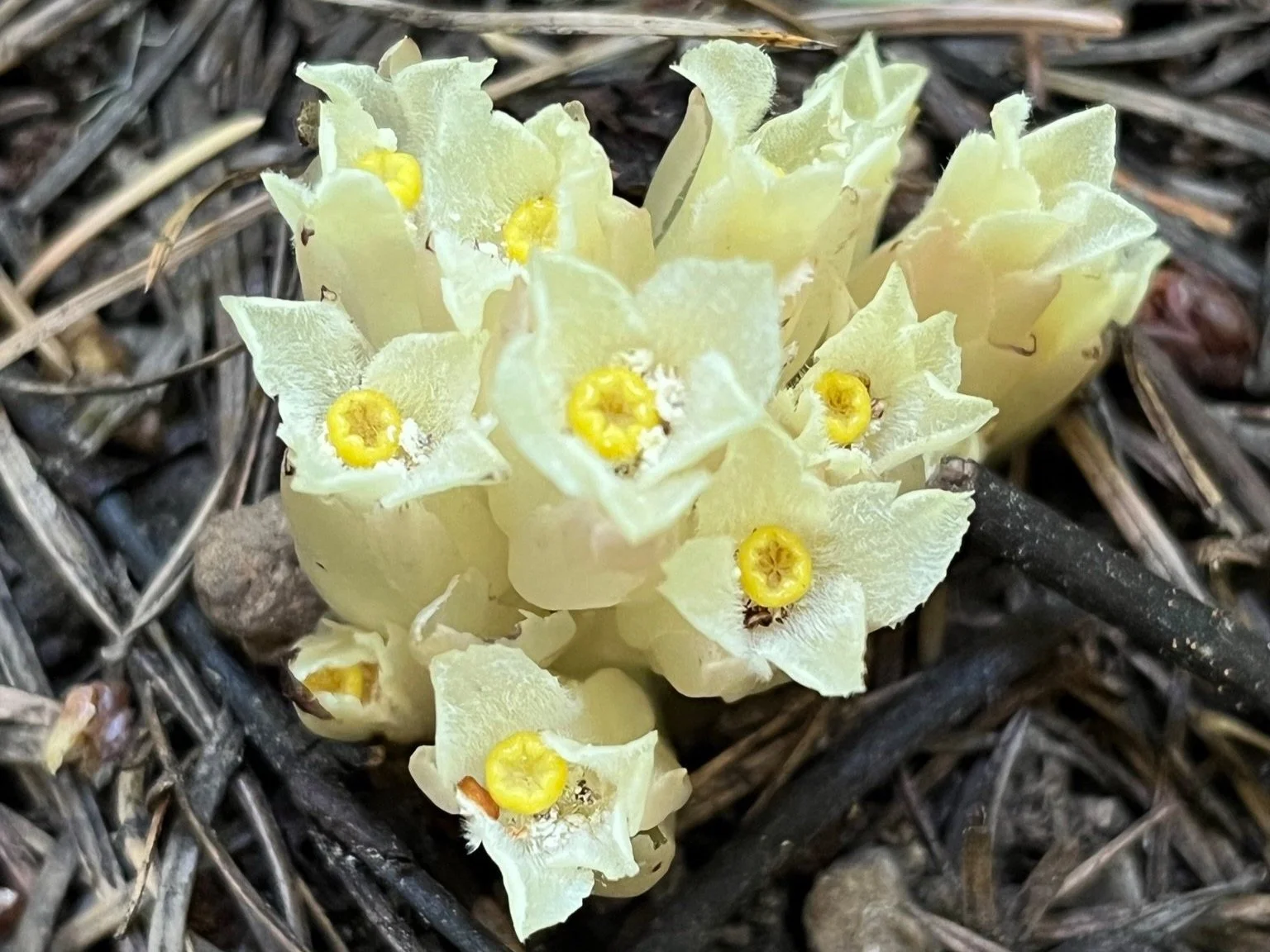
The botanical excitement continued as we walked through a more forested section of the PCT with big old conifers shading the trail. Two rare species of mycotrophic plants were in bloom: Phantom orchid (Cephalanthera austiniae) and Gnome plant (Hemitomes congestum)! These species do not make their own chlorophyl, lacking the green color typical of Kingdom Plantae. On the hike, we called them “saprophytic” plants. According to the U.S. Forest Service, this term misses the mark. These plants don’t get carbon nutrients from decaying organic matter (saprophytic), but are instead engaged in a symbiotic relationship with the soil fungi living in and around root systems of the trees and plants of the forest. See this awesome article for more info: https://www.fs.fed.us/wildflowers/beauty/mycotrophic/whatarethey.shtml.
Sometimes, as a ranger-naturalist-hiking guide, I am stumped by the questions folks ask. In this particular job, I am challenged. The biodiversity of the CSNM is real! There are new flowers every week that I have yet to be acquainted with. The place is so vast and the history is so varied. I am still very much getting to know the area, and it’s been humbling and exciting to do so alongside folks who are interested in learning more. Thank you, Sunday Hikers, for challenging me to learn more about the story of this land by way of your imaginative inquiries and creative curiosities.
Words and photos by Interpretive Ranger Sarah Martinez.


Sunday Hike #3 – Green Springs Mountain Loop, 7/3/2022
The Green Springs are a quintessential component of the Monument. Situated at around 4500 feet, the lush meadows and dense forests are an oasis above the drier interior valleys. The Green Springs Mountain Loop is a gem of a hike: 3 miles, gentle ups and downs, amazing views, and a glimpse of the many ecosystems within the Monument. This was the first hike I ever did in this area, when I arrived in Ashland a year ago to start the Environmental Education graduate program at SOU, so I was excited to share this trail with others.
A huge thunderstorm the night before and a chilly morning drizzle on a holiday weekend led to a smaller group this Sunday, July 3, 2022. The loop is situated on the PCT, but it’s pretty different from last week’s PCT trek because of the variety in ecosystems you can see. The five of us hiked the cool, foggy trail, the clouds parting occasionally with sunbeams breaking through. The views might not have been quite as sweeping as usual, but we still saw the depth of the valley and a slew of wildflowers still hanging on late into the season.
One reason I love this trail is that it showcases so many parts of the Monument. I pointed out the different conifers growing: Ponderosa pine, Incense cedar, Grand fir, White fir, and Douglas-fir. When we arrived at more open areas of the loop, White oaks in shrub and tree form populated the sunny hillsides. We saw a few Black oaks too and noted the difference between the leaves. Also on the sunnier side of the mountain were several Sage shrubs, a characteristics plant species from the Great Basin Desert and sagebrush habitats to the east. Spotted towhees and Lazuli buntings sang, especially in this one sunny patch with a lot of snags, perhaps the result of a big windfall a few years ago.
This is the kind of trail you can visit again and again, through the seasons, year after year. I look forward to doing so and encourage you to do so, too!
Words and photos by Interpretive Ranger Sarah Martinez.


Sunday Hike #2 – Wildlife of the Old Growth Stands, 6/26/2022
A lot can change in a week. Focusing on the weather changes: temperatures in the valley soared over 100˚F for the first time this year. Luckily for our June 26 Sunday Hike group, we were able to escape the heat and all the goings-on in town for a peaceful hike at higher elevation in the old growth forests of the northern portion of the Monument. Steve Godwin, BLM wildlife biologist, knows this area well after years of Spotted Owl research during his technician days. This was a great chance to learn about some of the species that need old growth forests to thrive, and how all the trees, plants, animals, and processes of the forest are deeply connected.
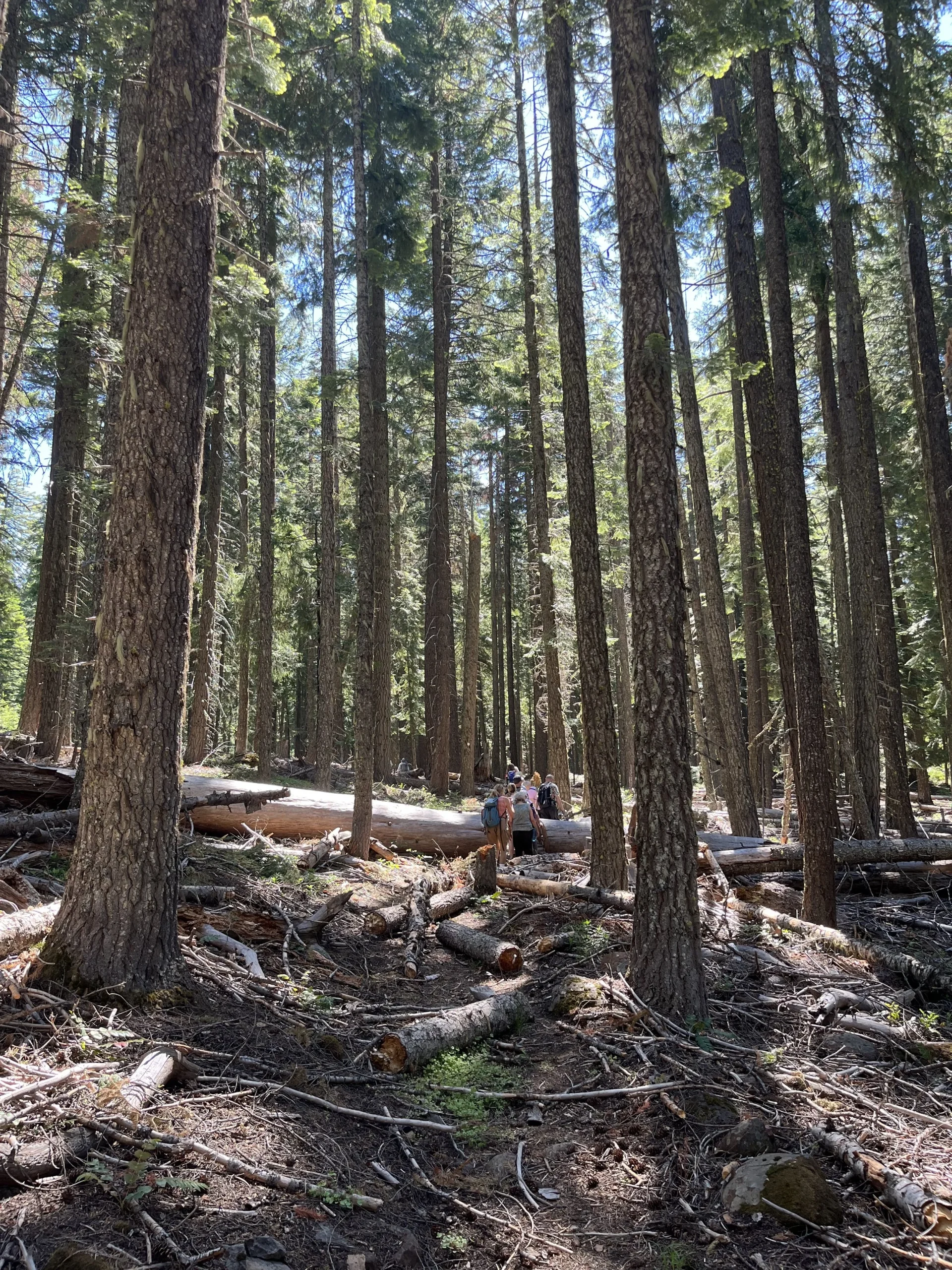
What makes a forest “old growth”? Steve tells us that the woods in our area are considered old growth if there have been no major unnatural changes (logging) for 80-100 years. We certainly walked past trees that have been alive for more than 100 years, but the stands we walked through were mostly second growth; the area had been logged in the past, like much of the forests of Oregon. Despite this disturbance, the forest has regenerated, and is now protected. Enormous Sugar Pines, Ponderosa Pines, and Douglas-firs towered above us, with Incense Cedar and White Fir filling in the gaps. Wind, especially during snowstorms, is now the main disturbance characterizing these woods. The presence of dead and downed limbs and trunks surrounding and even crossing the trail was astounding!
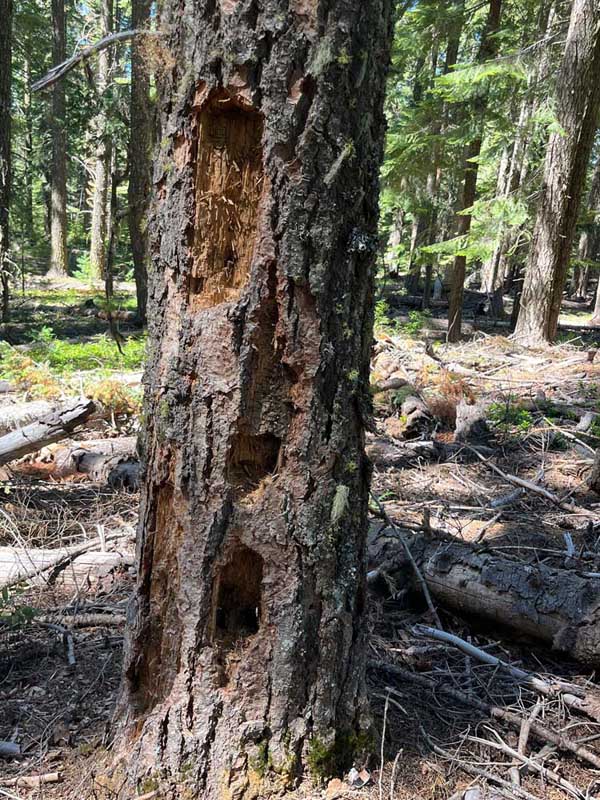
The massiveness of this coniferous forest and its tall trees contribute to its quietness, broken by the occasional call of a pileated woodpecker or the chirping of a Douglas squirrel. Steve used a Bluetooth speaker to call in a more elusive creature of the old growth: the Great Grey Owl. Though no one called back to answer our echoing hoots, this is their preferred habitat. A Great Grey Owl’s territory is about a square mile of tall, dense, old growth trees good for nesting and perching for hunting. Though there are plenty of creatures who prefer more open, edge habitats, there are some who cannot thrive without old growth woods. The Spotted Owl is another such species that many know as a mascot for anti-logging environmentalist efforts to protect old growth woods.
When walking in woods like these, something clicks for me about interconnectedness and resilience in a community. Steve points out a “living stump,” characterized by a cambium layer growing around and protecting dead heartwood. He mentions the roots of the trees of this forest, all intertwined, sending excess water and energy to the trees that need it most. Some trees, like White Firs, can tolerate shade and will pass their lives beneath the boughs of the overstory. Others, especially Pine species, need sunlight to survive well. A pine tree might stall as a seed or sapling for years until there is sufficient space and sunlight to shoot up and grow in the conditions it needs. It takes time to grow strong and rebound from clearcutting and other such massive changes to the landscape, to the community. The old growth forest is full of life, with stories and lessons to share.
Words and photos by Interpretive Ranger Sarah Martinez


June 27, 2022
Tom Glassman, a well-known local photographer, led our inspiring Nature Photography Hike & Learn on June 17-18. At the Friday evening lecture, we quickly realized that Tom’s images are composed in-camera, with no post-processing involved. Other than initial color correction, compositions are achieved without cropping or most of the techniques normally associated with today’s digital darkroom, such as Photoshop. He emphasized that the best way to improve a photograph is to note what’s missing and take another photograph.
During the Saturday hike portion of the class, a hardy group of folks met at the Hobart Bluff trailhead to put Tom’s teachings into practice. It was a foggy, cloudy, and cold day….just about perfect for some unusual flat-light photography. We hiked southward on the Pacific Crest Trail towards Pilot Rock about a half-mile to an outlook of the Bear Creek Valley, some 3,000 feet below us. The wildflowers were out and extraordinarily abundant, and the drops of water on the mosses, leaves, and flowers made the colors rich and saturated.
With a delightful blend of humor and expertise, Tom emphasized and demonstrated what it takes to compose a great photo, how to use layering to make it interesting, and how to use the fog to hide the background so we could highlight the foreground.
After three hours composing, focusing, and creating a narrative in the camera’s viewfinder, we had lunch tucked amidst the lava rocks, wildflowers, and trees. Feeling satisfied and a bit soggy, we headed slowly back to our cars to arrive at the parking lot just as the sun was breaking through. It was a fun and exciting H&L as we learned many of Tom’s photo techniques while also slowing way down to see and connect with the Monument in a new way.
Tom Glassman’s website can be found HERE.
Words by Terry Dickey, FCSNM Board Member


Sunday Hike #1 – Grizzly Peak Wildflowers, 6/19/2022
The first Sunday Hike of the summer series was a success, celebrating the biodiversity of the Cascade-Siskiyou National Monument by identifying the abundance of wildflowers in bloom along the trail up to Grizzly Peak. The group of 17 hikers was led by local wildflower enthusiasts, Edward Madson and Susan Roudebush. Their knowledge of the landscape and its botanical splendors was much appreciated on this trek up one of the most popular trails in the Monument!
Thanks to recent rains and cooler temperatures through May and June, the conditions were perfect for witnessing the magic of spring wildflower blooms. We took it slow on the ascent because we spotted so many flowers and stopped to examine, identify, and appreciate them all.
The diverse topography of this region sets the stage for an inspiring assemblage of plant communities within the area. Along the trail, we moved through an old-growth conifer forest of Grand and White Fir trees, a series of wet meadows, and up to a rocky, shrubby grassland atop the plateau, exposed and slowly regenerating from the 2002 Antelope fire. With such a variety of slope, aspect, moisture, light, and elevation, we identified around 50 species of flowering plants, shrubs, and trees on this 5-mile loop!
Some species on the forest floor included yellow Baker violets (Viola bakeri), Calypso orchids (Calypso bulbosa), rosy plectritis (Plectritis congesta), and striped coral-root (Corallorhiza striata). Shrubs in bloom included gooseberry (Ribes cruentum), red flowering currant (Ribes sanguineum), and serviceberry (Amelanchier alnifolia). Wet meadows were full of Camas (Camassia quamash). At and around the summit we saw lupine (Lupinus spp.), desert parsley (Lomatium spp.), Siskiyou onion (Allium siskiyouense), and so many more. The song of the Lazuli bunting (Passerina amoena) was the soundtrack to our expedition.
I strongly recommend taking a hike up to Grizzly Peak as soon as possible to get a glimpse of biodiversity in action for yourself. What a treat to live among such a gorgeous natural landscape, and to appreciate the beauty of biodiversity with a group of hikers who love the flowers as much as I do!
Photos and words by Interpretive Ranger Sarah Martinez.

June 20, 2022
The Friends of the Cascade-Siskiyou National Monument (FCNSM) have started an exciting new environmental education partnership with the Crest at Willow-Witt and the Medford District Bureau of Land Management (BLM). The effort is intended to enhance the outdoor experiences of students enrolled in the Crest’s Summer Nature Day Camps. The FCSNM’s Interpretive Rangers are now offering one day of place-based education every Wednesday throughout the summer at select sites within the Cascade-Siskiyou National Monument. The Nature Day Camps are offered by the Crest to students aged 6-11 and programming includes hiking the trails, exploring outdoors, making crafts, and learning about the unique species and ecosystems within the Monument.
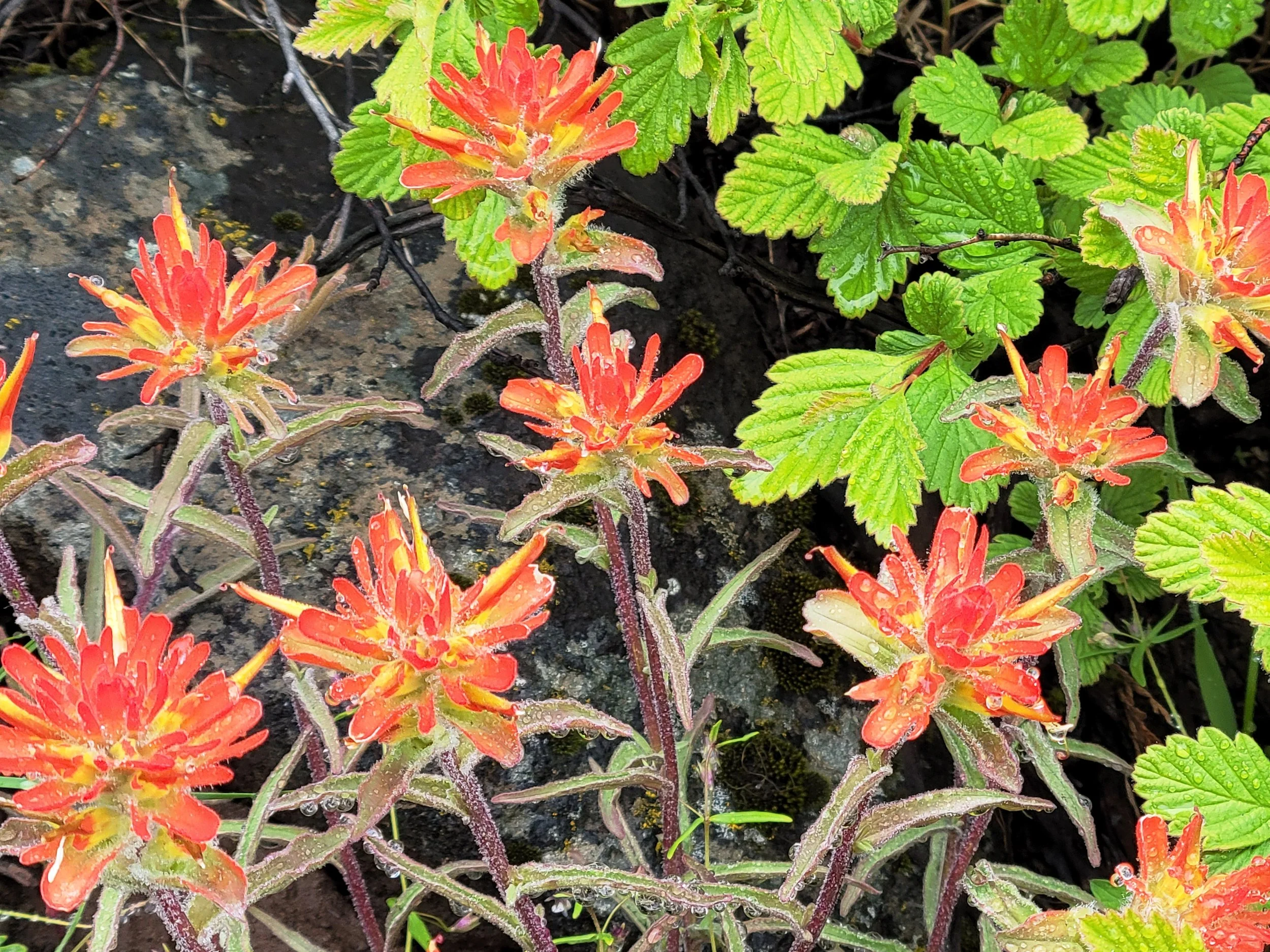
Our first Monument Day Camp kicked off at the Hobart Bluff trailhead on June 15, 2022. Due to spectacular conditions, programming was focused on wildflower education! With hand lenses and field guides in-hand, 30 students and their instructors scoured the Hobart Bluff and the Pacific Crest Trail for as many wildflower species as they could find. Many meadows and clearings were packed with paintbrush, lupine, wallflower, and desert parsley species. Additional wildflower highlights included Great camas (Camassia leichtlinii), checker lily (Fritillaria affinis), goat’s beard (Tragopogon dubius), and the Roundtooth ookow (Dichelostemma multiflorum).
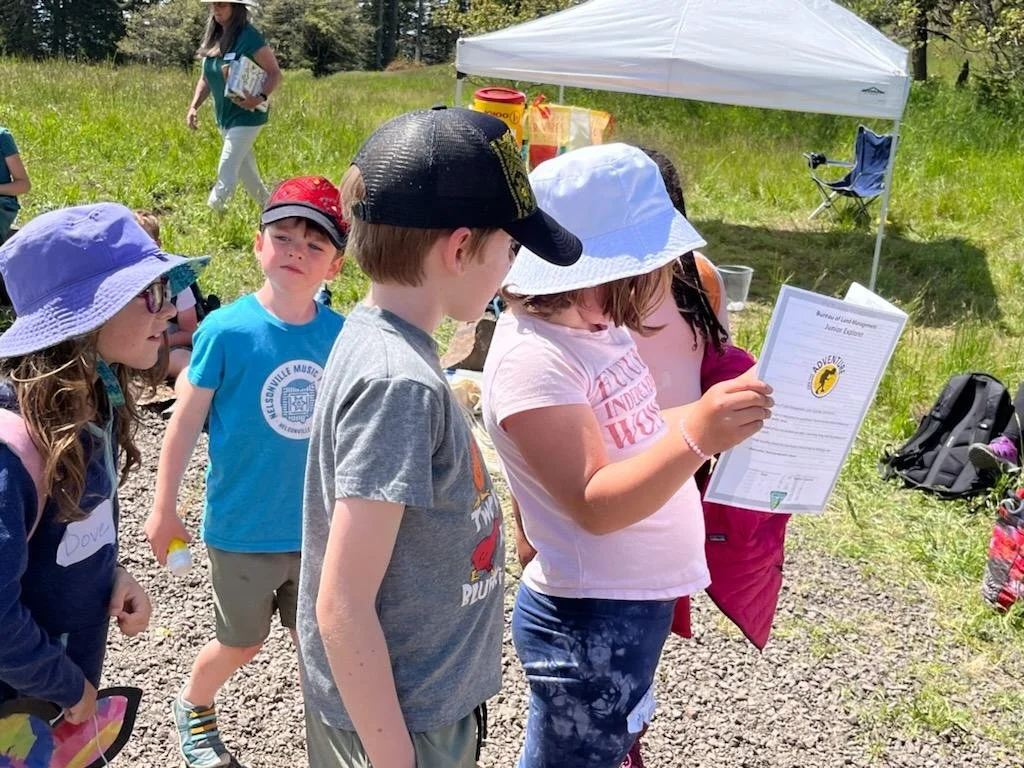
Throughout the day, students also played games, told stories, recorded observations in their nature journals, and completed Junior Ranger activities offered by the BLM. Additionally, younger campers were invited to create their own butterfly suncatcher craft (pictured below).
We are looking forward to new adventures with additional students in the coming weeks!
Words by Interpretive Ranger, Elizabeth Mackey


June 15, 2022
On June 10 – 11, there was a painting adventure in the Cascade-Siskiyou National Monument. Twelve experienced artists from around the state learned about the treasure trove of spectacular views and complex ecosystems that bring a wide variety of plants and trees together in this unique environment. Except for the wind, the weather was perfect and the wildflowers were in rare splendor.
Board member, Howard Hunter and local painter, Katy Cauker led the artists to several painting sites located in the wilderness within the Monument. The sites included a view point just east of Pilot Rock and a meadow just south of Hobart Trailhead, off the Pacific Crest Trail. It was an inspiring and productive day. The painters enjoyed the excitement of the vistas, and the challenges of capturing them with paint.
Many of the artists will now take their work home into their studios and complete the paintings. Later this fall, Sarah Burns, one of the local artists with the group, is tentatively planning to provide a forum to show the completed paintings at the Project Space in Talent, Oregon. This weekend’s painting adventure may well become an annual event for the group.