Franklin’s bumble bee listed as endangered

August 23, 2021

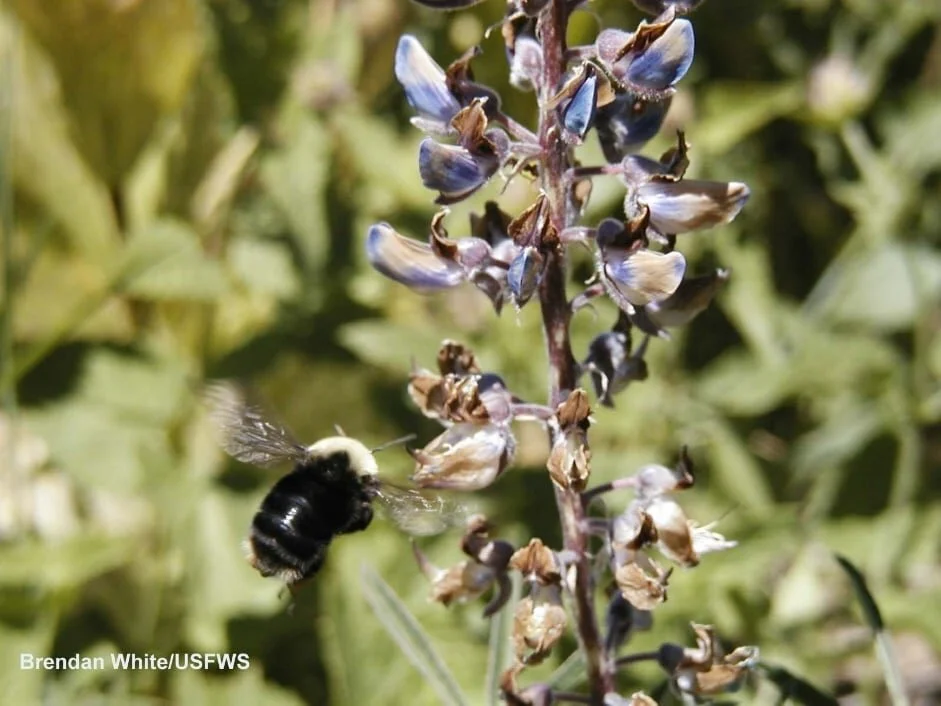
Today, the U.S. Fish and Wildlife Service announced the final rule to list the Franklin’s bumble bee as endangered under the Endangered Species Act. Franklin’s bumble bees are likely impacted by a combination of factors including disease, small population size, and pesticides. The range-wide decline of this species since the late 1990s and persistent threats mean this bee is at high risk of becoming extinct.

Franklin’s bumble bee has the smallest geographic range of any bumble bee in North America, and possibly the world. Found only in the hills of southwest Oregon and northern California, this elusive bee has always been hard to spot.

Franklin’s bumble bee has not been observed in its native habitat since 2006, indicating the species is likely in severe decline. Private landowners should not be impacted by the listing of Franklin’s bumble bee because its range is extremely limited and most recent observations have occurred on federal land at higher elevations.

The Rogue River-Siskiyou NF has historic locations and existing habitat for Franklin’s bumble bee on the Siskiyou Mountains and High Cascades Ranger Districts.

“The level of public and interagency engagement in the bumble bee survey efforts has been incredible,” said Glenn Casamassa, Forest Service Pacific Northwest Regional Forester. “The primary habitat for this bee in Oregon is on the Rogue River-Siskiyou National Forest. While this species has not been detected there since 2006, our employees continue to work with the U.S. Fish and Wildlife Service on sampling historic and suitable habitats in order to conserve and recover this species. There’s a collective sense of urgency to protect native pollinators, and this effort highlights not only the strength of our interagency partnerships but also the strength of research and citizen science efforts in Southwest Oregon.”

Historically, Franklin’s bumble bees have been found at elevations between 540 feet to more than 7,800 feet, located in a roughly 13,000-square-mile area in southwest Oregon and northern California. Their ability to survive in cold climates makes them the primary pollinators of alpine flowering plants. The bee needs abundant flowers throughout their May-September flight season and cavities—or holes—for breeding and sheltering. Because they are habitat generalists and there appears to be plenty of intact habitat available to them, the Service determined that designating critical habitat for the Franklin’s bumble bee is not prudent at this time.

Xerces Society and an individual scientist petitioned the Service in 2010 to list the Franklin’s bumble bee as endangered under the ESA, based on a small number of extant populations, natural instability of small populations and other factors.

For information on the Franklin’s bumble bee, please visit http://www.fws.gov/oregonfwo/.

Thank you SOU Laboratory of Archeology for recent Hike & Learn

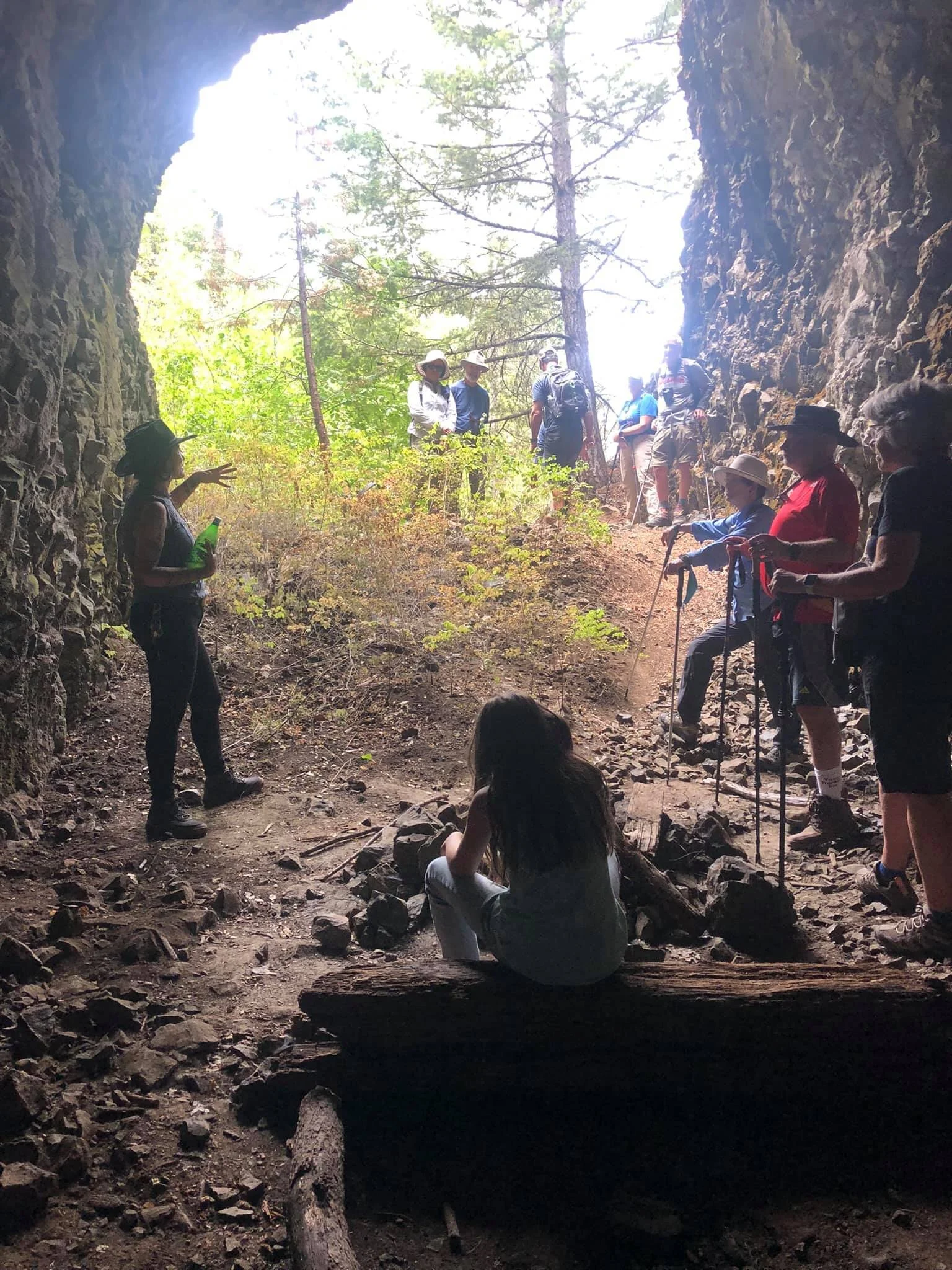
We wish to thank Professor Chelsea Rose of SOU, her great volunteers, the BLM Archeologist Lisa Rice and BLM Rangers and Friends of the Monument Rangers for helping sixty friends make the 5 mile hike to Buck Tunnel with informational tables and displays along the way! We had a terrific lecture on Thursday evening and hike on Saturday.

Thank you partners and volunteers!

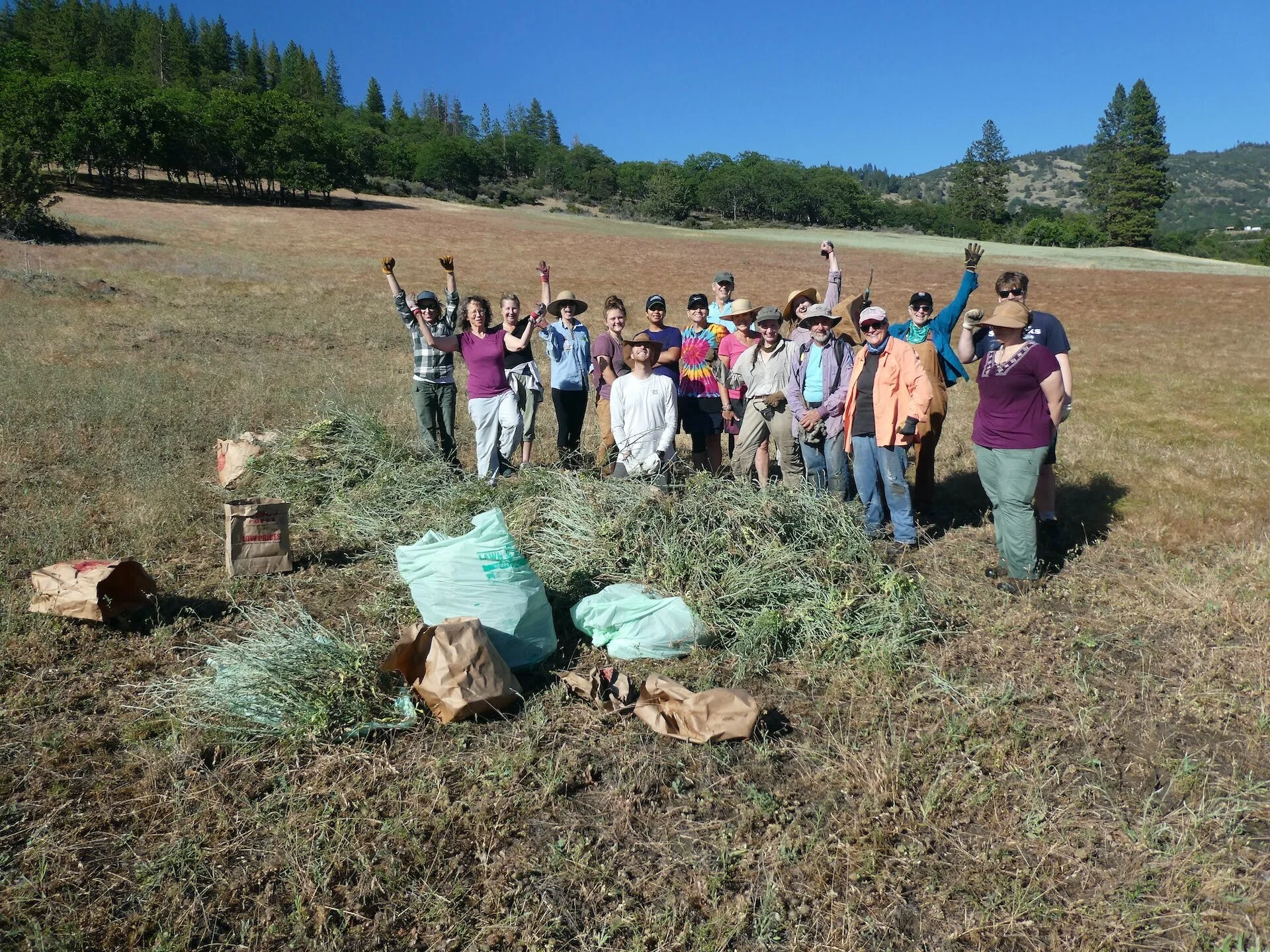
Thank you to every volunteer for participating in the Star Thistle pull at the Mariposa Preserve in the Cascade Siskiyou National Monument last week. Each and every one of you made a huge difference in protecting and conserving this special place. It was also fun getting drenched in the rain with you all!

Thank you to our partners and friends at the Siskiyou Chapter of the Native Plant Society of Oregon and especially K.S. WILD and Allee Gustafson for doing the registration and coordination for this partnership! Shout out to Charles “Charlie” Schelz the BLM Ecologist for the Cascade Siskiyou National Monument for making a Star Thistle pull so fun! This effort was to protect the preserve for Greene’s Mariposa Lily.

 Photo from K.S. Wild
Photo from K.S. Wild

2021 Artists in Residence in Cascade-Siskiyou

Watercolorist Julie Hutslar and quilter Susan Roudebush are selected for the 2021 Artist-in-Residence program at the Cascade-Siskiyou National Monument. Each artist will receive a one- to two-week residency at CSNM facilities during this summer, and will use their artistic efforts to support the public lands.

The Cascade-Siskiyou Monument was established for its biodiversity and celebrates its 21st anniversary. The Monument is part of the National Conservation Lands, set to conserve special features, from winding rivers to mountain vistas.

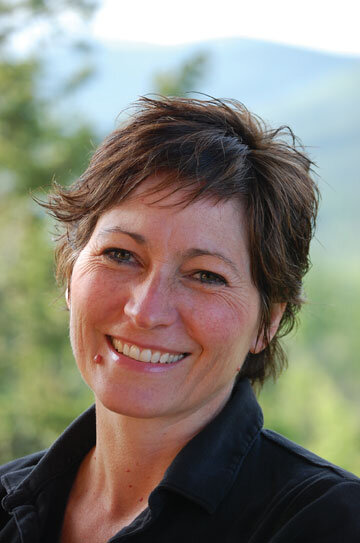
Julie, Bitterroot Valley, Montana, will create works in the Monument in June; and Susan, from Ashland and Bend, Oregon, will create and exhibit in October. More about the artists.

Julie Hutslar says, “A joyful camper, I have loved exploring the west for four decades now. This area of Oregon is one I welcome the chance to get more intimate with. Hiking is the way I reconnect and mountains are my constant source of inspiration!”

Julie will meet the community and exhibit her work from the residency on Friday, June 11, from 5-8pm, at the Green Springs Inn – Forest Room.

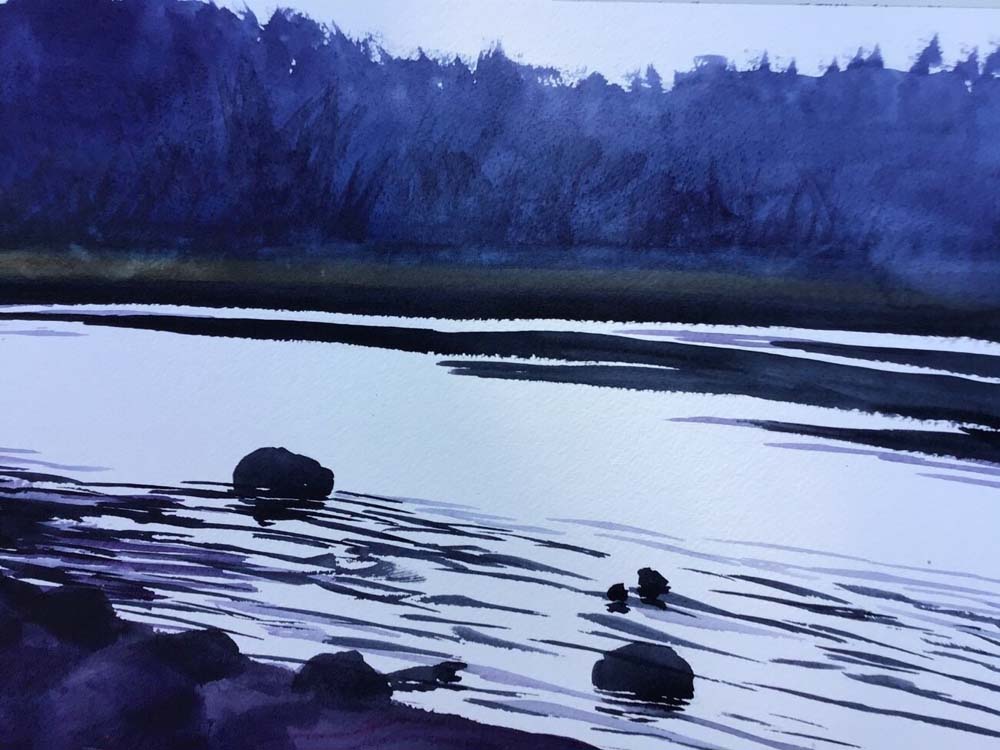
Images: Julie Hutslar, watercolor in progress; PCT By Little Hyatt; Hyatt Lake At Dusk; a sketch.

Watch for future updates on Susan Roudebush’s residency in autumn. Roudebush, an avid hiker, wants to create quilt panels that show regions of the monument: oak savanna, grasslands and high-elevation areas—showing the biodiversity that may not be easily understood.

Launch YouTube Friends of Cascade-Siskiyou Channel

“Thank you.  A humbling introduction, so much covered.  Learning and knowing more of the native peoples’ history, culture, contributions will enrich us all. For me, I hope to learn so much more. I’ll look for your blog, and the YouTube channel.” — Allison-Lama Susi:

“I would love to have a video of the presentation to share with others on our school staff. Thanks for this presentation..” —Marcia Thomason

“I would like to have the opportunity to view this presentation one more time so I can go back and take detailed notes.” Thank you. — Ce Yanez

These comments from the David Lewis lecture (Native American History in Southern Oregon) encouraged us to record and make accessible our presentations.

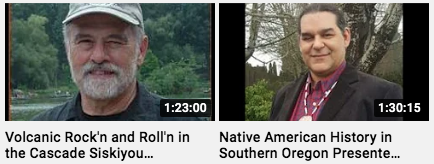
You can view our recorded lectures and presentations on our newly launched YouTube Channel. The first two titles and speakers are: Volcanic Rock’n and Roll’n in the Cascade-Siskiyou National Monument, by Jad D’Allura, SOU Professor Emeritus; and Native American History in Southern Oregon by David Lewis, Oregon State University Professor. Any recorded video will be added to the channel.

Just in time for the 21st anniversary of the Monument and in response to the social distancing of the Covid pandemic, the Friends’ education programing transformed to online presentations. Recorded presentations connected presenters to audience from around the world. More people could learn about the Monument at a time of their own convenience.

Lisa James, Executive Director, Friends of CSNM said, “By sharing our videos on YouTube and linking them to our website, our loyal friends and subscribers can easily view the recordings at their convenience.  We also want to draw new audience members who are searching for topics of interest not found elsewhere.” 

From Jad D’Allura’s talk about the 35-million year-old rocks of the Cascade-Siskiyou National Monument to the David Lewis’ talk about indigenous peoples who traveled through and lived in this area; the Monument, as one of America’s public lands, holds so much for us yet to know.

We thank our presenters for sharing their knowledge with us; and we thank you for your support to care for this place we call home.

We stay humble and are learning together.

Friends Research Fund 2021 Awards Four Student Researchers

The Friends Research Fund (FRF) awarded grants totaling $ 3,856 to four undergraduate students to conduct botanical and geological studies in the Monument. Britton Glenn and Andrew Restrepo, both enrolled at Evergreen State College, will research varient lichen; Lauren Castro, University of Oregon, will focus on mapping geological areas near Grizzly Peak, and Samuel Barrus, Oregon State University, will investigate the geological age and properties of the Barron Mine located on the Sampson Creek Preserve.

These student will present their finding in next year at the Monument Research Symposium, held annually in March. Final Reports will be held with the Friends and the Bureau of Land Management (BLM).

Thank you to the FRF 2021 review committee members: Scot Loring, Botanist and Friends Board member; Hans Stroo, Environmental Scientist; Maia Black, Community Member; and Matthew McClintock, BLM Geologist. The Committee was chaired by Friends Board Members Jacqueline Blanchette and Elaney Marcotte, and advised by Lisa James, Friends CSNM Executive Director.

Descriptions of the 2021 research grants

Project Title: Vagrant Lichens in Cascade-Siskiyou National Monument
Britton Glenn and Andrew Restrepo, Botany / Ecology, Evergreen State College

Britton and Andrew will be working together to study vagrant lichen in the Cascade-Siskiyou National Monument under their faculty advisor, Lalita Calabria, Professor of Botany. Vagrant lichens are likely sensitive to human-induced habitat changes and invasion by non-native plant species. Britton and Andrew will be documenting how the unique vagrant lichen populations of the Monument interact with native and non-native grasses. The data they collect will be used to update the current distribution and ecology of vagrant lichens.

Project Title: CSNM Geological Mapping
Lauren Castro, Earth Science, University of Oregon

This summer and fall, Lauren will be working with Jad D’Allura, Professor Emeritus of Geology at Southern Oregon University. Lauren will focus on mapping the northwest portion of the Monument near Grizzly Peak, as well as sample and analyze welded tuffs in the Little Hyatt Reservoir area. This study will improve and update current geological studies of the Monument.

Project Title: Barron Mine
Samuel Barrus, Geology, Oregon State University

Samuel will be working with professors Dr. Jad D’Allura, SOU Professor Emeritus and Dr. John Dilles, OSU Professor of Geology. His project focuses on analyzing the geology of the now abandoned Barron Mine, located on the Sampson Creek Preserve owned by the Selburg Institute, also a project co-funder with the Friends. This project will help determine the geologic age and properties of the Barron Mine.

Reading Notes: Native American Tribes of Southern Oregon

Know Your Monument

History of the Native American Tribes of Southern Oregon

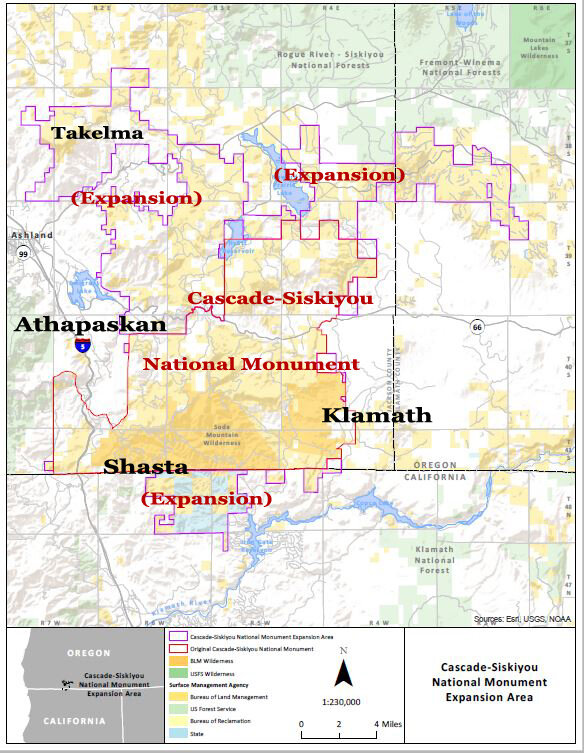
The Cascade- Siskiyou National Monument was established in 2000 and then expanded in 2016, to span over 114,000 acres of land. The monument is located on the traditional homelands of the Takelmans, Athapaskans, Shastans, and Klamath peoples. Before their removal to the reservations of the Grande Ronde and Siletz in the 1850s, the tribes of this region lived here for time immemorial, with dates of occupation older than 10,000 years.
“Establishing this monument preserved the landscape for the future of all Americans. For Native peoples to return and find community in the original landscapes of our peoples is priceless. In this environment we can practice restoring cultural practices. Many people in the Grand Ronde tribe have an affinity to the Rogue region and this monument preserves the wilderness for them and their descendants. In addition, tribal peoples in the region are using the landscape for their own cultural practices. This place is an important vault of information about tribal lifeways.”

  • David Lewis, PhD, The Land is Our Heart: Protect the Cascade-Siskiyou National Monument, 2017

Dr. David Lewis is a member of the Confederated Tribes of Grand Ronde, a descendant of the Santiam, Chinook and Takelma Peoples of Western Oregon. Dr. Lewis is a recognized researcher, scholar, educator, and writer of original histories of the peoples of Oregon and California, with an extensive record of collaborative projects with regional scholars, tribes, local governments, and communities for over 20 years. He is an adjunct professor at Oregon State University in Anthropology and Ethnic Studies (Native Studies).

 Dr. David Lewis
Dr. David Lewis

He has generously shared additional readings that are on his website: ndnhistoryresearch.com
See Dr. Lewis’ presentation Native American History in Southern Oregon (2021).

His recent articles about the CSNM are listed below:

The Land is Our Heart: Protect the Cascade-Siskiyou National Monument (2017)

Repealing National Monuments? Why Tribal People Should Care! (2017)

 This map and nformation in this article comes from   The Land is Our Heart: Protect the Cascade-Siskiyou National Monument    ( 2017), David Lewis, PhD
This map and nformation in this article comes from The Land is Our Heart: Protect the Cascade-Siskiyou National Monument ( 2017), David Lewis, PhD

Additional publications by Dr. David Lewis: 

Restoring Indigenous Knowledge, Western Humanities Review, Fall. (2020)

White American Violence on Tribal Peoples of the Oregon Coast. Oregon Historical Quarterly. Vol. 120(4). Winter. (2019)

Four Deaths: The Near Destruction of Western Oregon Tribes and Native Lifeways, Removal to the Reservation and Erasure from History. Oregon Historical Quarterly. Fall, Vol. 115(3):414-437. Lewis, David G. and Thomas J. Connolly. (2014)

Natural Foresters: Native Timber Traditions and Logging from the Grand Ronde Tribe. Willamette Valley Voices: Connecting Generations. Vol. 3(1). Winter. (2014)

Native American Archives Special Issue: Dedication. Journal of Western Archives, Vol. 6:1. Lewis, David G. and Jennifer O’Neill. (2014) 

Developing and Organizing a Professional Development Gathering for Oregon’s Tribal Communities: The Oregon Tribal Archives Institute. Journal of Western Archives, Vol. 6(1). Lewis, David G. and Natalie Fernandez. (2014)

History of the Native American Tribes of Southern Oregon – FREE online Lecture May 6 at 6:00pm

As part of the INSPIRING CONNECTIONS WITH NATURE LECTURE SERIES, The Friends of the Cascade Siskiyou National Monument invite you to join us with our esteemed Oregon State University Professor David Lewis. You’ll hear about:
• History of the Tribes from Southern Oregon
• Lifeways
• Rogue River Wars
• Forced Removal
• Treaties
• Environmental Focus: Changes to the lands after the removal and impacts of farms and grazing by settlers
• Most accounts of this history we hear are not the point of view of the Native perspective. This lecture is designed to tell the history and dispel repeated stereotypes

6:00 p.m. May 6th Pacific Time